
New locations
Open new stores on a fixed date without the plan trapped in one PM's Excel
A ground-up build runs a long, dependency-heavy lifecycle against an opening date that will not move. RolloutIQ runs every store on the same new-build playbook, so the growth plan is one portfolio view instead of a folder of spreadsheets.
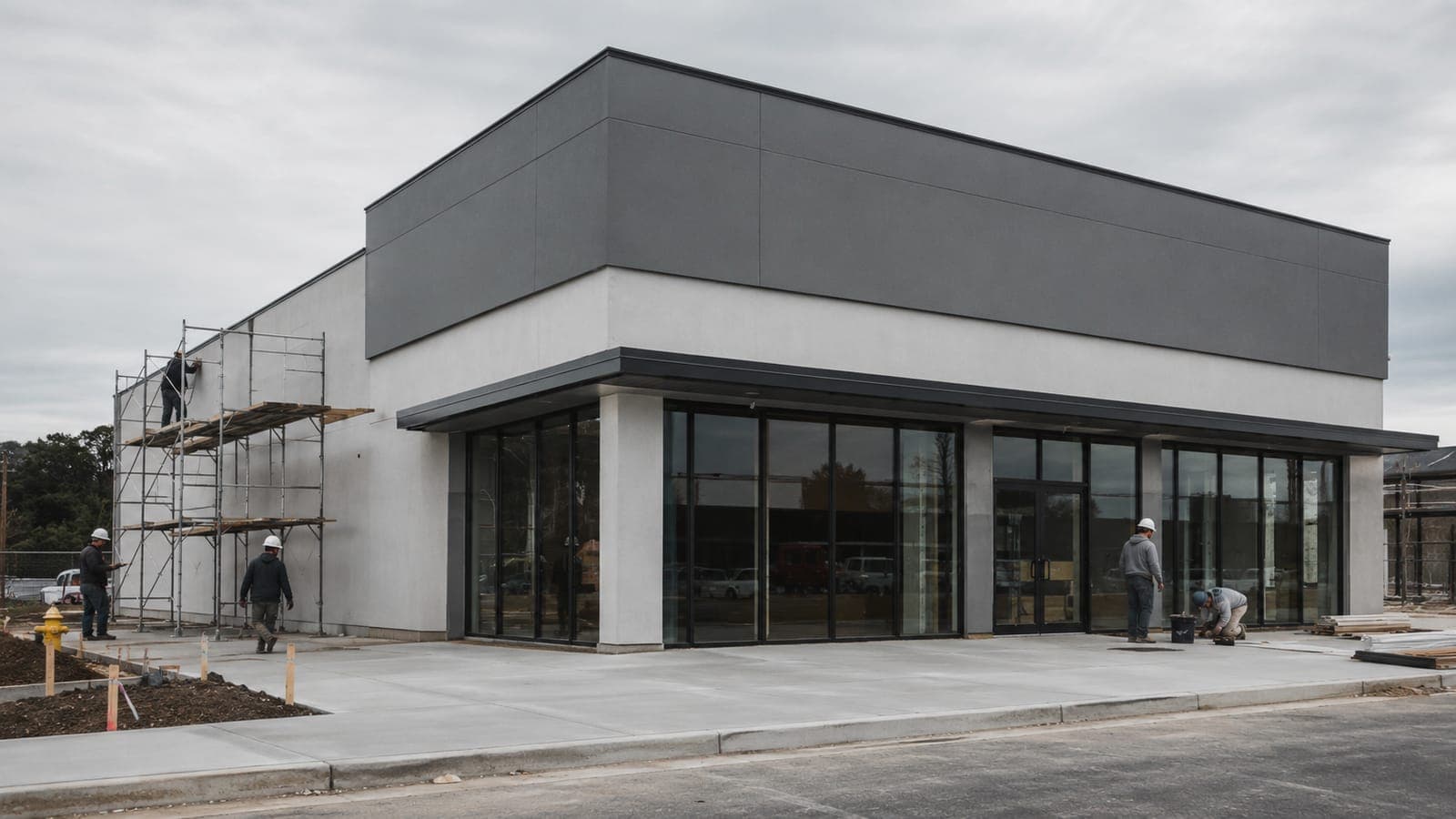
The way it works today
What running new builds looks like today
Deal-to-open can run anywhere from nine months to well over two years, and the killers are the dependencies no one controls: permits, utilities, and the circuit provisioning that quietly runs longest. Each project manager keeps the plan in a custom spreadsheet that becomes unreadable the day they leave.
A long, dependency-heavy lifecycle
Deal, design, permit, bid, build, and open all have to line up, and any one of them can move the date.
The immovable opening
The grand opening is often tied to a marketing campaign, so the date is fixed and the plan has to absorb every slip.
Knowledge trapped in spreadsheets
The plan lives in a per-PM Excel that no one else can read, so a departure takes the program's memory with it.
15 to 22 months
one QSR's deal-to-open cycle stretched to, from 15 to 16 months, on permit and utility delays
RolloutIQ store-development research
How RolloutIQ runs it
How RolloutIQ runs new builds
One project per store on the new-build playbook
A schedule template encodes the deal-to-open sequence with role-based owners, and the critical path shows what slips when a permit or a utility date moves.
See how it works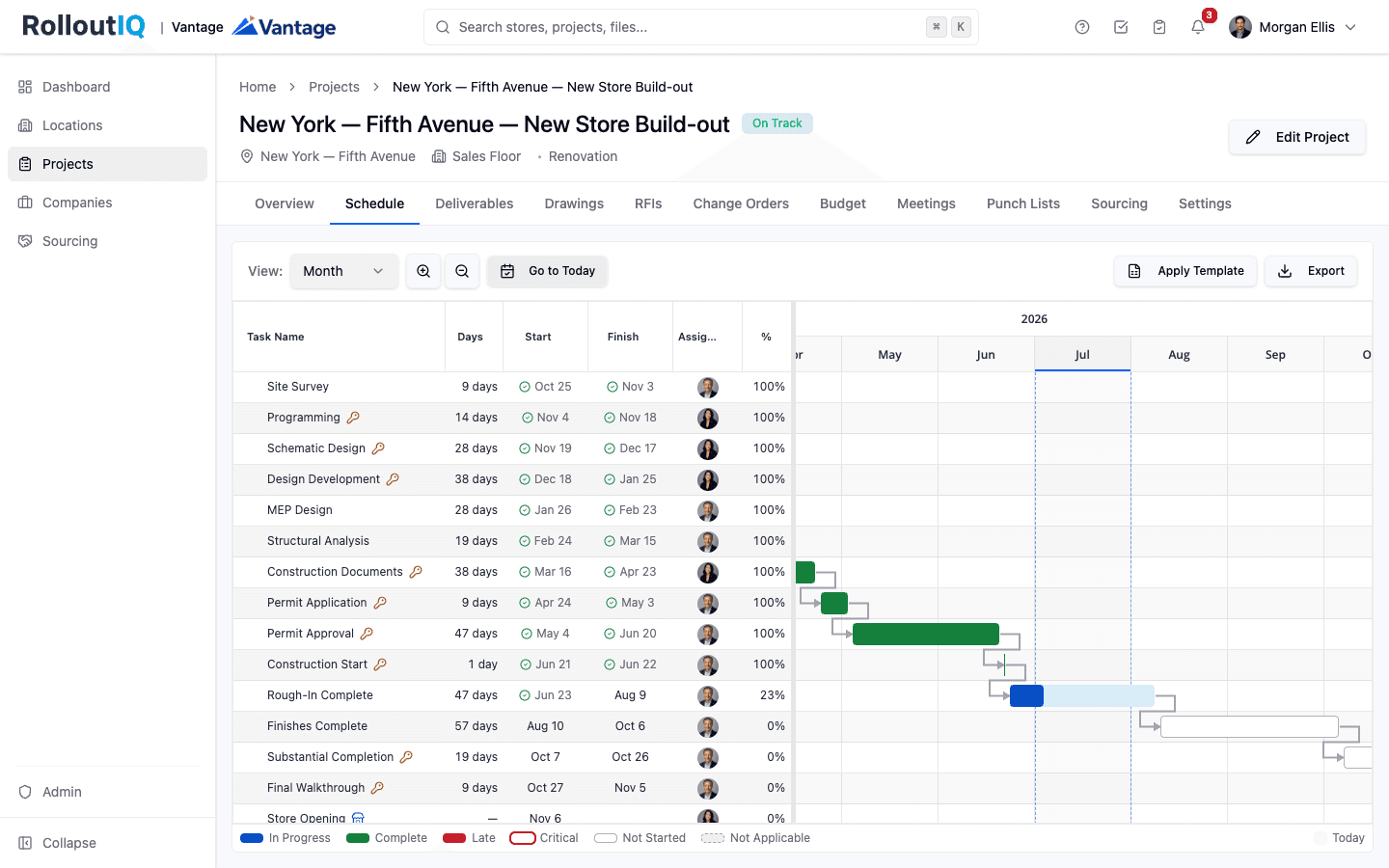
The new-build playbook is a template, and the critical path shows what slips.
Bid the GC and vendors
Run sealed bidding with a leveling matrix and an approval-chain award through Sourcing, feeding the awarded number into the budget.
See how it works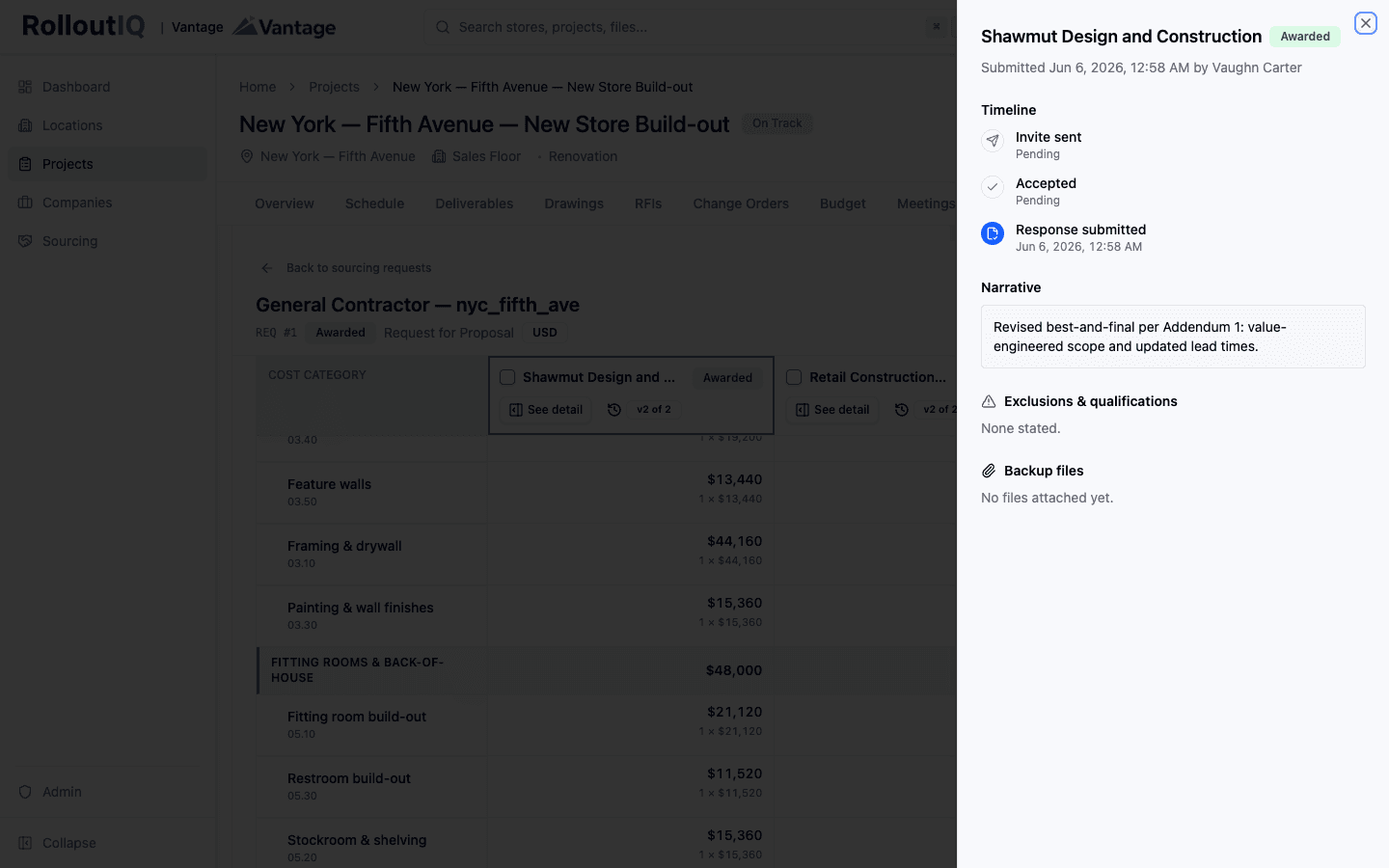
Sealed bidding and a leveling matrix award the work into the budget.
Run construction on the record
RFIs, drawings with version history, and meeting minutes keep the build documented so a question or a revision never gets lost.
See how it works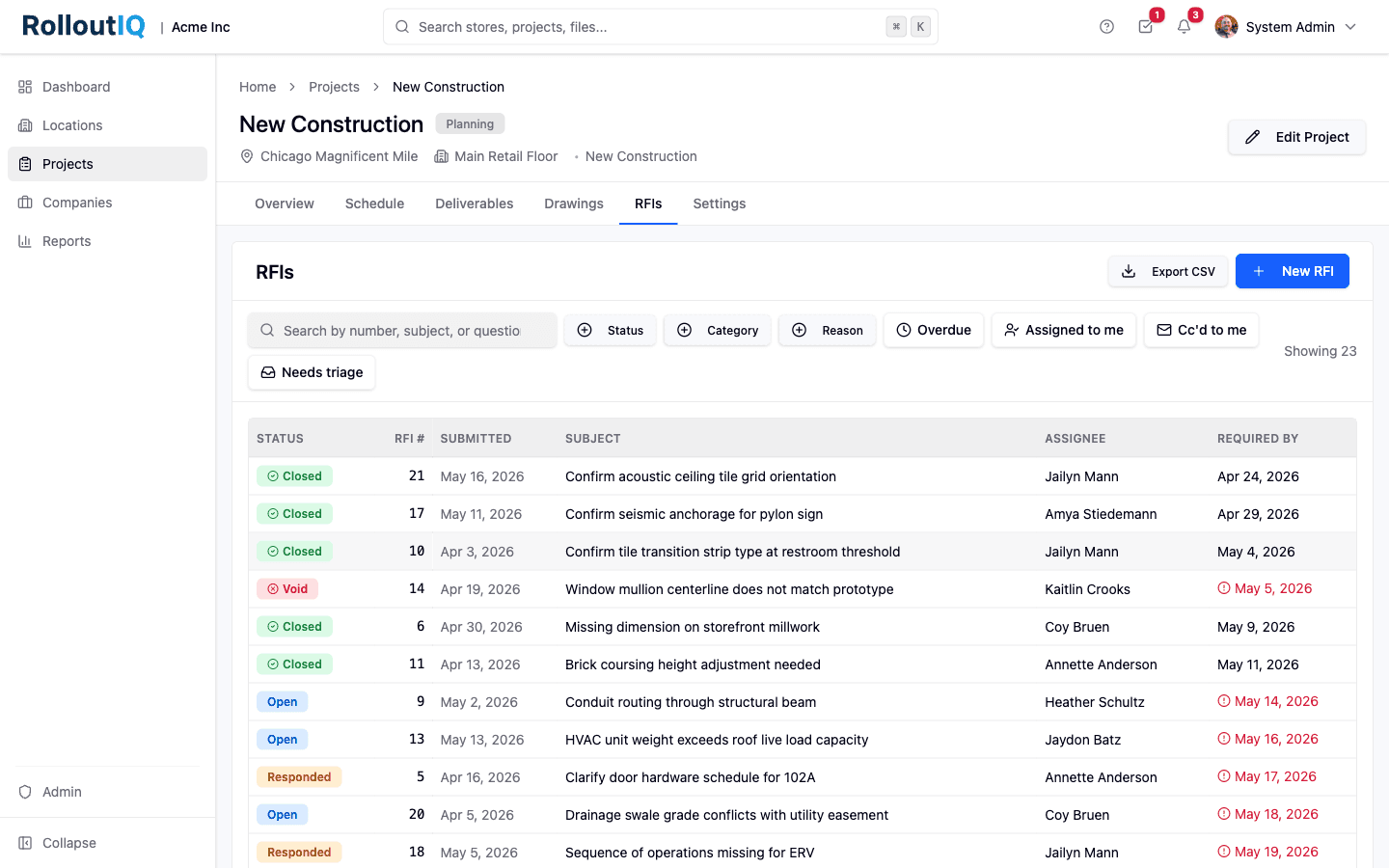
RFIs and versioned drawings keep the build documented.
Pass the pre-opening inspection
A punch list with a verification gate confirms the store is genuinely open-ready before the date, not optimistically marked complete.
See how it works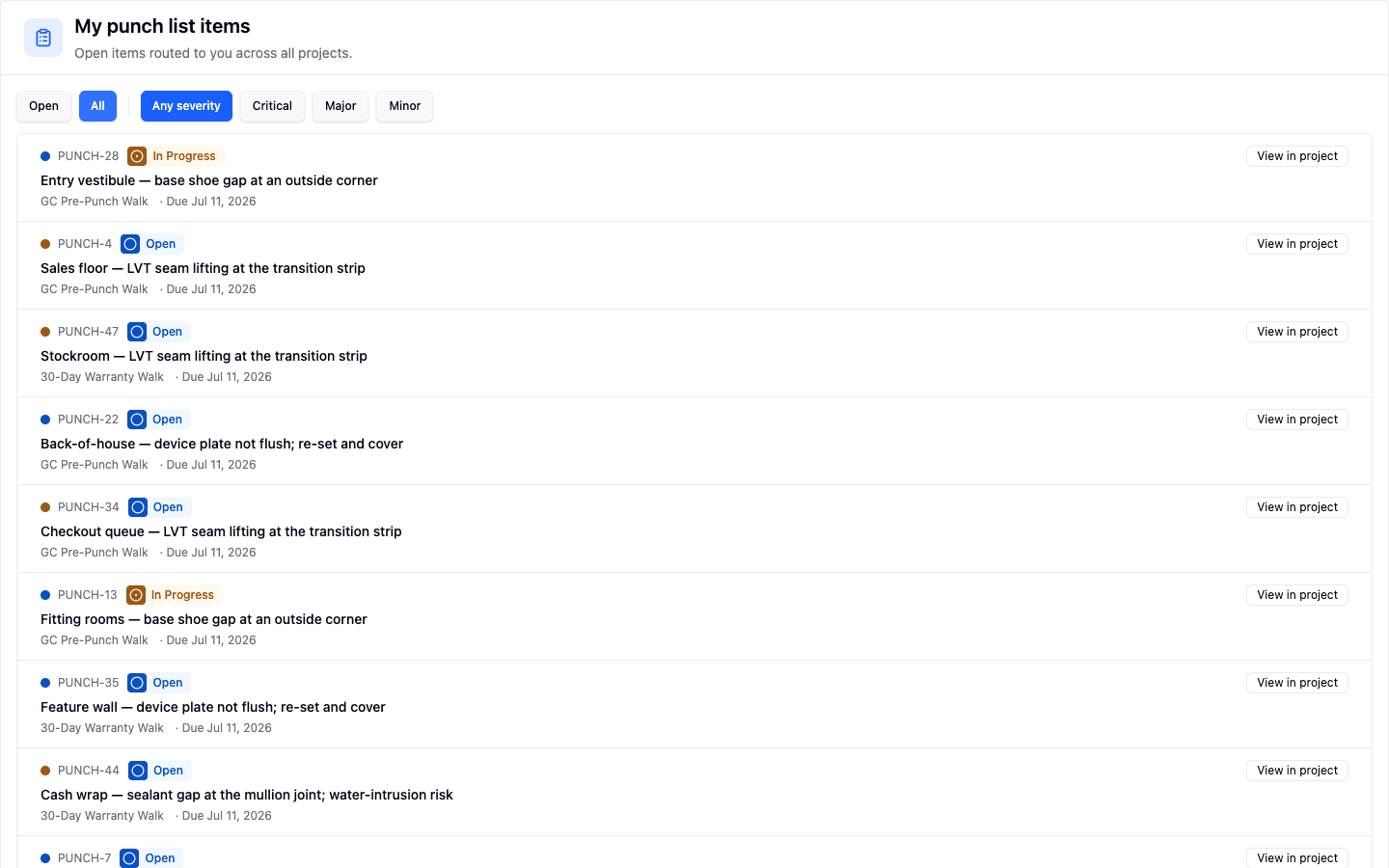
A verification gate confirms the store is actually open-ready.
See the growth plan on one screen
Reports show an opening tracker and a pipeline funnel with median cycle times, so a growth plan of twenty parallel builds is one portfolio view.
See how it works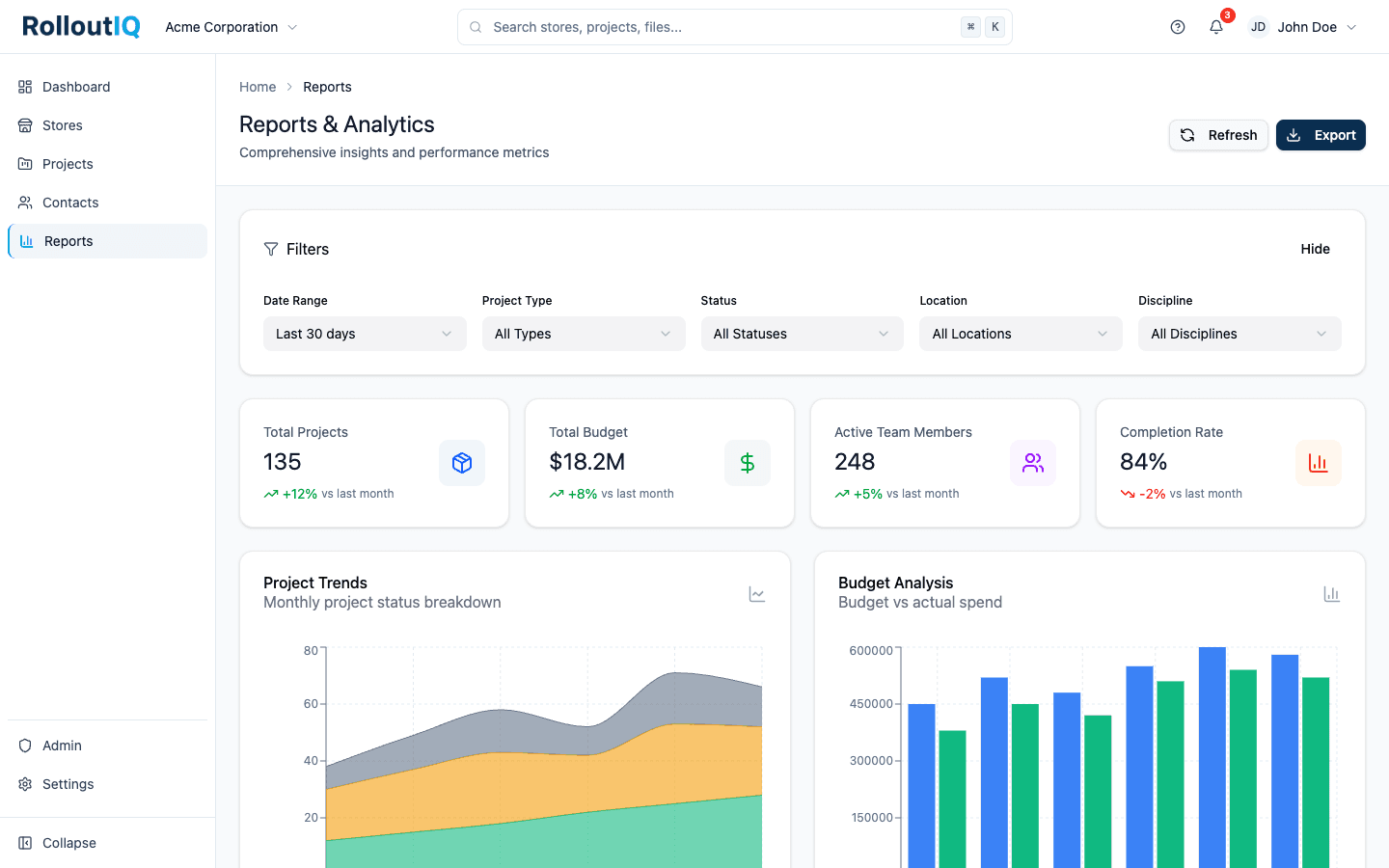
The growth plan is one portfolio view, not a folder of spreadsheets.
In practice
A growth plan of parallel builds
A growing operator runs twenty or more ground-up builds in parallel, each with a grand-opening date tied to a campaign that will not move. Run every store on the same playbook, and the program lead sees which openings are at risk and why, early enough to do something about it.

FAQ
Common questions
RolloutIQ models permitting as scheduled deliverables on each site's critical path, so you see when a permit is due and whether it is at risk. It is not a permitting, e-filing, or site-selection system; it manages the construction program, and it keeps the permit from being the dependency nobody was watching.
Open on the date, every time
Book a walkthrough and we will show you how a growth plan of parallel builds runs on one playbook and one portfolio view.