

Operations
Reducing Delays in New Store Openings
Practical strategies for multisite operators to identify bottlenecks, fix process gaps, and consistently hit store opening dates.
The Real Cost of a Delayed Opening
A delayed store opening is not just a scheduling inconvenience. It is a direct hit to revenue, a strain on team resources, and often a breach of lease obligations. For many retail operators, each week of delay represents tens of thousands of dollars in lost sales, pre-hired staff sitting idle, and marketing campaigns that need to be rescheduled.
When delays become systemic, they erode confidence across the organization. Real estate teams hesitate to sign new leases, executives question pipeline commitments, and field teams lose trust in the process. Breaking this cycle requires a deliberate focus on the root causes of delays, not just the symptoms.
The Top Five Causes of Store Opening Delays
Understanding what actually causes delays is the first step to preventing them. While every project has unique challenges, the same root causes appear across the industry.
- Permitting bottlenecks - Underestimating municipal review timelines or submitting incomplete applications.
- Design changes mid-construction - Scope creep from stakeholders who did not engage during the design phase.
- Vendor and material delays - Long-lead equipment orders placed too late or vendor capacity issues during peak seasons.
- Inspection failures - Work that does not meet code on first inspection, requiring rework and re-inspection scheduling.
- Incomplete turnover criteria - Unclear definitions of what constitutes a completed project, leading to disputes at closeout.
Building Buffer Into Your Schedule Without Padding
There is a difference between strategic buffer and lazy padding. Padding inflates your timeline without adding value. Strategic buffer places contingency time at the points in your schedule where delays are most likely to occur, based on historical data from your own projects.
Analyze your last 10 to 20 completed projects to identify where delays actually happened. You will likely find that 80 percent of delays concentrate in two or three phases. That is where your buffer belongs. The rest of your schedule can run tight because the data shows those phases are predictable.
Pre-Construction as Delay Prevention
The pre-construction phase is your best opportunity to prevent delays. Every hour invested in thorough planning during pre-construction saves multiple days during the build. This means completing design reviews with all stakeholders before construction starts, placing long-lead orders as early as possible, and walking the site to identify conditions that could impact the schedule.
Long-lead equipment is where this bites hardest. Electrical gear has become a binding constraint on openings. NERC reported that power transformer lead times averaged roughly 120 weeks in 2024, with the largest units stretching to 210 weeks, against a pre-pandemic norm of six to eight months, and Wood Mackenzie put standard power transformers at 128 weeks and switchgear at 44 weeks in 2025. A store that needs new electrical service cannot open faster than its switchgear arrives, so those orders belong at the very front of the schedule, not the day construction starts.
A structured pre-construction checklist ensures that nothing falls through the cracks. When you start construction with permits in hand, materials on order, and vendors scheduled, you eliminate the most common sources of delays before they have a chance to materialize.
Real-Time Visibility as an Early Warning System
You cannot fix what you cannot see. The operators who consistently hit their opening dates are the ones who have real-time visibility into project status across their entire portfolio. When a project starts trending behind schedule, they know about it within days, not weeks.
Daily progress updates, automated schedule variance alerts, and portfolio-level dashboards give leadership the information they need to intervene early. By the time a delay shows up in a monthly status report, the window for corrective action has usually closed.
Sources
The industry benchmarks cited in this article come from the following research.
- NERC (North American Electric Reliability Corporation), 2025 Summer Reliability Assessment, on 2024 power transformer lead times - https://www.nerc.com/globalassets/programs/rapa/ra/nerc_sra_2025.pdf
- Wood Mackenzie, on transmission and distribution equipment lead times (Q2 2025) - https://www.woodmac.com/news/opinion/mind-the-gap-tackling-supply-chain-challenges-in-the-electric-td-sector/
The Rollout
The Rollout, in your inbox
A founder's read on retail and multi-site store development. What the latest news means for your pipeline, and what we are building, every couple of weeks.

Written by
Nariman Shariat
Founder, RolloutIQ
Nariman has spent about 20 years opening stores, in the seat between the landlord, the architect, and the general contractor, across some of the largest retail and workplace fleets in the country. Along the way he built the internal platform that ran store development across a fleet, then rebuilt the same idea company after company. He founded RolloutIQ to give multi-site development teams the single source of truth he kept having to build by hand, and writes here about the work of opening and remodeling stores at scale.
More about NarimanKeep Reading
Related Articles
Continue exploring best practices for store development and construction management.
What the Fastest Retail Operators Do Differently
The fastest US developers open anywhere from about 100 to more than 500 units a year, across businesses that sell nothing alike. What they share is how they build. Three moves separate them from everyone else.
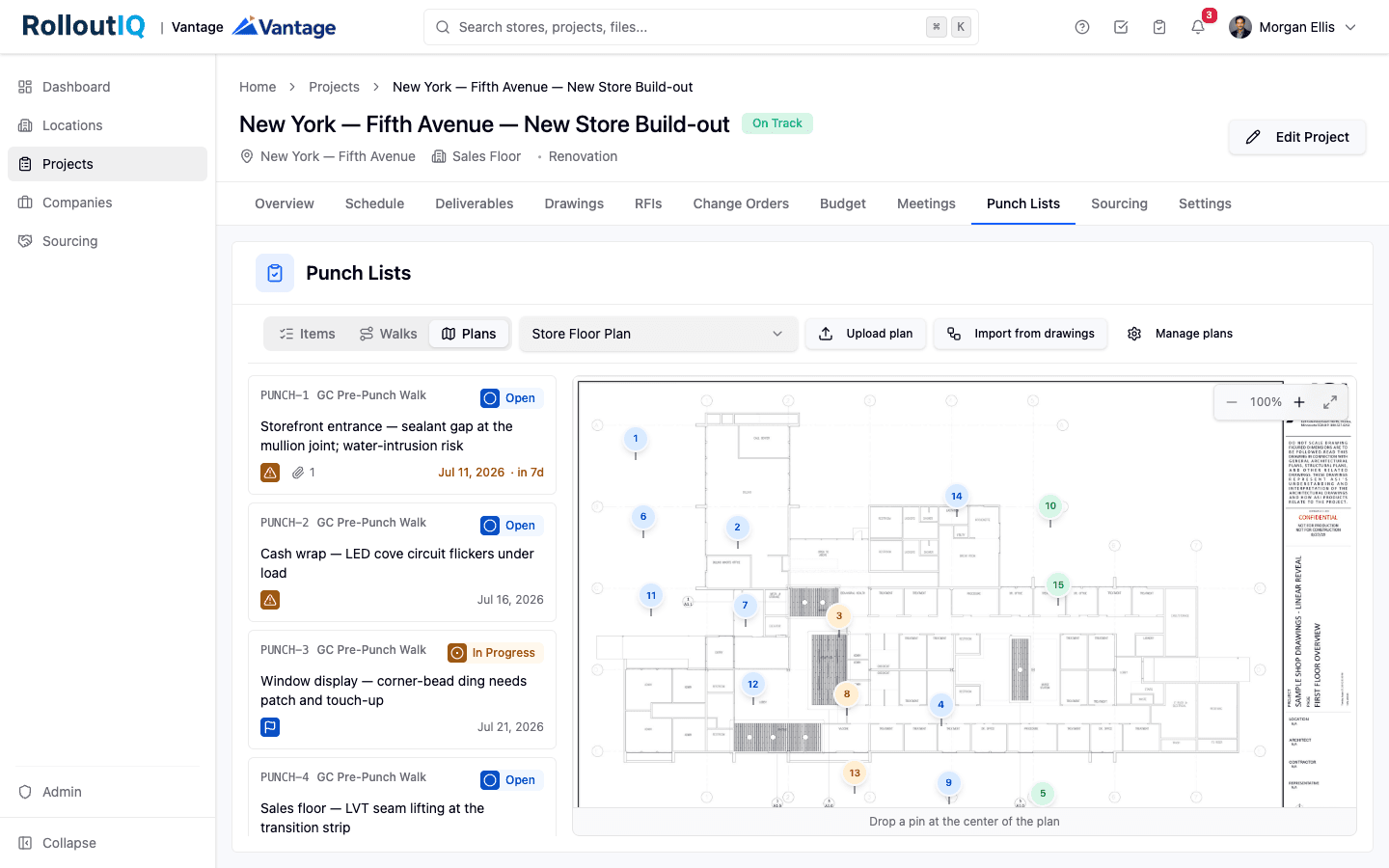
Punch List Management for Retail Rollouts: One Backlog for Every Walk
Retail store openings run a construction punch list and a separate pre-opening checklist in two different tools, reconciled by email. Here is how to put every walk in one backlog and verify each item before it closes.

Optimizing Your Store Development Process from Site Selection to Grand Opening
Store development is one of the most complex workflows in retail operations. Learn how leading operators streamline every phase from site selection through grand opening.

A Retail Permitting Playbook, Built Jurisdiction by Jurisdiction
Permitting sits on the critical path before a single wall goes up, and every jurisdiction runs its own process. Multisite operators who move fastest turn hundreds of local processes into a playbook they reuse.
The 2026 Retail Construction Squeeze: Why Store Openings Are Up but Capacity Is Down
Retail construction activity is contracting in 2026 even as store openings climb. The math is uncomfortable, and operators who plan for it now will outperform those who don't.
Why Store Rollouts Fail, and Why the Failure Is Systemic
A store opens late and the general contractor takes the blame. The same slip shows up at the next store, and the next. The causes of rollout failure are a stable, well-documented handful, which is what keeps them recurring at store 5, 50, and 500.

The Pre-Construction Checklist Every Retail Buildout Needs
Most construction delays trace back to gaps in pre-construction. Here is a checklist that closes those gaps before you mobilize a single trade.
Ready to Build Smarter?
See how RolloutIQ™ can streamline your retail and multi-site rollout program. Book a personalized demo with our team.