
Fixture programs
Run a fixture rollout without the reverse schedule living in one spreadsheet
Fixtures are owner-furnished, long-lead, and choreographed to land exactly when construction is ready. RolloutIQ puts every store's fixture sequence on the critical path so a slipping lead time is a flag, not a delivery that misses the opening.
The way it works today
What running a fixture program looks like today
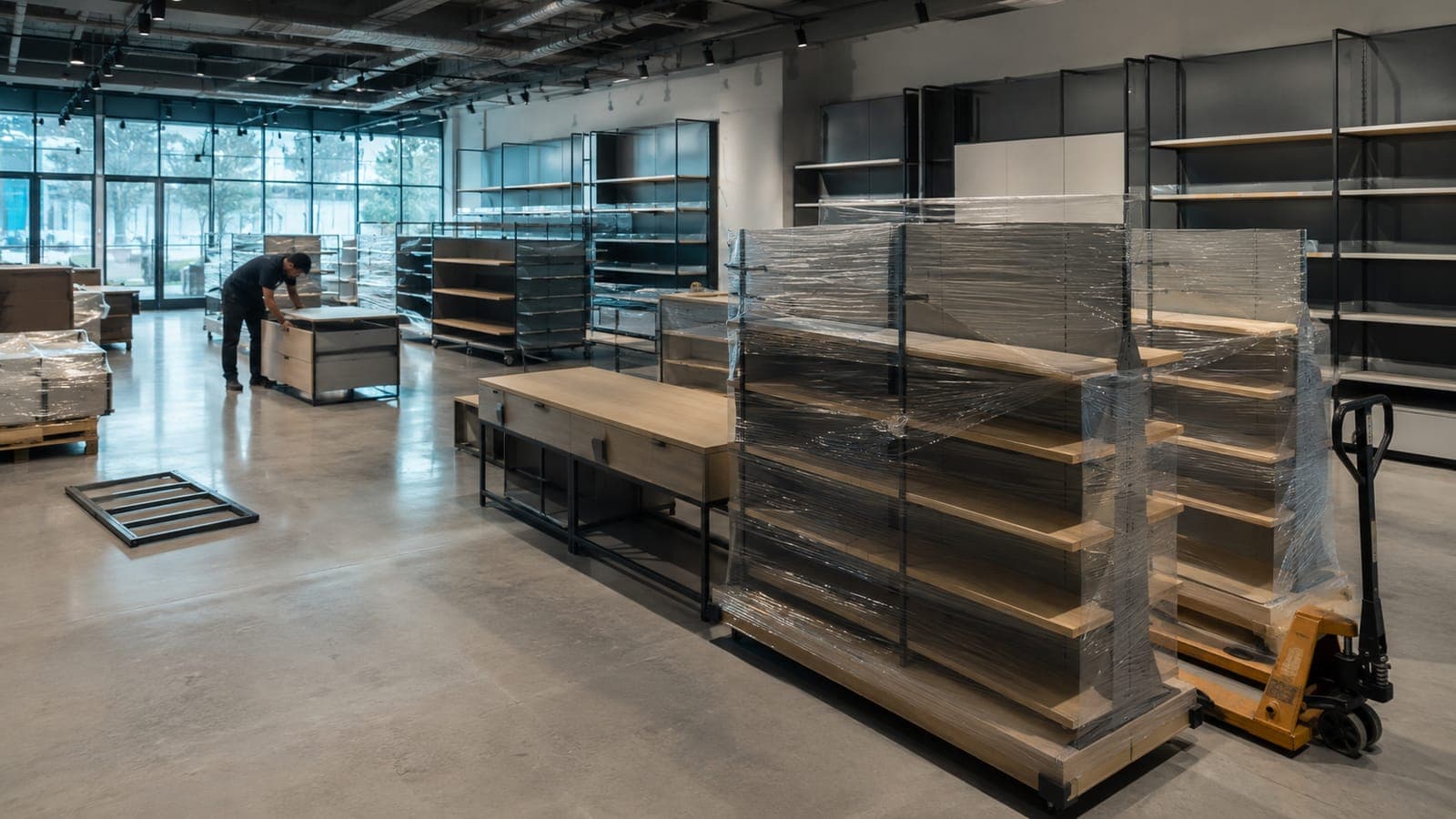
Fixtures are usually routed around the general contractor and managed as a separate, tightly-timed stream in a per-project spreadsheet. Each item is ordered on a reverse schedule to arrive at construction-readiness, and the install crews are often the real constraint.
Long, reverse-scheduled lead times
Custom millwork runs 8 to 16 weeks and custom fixtures 10 to 20, all ordered backward from a construction date that itself can move.
An owner-furnished stream off to the side
Because fixtures sit outside the GC contract, they live in their own tracker, disconnected from the schedule they have to land inside of.
Install capacity is the bottleneck
Fixture-installer capacity tightens in the Q3 and Q4 rush, and a fleet program competes with everyone else for the same crews.
30 to 50%
of a specialty apparel store's project cost is fixtures and millwork
RolloutIQ store-development research
How RolloutIQ runs it
How RolloutIQ runs a fixture program
Model each store as a project
Every location becomes a fixture project on the same structure, so the program is one system instead of one spreadsheet per store.
See how it worksPut the lead times on the critical path
The fixture order, fabrication, and install deliverables sit on each site's schedule, and ripple recalculation surfaces the reverse-schedule slip the moment a date moves.
See how it works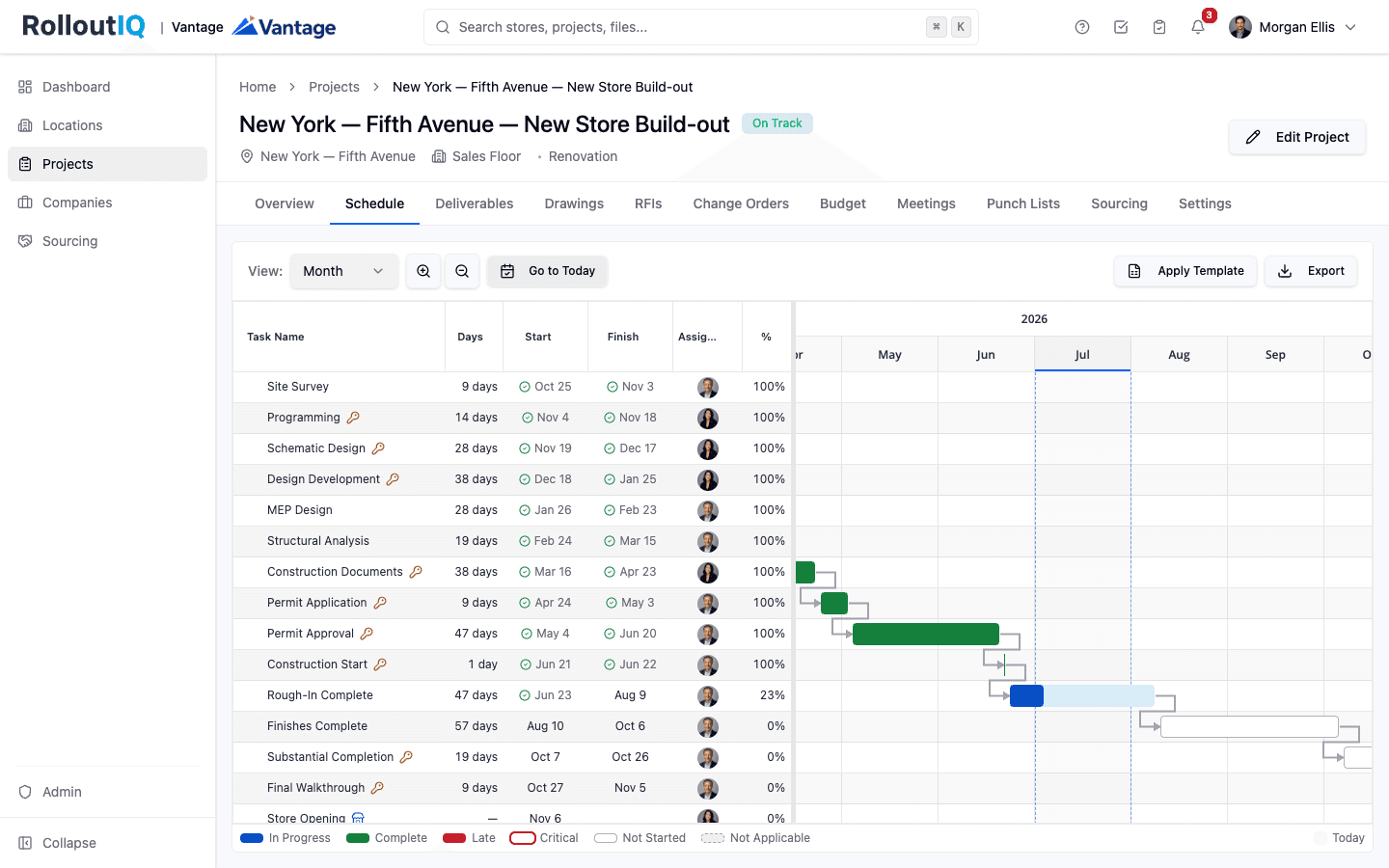
Lead times sit on the critical path, so a reverse-schedule slip surfaces early.
Award the fixture vendor
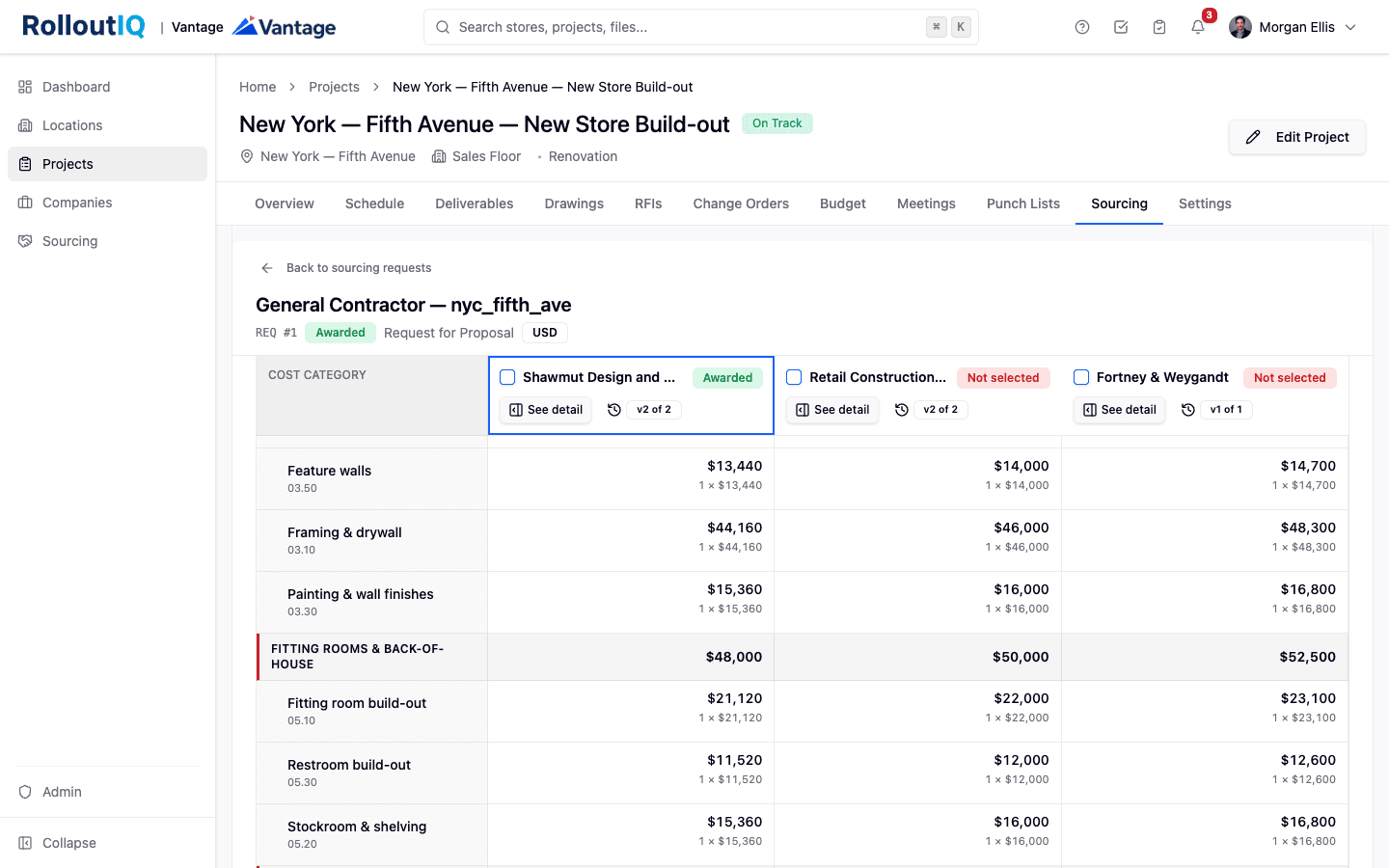
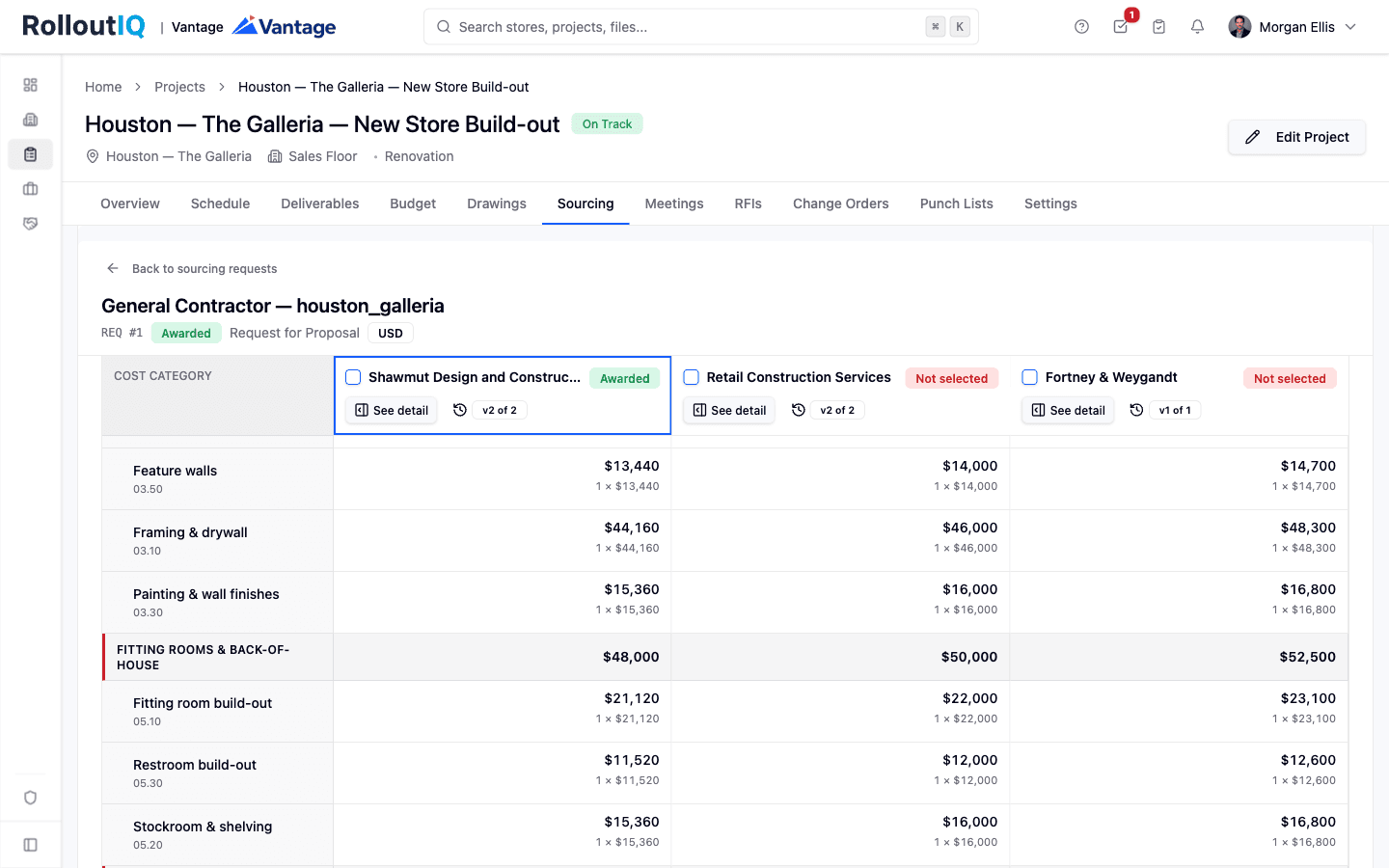
Run the vendor bid and leveling through Sourcing, and the awarded number flows straight into the program budget.
See how it works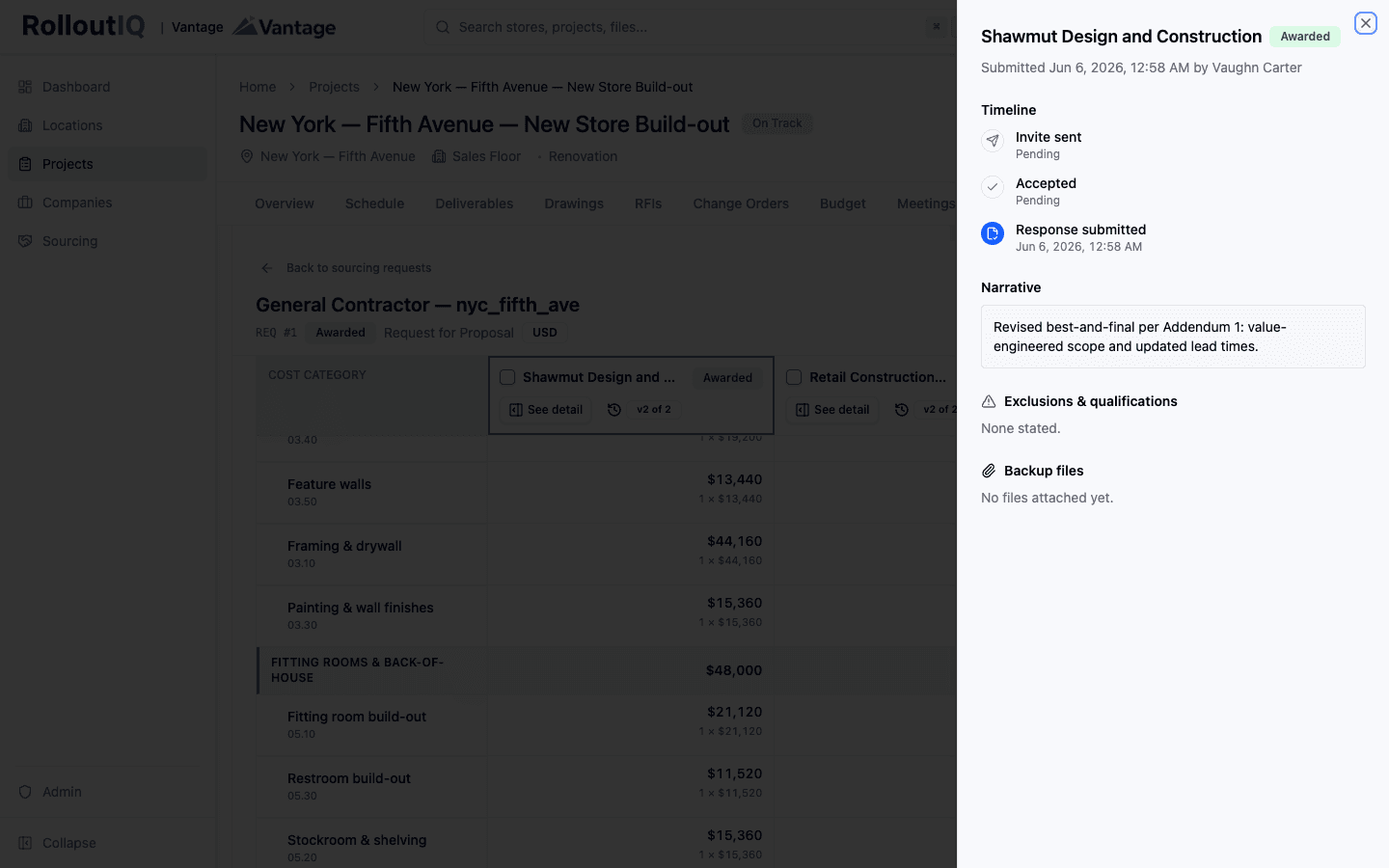
Award the vendor from a leveled bid that feeds the budget.
Hold the number against a fixtures cost code
The awarded cost lands in the governed budget under a fixtures category, with version history, so exposure is legible across the fleet.
See how it works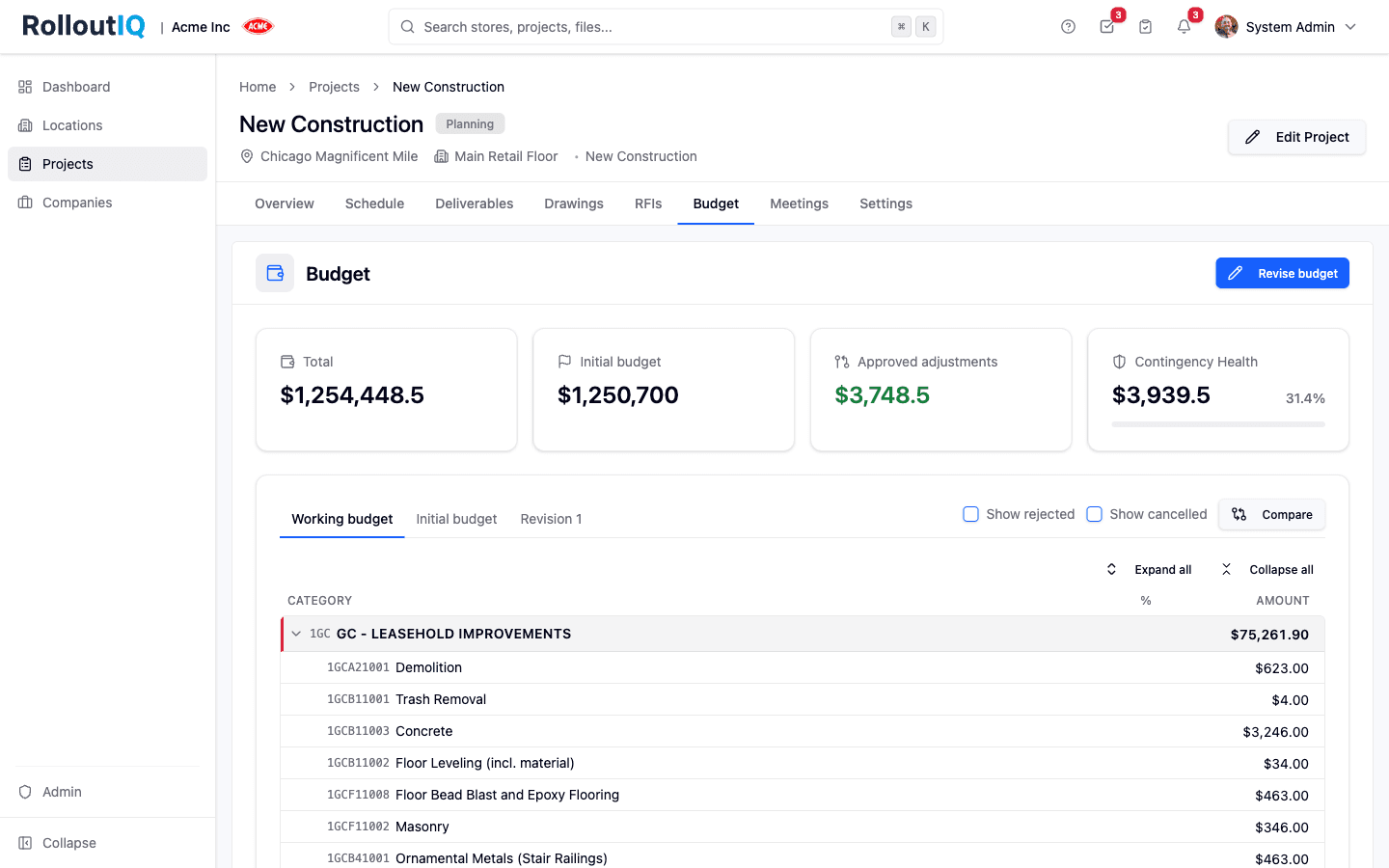
The fixture number lives in the governed budget, not a side spreadsheet.
Validate the install in the field
A punch walk with a verification gate confirms the fixtures were installed correctly, with photos pinned to the location, before the site is called done.
See how it works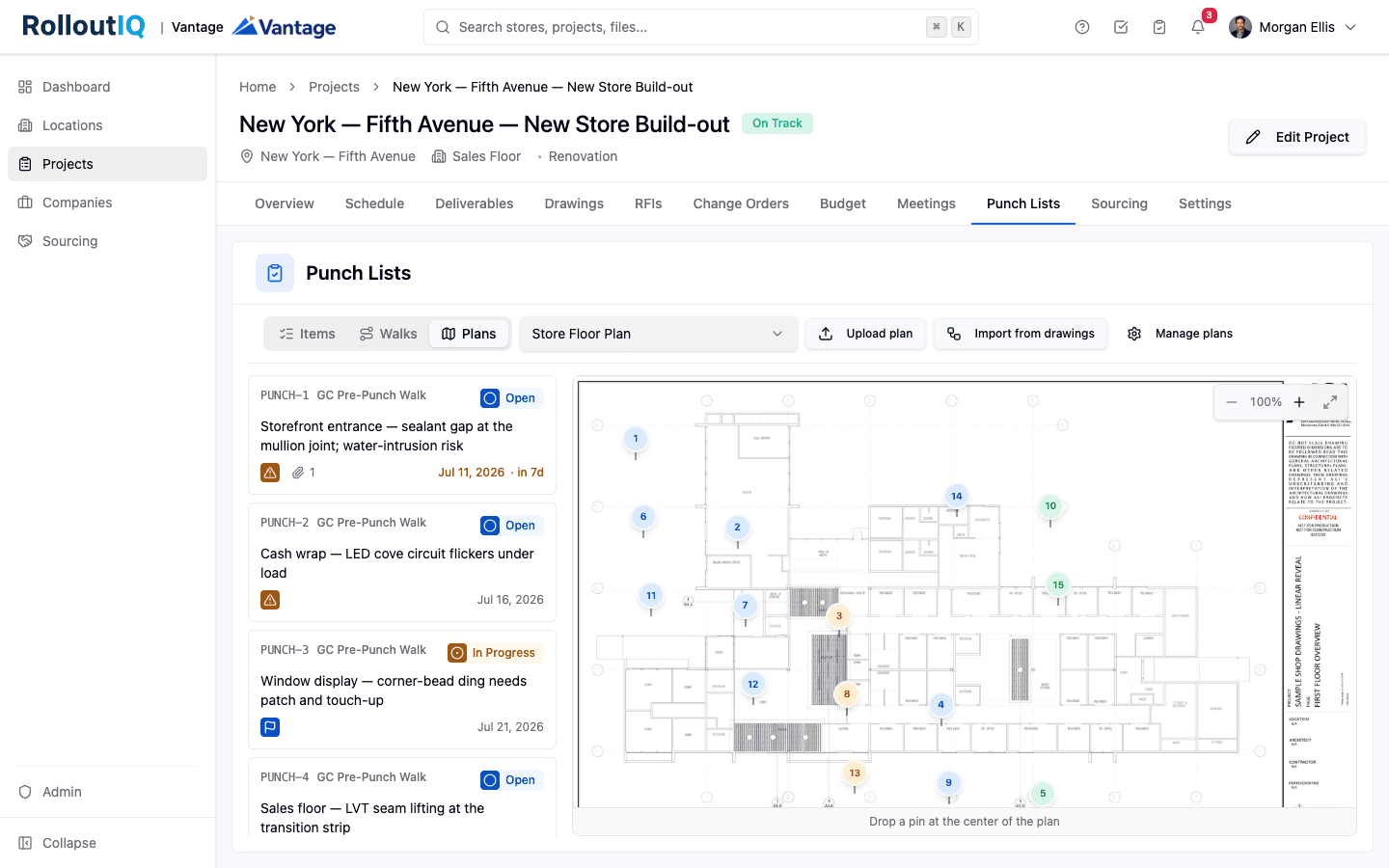
A verification gate confirms the fixture install before closeout.
See exposure and slips across the fleet
Reports show cost exposure by category and a schedule-risk hotlist that names the stores where a fixture lead time is putting the opening at risk.
See how it works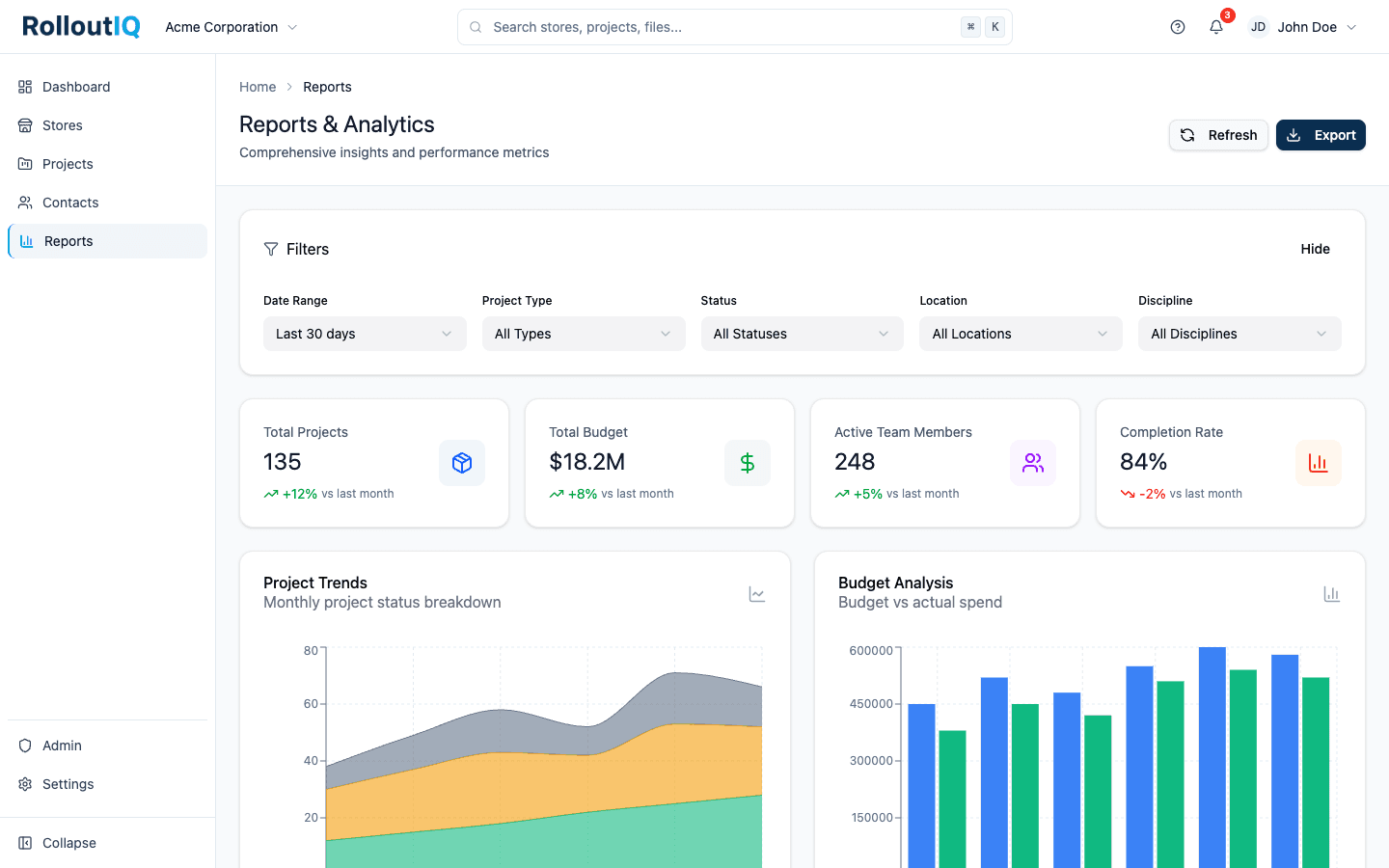
The portfolio view names the stores where a lead time is at risk.
In practice
A fixture retrofit against the holiday crunch
A retailer swaps a new display and cash-wrap system across its fleet, and installer capacity in the fourth-quarter rush is the binding constraint. Run each store as a project with the fixture lead times on the critical path, and the program shows exactly which locations will and will not have their fixtures set in time.
FAQ
Common questions
No. Sourcing runs the bid and award and feeds the awarded number into the budget; it is not a procurement, purchase-order, or delivery-logistics system. RolloutIQ manages the fixture program as scheduled work and cost, which is what keeps a lead time from quietly slipping past the construction date.
Yes. Fixtures are usually owner-furnished and bid separately, and that is exactly how RolloutIQ models them: each store is its own project, the fixture vendor is awarded through Sourcing, and the fixture schedule sits alongside the construction schedule it has to land inside of.
Keep every store's fixtures on the critical path
Book a walkthrough and we will show you how a fixture rollout runs when the lead times live on the schedule instead of in a spreadsheet.