
Location closures
Run a closure like the project it is
Decommissioning a store cleanly is real project work with contractual surrender obligations, and closures now outpace openings. RolloutIQ runs each one as a first-class project so nothing about a handback is left to memory.
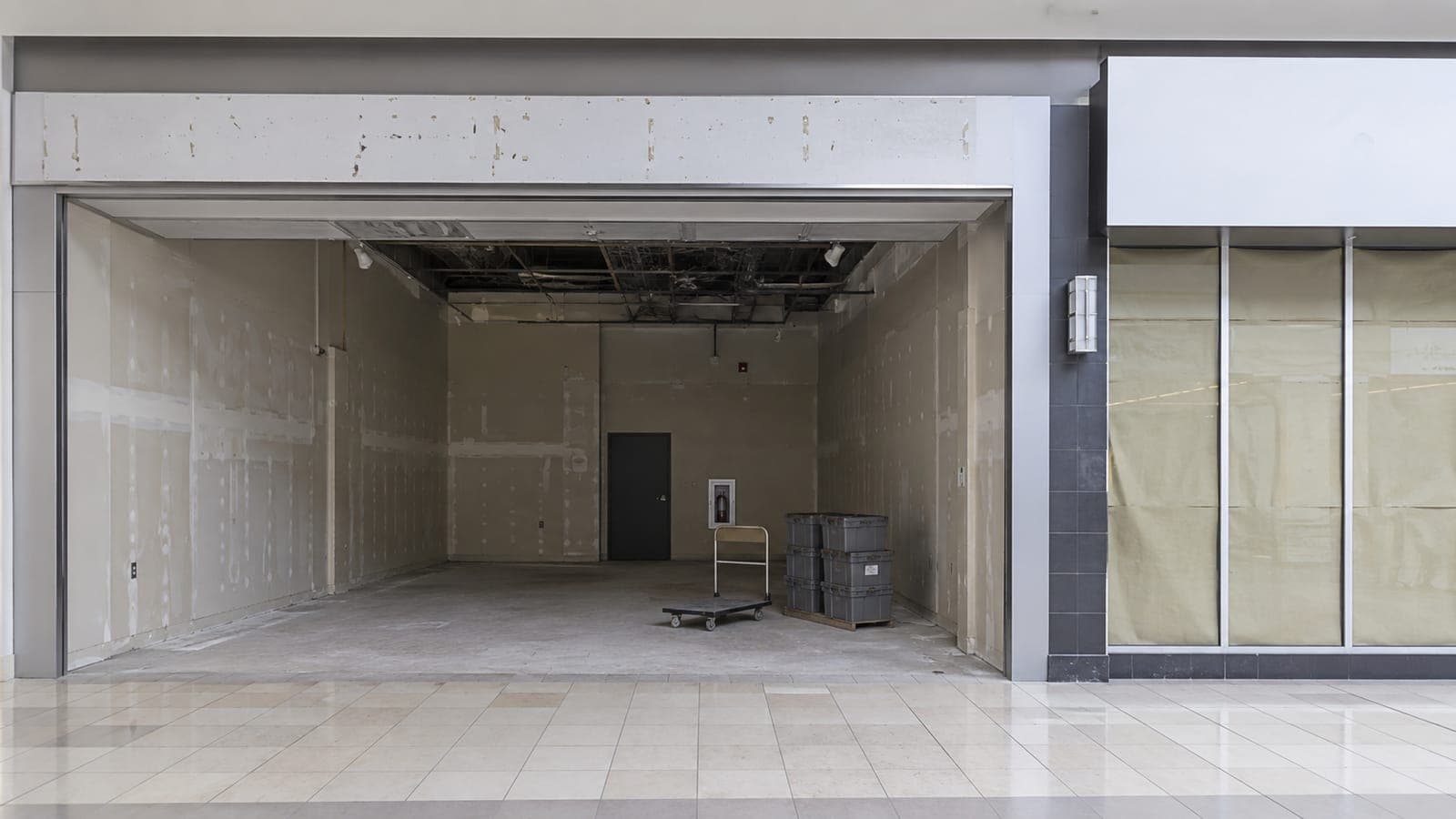
The way it works today
What running closures looks like today
Closures are usually run ad hoc, even though a clean decommission carries lease-surrender and restoration obligations that a landlord will hold a deposit against. A large retailer carries a handful of active closures at any time, each managed off to the side.
Ad hoc by default
A closure is often a spreadsheet and a few phone calls, even when the contractual surrender condition is specific and enforced.
A surrender condition to prove
Restoration and reinstatement requirements decide whether a deposit comes back, and they have to be documented, not assumed.
The store still exists
A closed location is not gone: the space may be backfilled, and the estate has to stay legible through the transition.
~7,900
projected US store closures in 2026, against roughly 5,500 openings
Coresight Research
How RolloutIQ runs it
How RolloutIQ runs a closure program
Run each closure as a first-class project
Closure ships as a project type in the catalog, so a decommission is a real project with a schedule, not a task buried in someone's inbox.
See how it worksTemplate the decommission sequence
A schedule template carries the repeatable steps, asset recovery, utility disconnect, fixture removal, and the restoration walk, with owners and due dates.
See how it works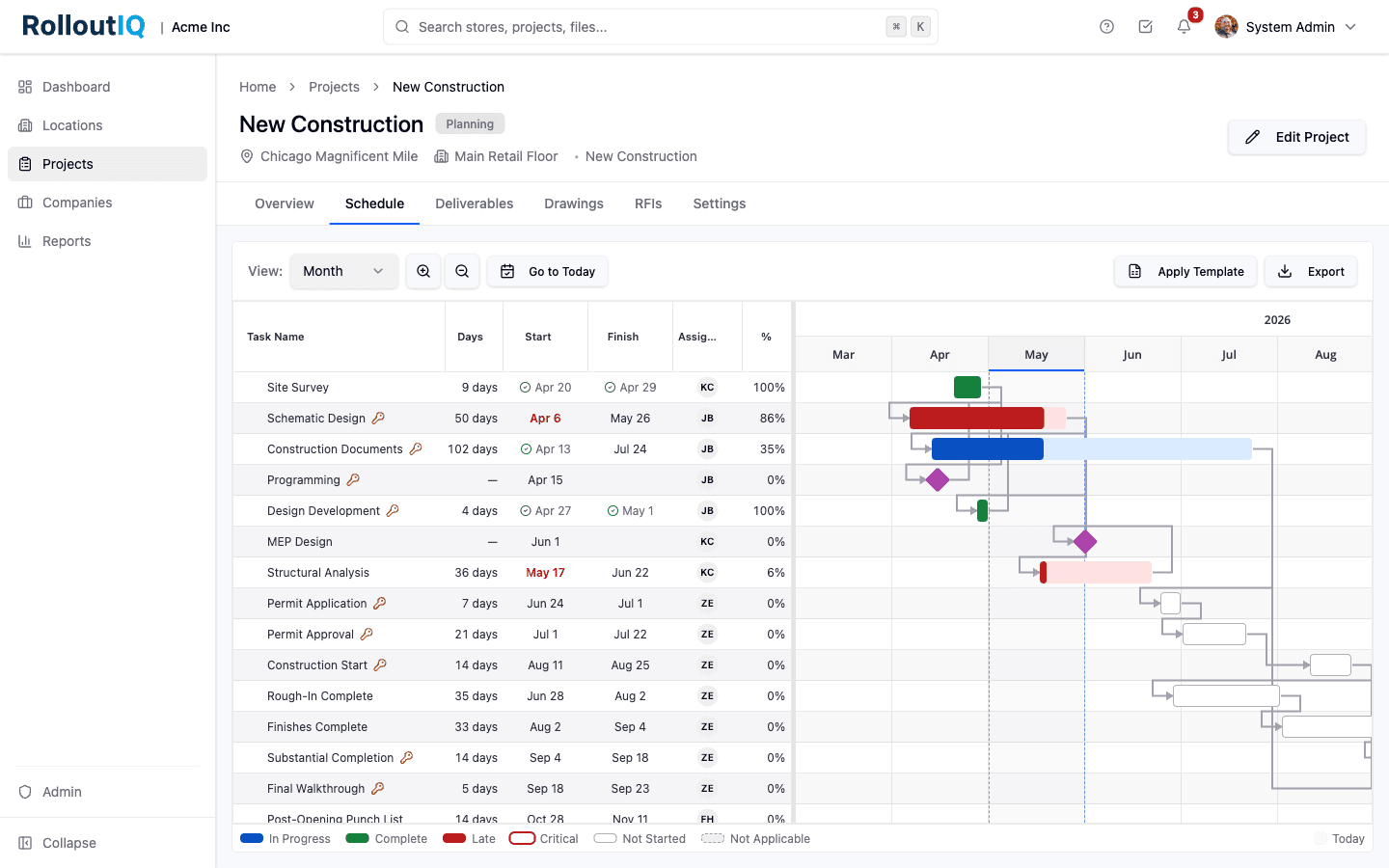
The decommission sequence is a reusable template, not a fresh plan each time.
Verify the surrender condition
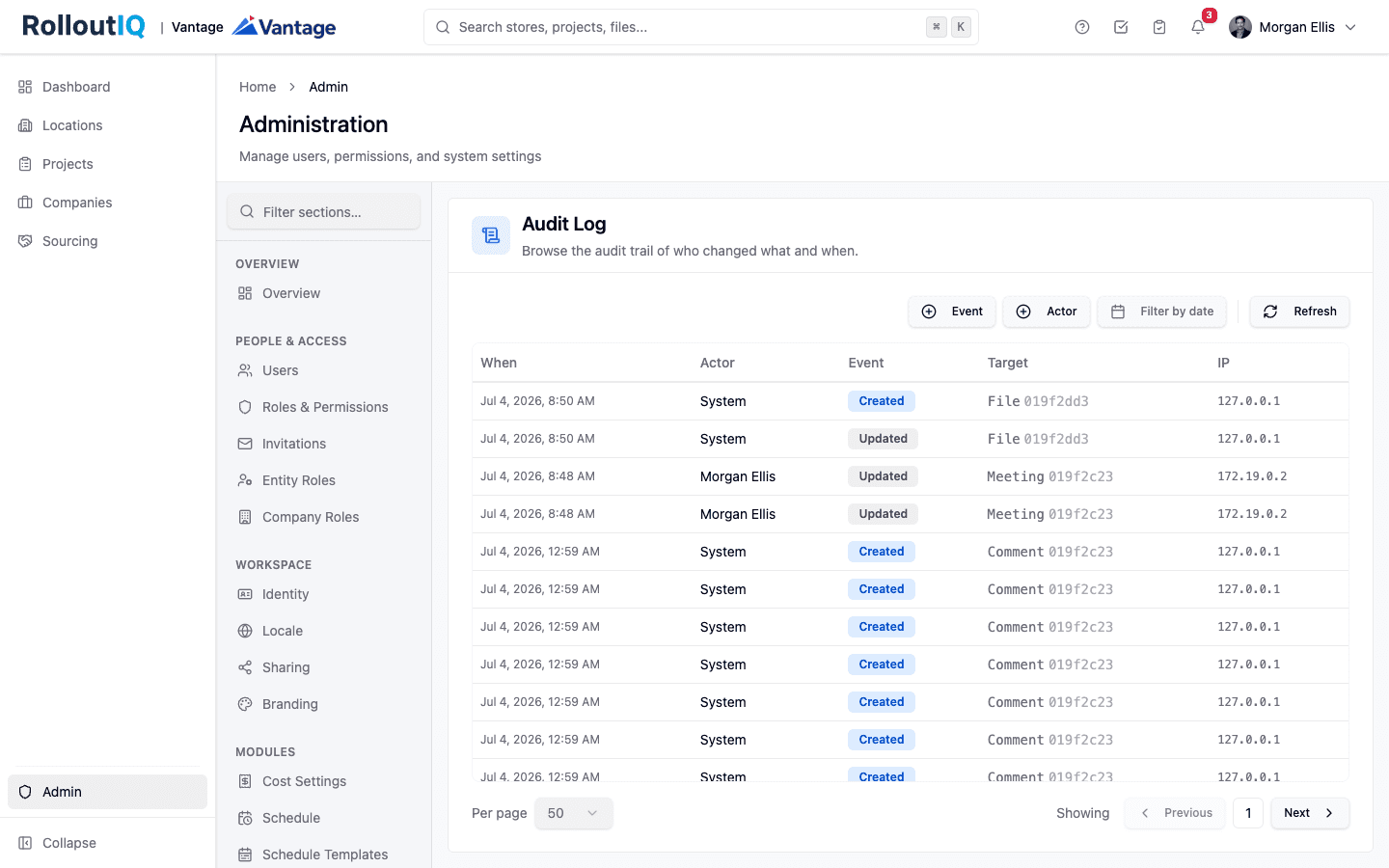
A punch walk with a verification gate documents that the space meets the contractual handback condition, with photographic proof pinned to the location.
See how it works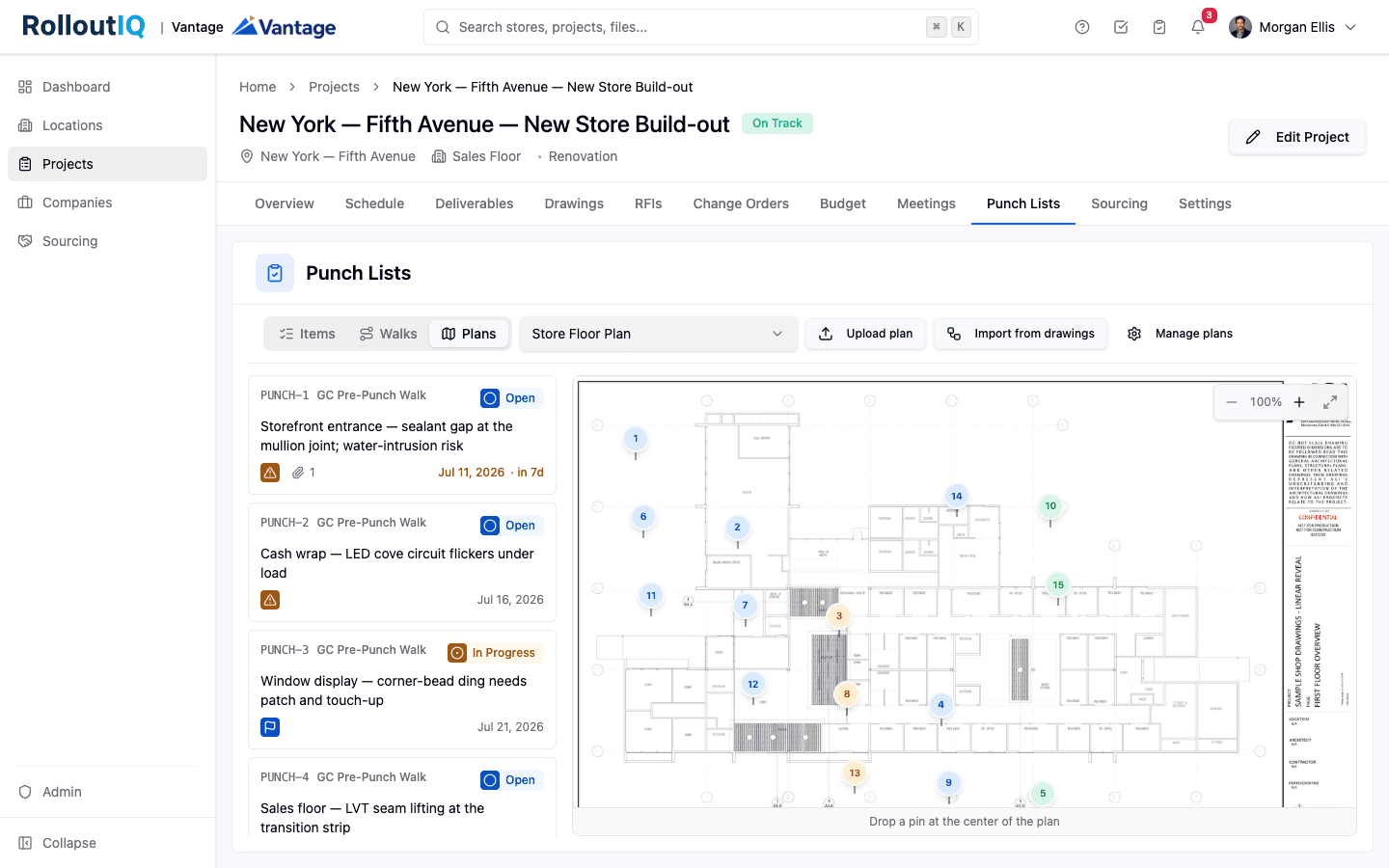
A verification gate proves the handback condition before you surrender the space.
Award decommission vendors
Run the bid for demolition, asset recovery, and restoration vendors through Sourcing, feeding the number into the closure budget.
See how it works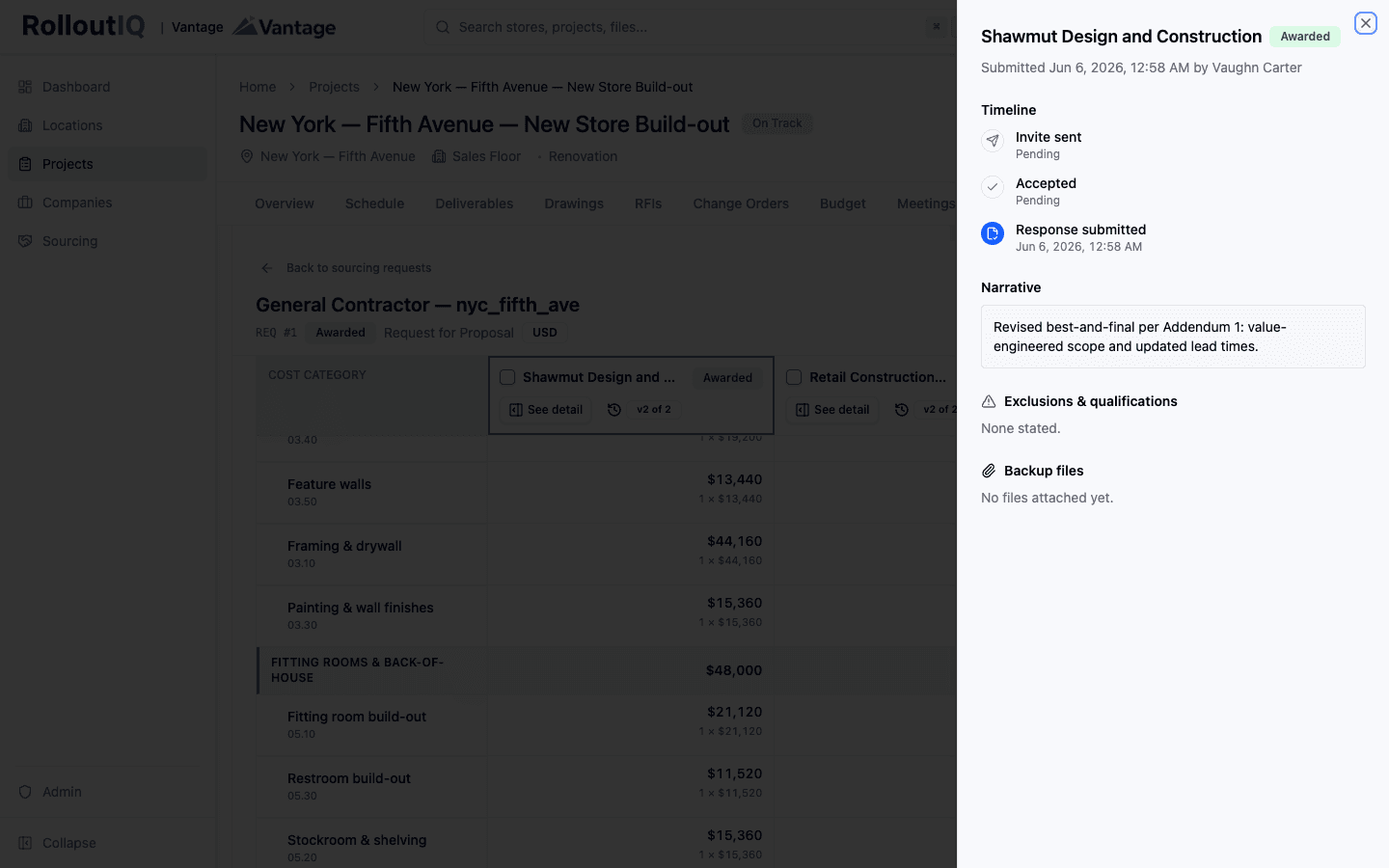
Award decommission vendors from a leveled bid.
See lifecycle state across the estate
Reports show which locations are closing, closed, or backfilled, so the whole estate stays legible through the closure wave.
See how it works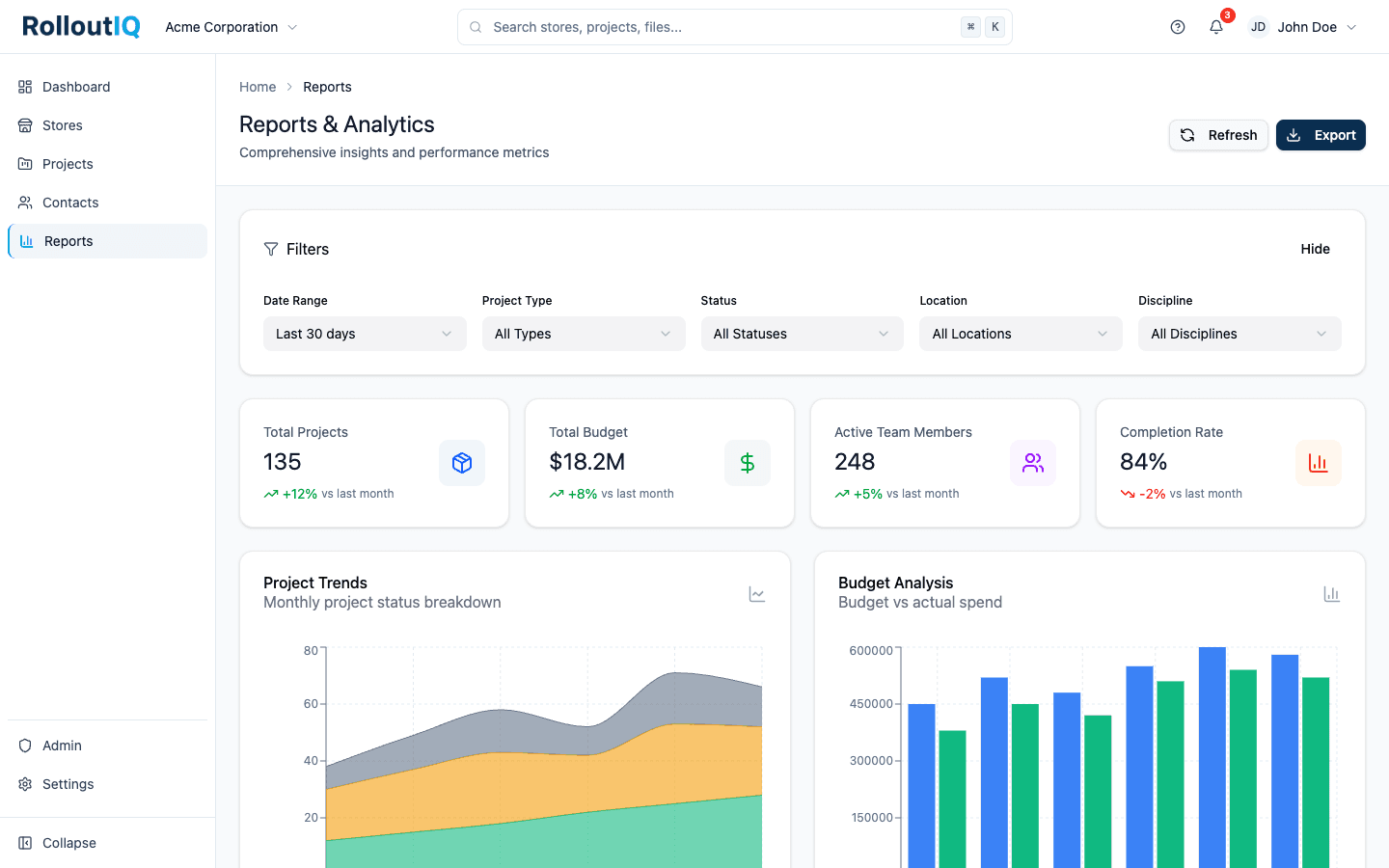
The estate stays legible: which locations are closing, closed, or backfilled.
In practice
A closure wave with a contractual handback
With closures projected to outpace openings, a retailer runs a wave of decommissions, each with a specific restoration condition tied to a deposit. Run every closure as a project on one decommission template, and the surrender walk becomes documented proof instead of a photo buried in someone's phone.
Source: Coresight Research
FAQ
Common questions
RolloutIQ is not a lease-administration system. It manages the closure as a project: the decommission schedule, the vendor awards, and the verified surrender walk that documents the space met its contractual handback condition. The lease terms live in your lease system; the work of satisfying them lives here.
Run your closures like projects
Book a walkthrough and we will show you how a closure wave stays documented and on schedule when every decommission is a real project.