
Industry Trends
The Closure Side of the Ledger Deserves the Same Rigor as the Opening
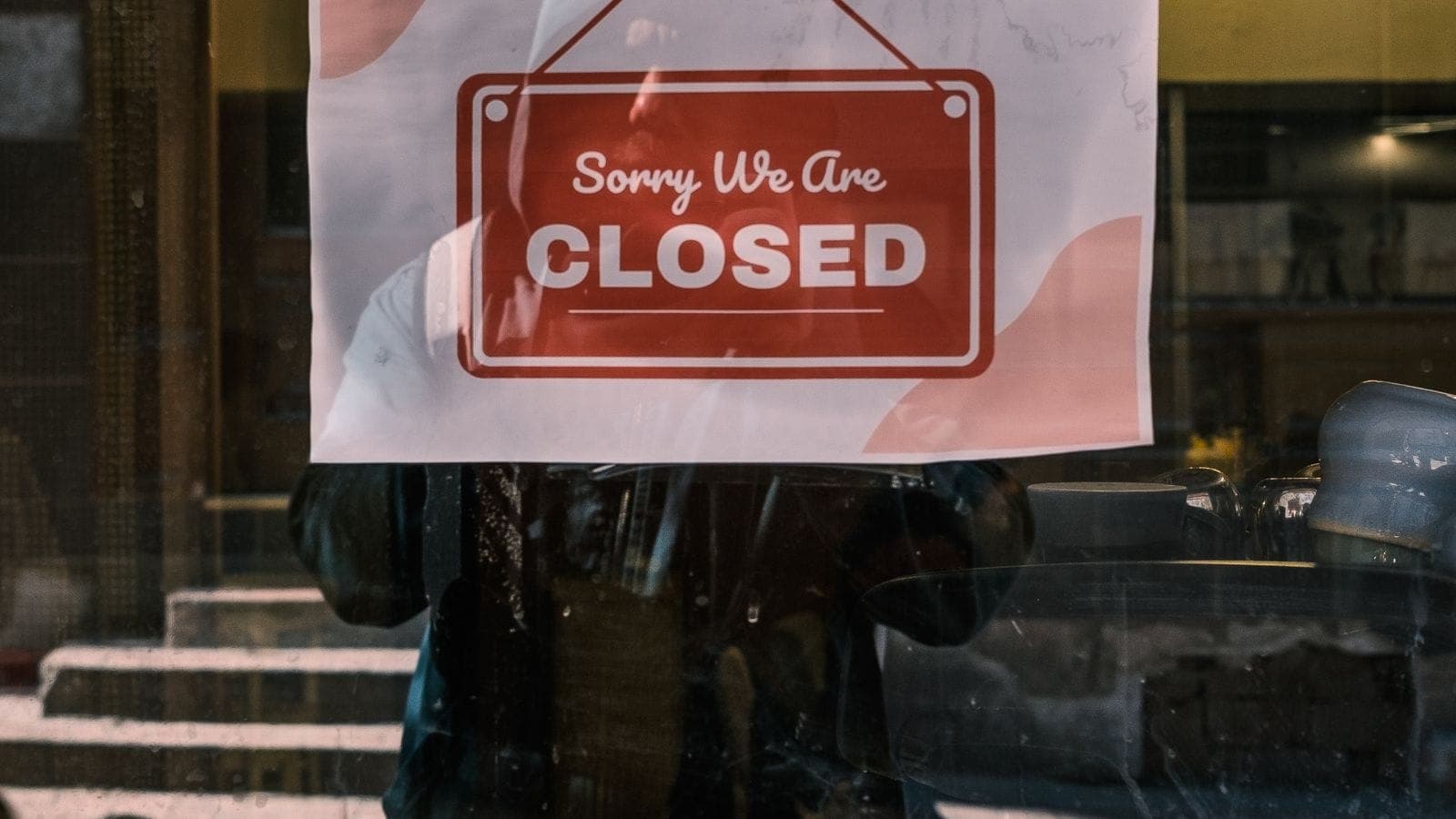
Closures still outpace openings in 2026. Decommissioning a store cleanly is real project work, and most retailers run it off a spreadsheet and a few phone calls.
The News
Coresight Research, the retail advisory firm whose weekly store tracker most of the trade press leans on, now projects roughly 7,900 US store closures in calendar 2026 against roughly 5,500 openings. As reported by eMarketer and CRE Daily, the closure figure is down about 4.5% year over year and the openings figure is up about 4.4%, which makes 2026 the lowest closure total in three years.
Even so, the ledger runs heavily negative. Coresight's year-end tally put 2025 closures above 8,000, and the projected 2026 net loss of about 2,400 stores is still larger than 2024's net loss of 1,355. Drugstores, home goods, office supply and apparel are driving the shutdowns, with GameStop, Francesca's and Walgreens named among the chains closing the most doors. So the headline is that the pace is easing. The reality underneath it is that a lot of stores are still going dark.
Why the Closure Side Is the Under-Managed Ledger
Openings get all the attention. There is a grand opening date, a proforma, a readiness checklist, a cross-functional cadence, and a director whose bonus rides on hitting the schedule. Every mature retailer has a system for turning a lease into an open store.
Almost none of them have the equivalent for turning an open store back into an empty box. The closure is treated as an errand handed to whoever has capacity. A real estate manager negotiates the exit, a facilities lead arranges to pull the equipment, someone in accounting chases the final utility bills, and the pieces are coordinated over email. That works when you close one store a year. It stops working when the closure calendar is a steady drip across the portfolio, because the same mistakes repeat store after store with no template and no system of record.
That gap is expensive precisely because a closure carries obligations that a build does not. You are handing an asset back to a landlord who has a signed opinion about what condition it should be in, and you are trying to walk away without leaving money or liability behind you.
What Closing a Store Cleanly Actually Takes
Decommissioning a store is a multi-workstream project with dependencies, a critical path, and a hard end date, which is the surrender date in the lease. It is closeout in reverse, and it is at least as document-heavy as the build was.
The lease itself usually dictates a surrender or make-good condition. Some leases require you to remove your trade fixtures and reinstate the premises to a defined base condition. Others require you to leave improvements in place. Getting this wrong in either direction costs you, and the notice windows that govern it are buried in the lease language rather than sitting in front of the person running the exit.
Then there is the physical decommission. Fixtures, refrigeration, kitchen equipment and signage have to be recovered and given a destination, whether that is redeployment to another store, resale, or scrap. IT, point of sale, low voltage and network gear have to be wiped and pulled in the right order so you are not terminating a circuit before the data comes off it. Utilities have to be finaled rather than left quietly billing for months after the lights go out. Environmental and hazmat obligations, from refrigerant recovery to ballasts and grease, have to be discharged before you hand over the keys. And the whole thing has to close out lien-free, with final vendor payments, waivers and a signed restoration acceptance, so that the security deposit comes back and no claim follows you into next year.
That is a project. A platform built for rollout portfolios, RolloutIQ among them, models the store as an entity with a full lifecycle, which is the same structural reason the exit belongs in the same system as the build rather than in a separate spreadsheet nobody reconciles.
What This Reveals About 2026
The Coresight numbers describe a market that is still churning even as it normalizes. A net loss of roughly 2,400 stores in what forecasters are calling a good year means the average multi-unit operator is not in a pure growth posture. Most portfolios are opening in strong formats and markets while quietly closing in weak ones, and the two pipelines run at the same time.
That has an operational implication that the opening-centric coverage misses. If you are going to close stores every year as a matter of course, then closures are not one-off events to be improvised. They are a recurring project type that deserves the same rigor, the same templates and the same portfolio visibility you already apply to the opening side. The retailers who treat the exit as structured project work recover more of their fixtures, surrender on time, avoid restoration disputes, and get their deposits back. The ones who treat it as an errand leave money on the table at every closed door, and at portfolio scale that adds up faster than anyone tracks, because nobody is tracking it.
What Operators Should Do
If closures are a permanent feature of your calendar, run them like the projects they are. A few concrete moves separate a clean exit from an expensive one.
- Track lease make-good and restoration obligations as structured data rather than as clauses buried in a PDF. Capture the surrender condition, whether removal or reinstatement is required, and the notice windows, so the person running the exit sees the requirement months ahead instead of the week before.
- Run fixture and equipment asset recovery and disposition as a plan tied to the closing store's asset register. Decide per asset whether it gets redeployed to another location, resold, or scrapped, and you convert a demolition cost into partial recovery.
- Sequence the IT, low voltage and utility decommission deliberately. Wipe data before circuits are cut, and final each utility account on a date certain so services do not keep billing after the store goes dark.
- Discharge environmental and hazmat obligations before you surrender. Refrigerant recovery, ballasts, grease and any ADA or life safety conditions are cheaper to handle on your schedule than as a landlord back-charge.
- Assemble a lien-free, documented exit. Collect final vendor payments and waivers, get a signed restoration acceptance, and close the surrender the way you would close out a build, so the deposit returns and no claim follows you.
- Keep portfolio visibility across every concurrent closure on the same dashboard you use for openings. At 2,400 net closures a year across the industry, the retailers who see all their exits at once are the ones who stop repeating the same mistakes store to store.
Sources
This article draws on the following reporting of Coresight Research's 2026 store opening and closure forecast.
- eMarketer - https://www.emarketer.com/content/physical-retail-store-closures-openings-2026-outlook
- CRE Daily - https://www.credaily.com/briefs/retail-openings-surge-as-closures-hit-three-year-low/
The Rollout
The Rollout, in your inbox
A founder's read on retail and multi-site store development. What the latest news means for your pipeline, and what we are building, every couple of weeks.

Written by
Nariman Shariat
Founder, RolloutIQ
Nariman has spent about 20 years opening stores, in the seat between the landlord, the architect, and the general contractor, across some of the largest retail and workplace fleets in the country. Along the way he built the internal platform that ran store development across a fleet, then rebuilt the same idea company after company. He founded RolloutIQ to give multi-site development teams the single source of truth he kept having to build by hand, and writes here about the work of opening and remodeling stores at scale.
More about NarimanKeep Reading
Related Articles
Continue exploring best practices for store development and construction management.

Retail's 2026 Growth Is Conversion, Not Construction
As new retail construction falls in 2026, off-price and discount chains are expanding by taking over bankrupt competitors' leases. That growth looks like a rollout but runs like a portfolio of one-off conversions.

Optimizing Your Store Development Process from Site Selection to Grand Opening
Store development is one of the most complex workflows in retail operations. Learn how leading operators streamline every phase from site selection through grand opening.

Reducing Delays in New Store Openings: A Practical Guide
Every delayed store opening costs money in lost revenue, extended rent obligations, and team morale. Here are the practical strategies that top operators use to hit their dates.
Ready to Build Smarter?
See how RolloutIQ™ can streamline your retail and multi-site rollout program. Book a personalized demo with our team.