

Construction Management
Change Orders as an Early-Warning Signal Across the Fleet
Across a portfolio, the pattern in your change orders is the first place budget trouble shows up. It surfaces there months before the final numbers confirm it.
The budget moves after you approve it
A project budget is approved once, and then it starts to move. Change orders are how it moves, each one a priced adjustment for a condition nobody drew or a scope the estimate missed. The volume is large enough to matter. Mining nearly 900,000 change orders across more than 18,000 projects, the AIA's 2023 study The Truth About Change Orders found an average cost impact of about 5% on projects in the $1 to $5 million range, which is where most retail tenant-improvement work sits. One store absorbs a 5% overrun, but run it across 50 or 200 and it eats the margin you were counting on.
The change you never see
Change is hard to read because most of it stays invisible to the tools watching for it. On a retail rollout, somewhere between 20% and 60% of the project cost flows around the general contractor into parallel vendor streams for fixtures, signage, technology, and equipment, each bought and managed directly. Most change-order systems only watch the GC. So a change to the fixture package or a repriced signage order lands in an email or a spreadsheet and shows up in the budget weeks later, after the money is already committed, because the tools were never watching that stream.
The rate is the tell
Once you capture it, the rate of change becomes a leading indicator. A single change order only speaks for its own store. When the same change shows up across a dozen stores built on one prototype, it points to a costed-in defect in the prototype, and it does so before the final budgets confirm it. The pattern holds by vendor and by scope too, so a signage vendor whose change orders keep climbing is either hitting a real problem or mis-estimating its bids, worth knowing in month two rather than at closeout. None of this reads if the change orders are unstructured. A change order tagged with its cost category and its reason compares cleanly across the fleet; the same change buried in an email paragraph never gets counted.
Governance that does not stall the work
Reading change as a signal only works if capturing it does not slow the store down, because the pressure on site is always to keep moving. A vendor can start urgent work under a change directive with a not-to-exceed ceiling, so the crew keeps going while the final price gets reconciled against the cap, and nobody trades governance for speed. Every round of a change order is also frozen as a permanent record, with its full priced breakdown and backup, so what was proposed and what an approver rejected are both there later, not just the version that won. RolloutIQ captures change this way across every vendor stream, which is what makes the portfolio read possible in the first place.
Reading the change-order record
Captured as structured data across every stream, the change orders that would otherwise read as a running tax on the budget become the earliest warning system you have. The prototype scope that keeps generating change, or the vendor whose reprices keep landing, is sitting in that record, waiting to be read while there is still time to fix the source rather than pay for it again on the next 30 stores.
Sources
The change-order cost-impact figure cited in this article comes from the following industry research.
- AIA Contracts (powered by Catina), The Truth About Change Orders (2023) - https://learn.aiacontracts.com/articles/the-truth-about-change-orders/
The Rollout
The Rollout, in your inbox
A founder's read on retail and multi-site store development. What the latest news means for your pipeline, and what we are building, every couple of weeks.

Written by
Nariman Shariat
Founder, RolloutIQ
Nariman has spent about 20 years opening stores, in the seat between the landlord, the architect, and the general contractor, across some of the largest retail and workplace fleets in the country. Along the way he built the internal platform that ran store development across a fleet, then rebuilt the same idea company after company. He founded RolloutIQ to give multi-site development teams the single source of truth he kept having to build by hand, and writes here about the work of opening and remodeling stores at scale.
More about NarimanKeep Reading
Related Articles
Continue exploring best practices for store development and construction management.
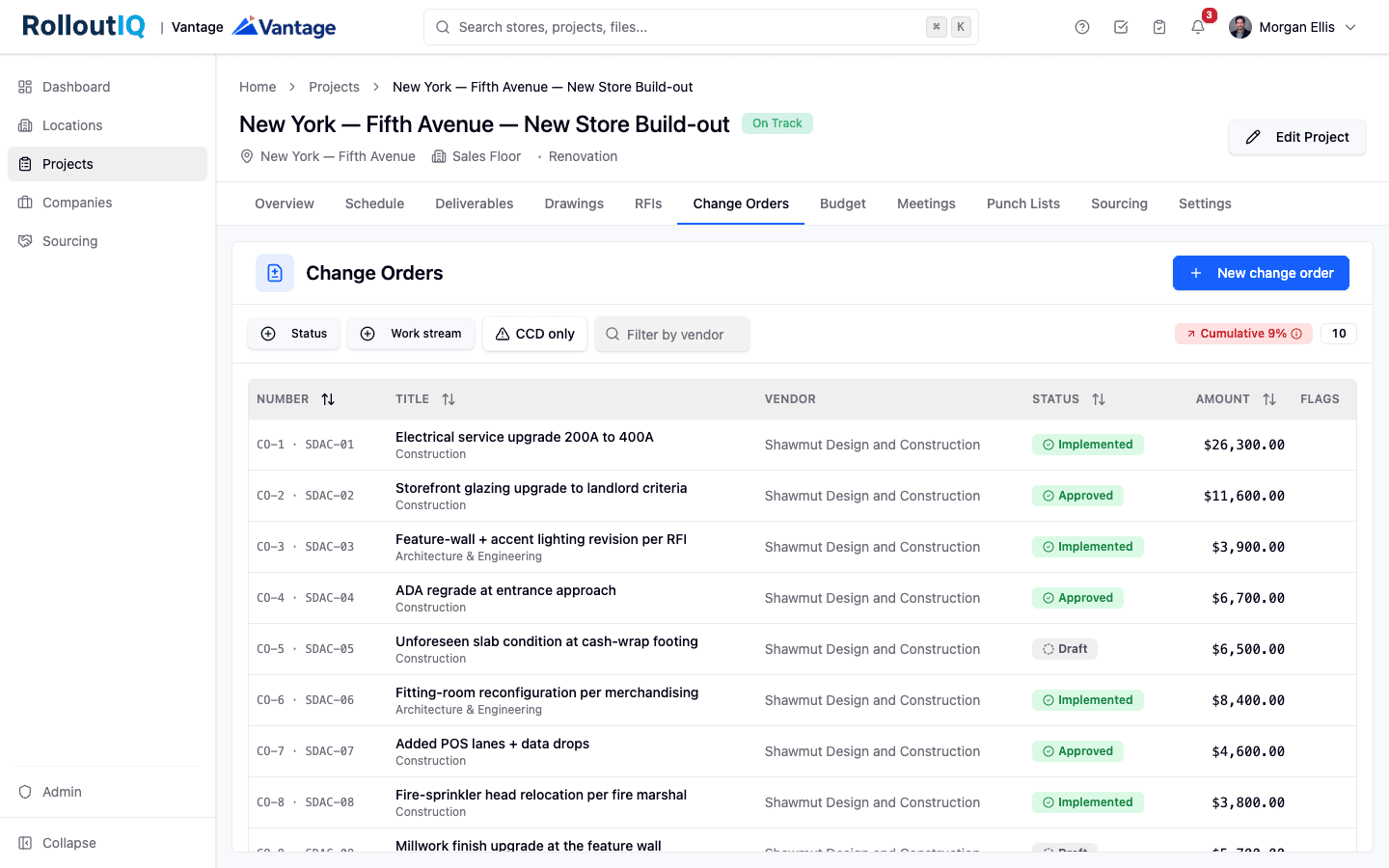
Change Order Management for Retail Rollouts: The Change Outside the GC
On a retail rollout, a large share of cost flows around the general contractor into fixtures, technology, signage, and equipment. Here is how to keep change orders from those streams from surfacing as a closeout surprise.

Reading RFIs as a Portfolio Signal
An RFI holds up a job until someone answers it. When that same question keeps getting filed at store after store, the prototype is what it is pointing at, and reading that starts with how you capture the data.
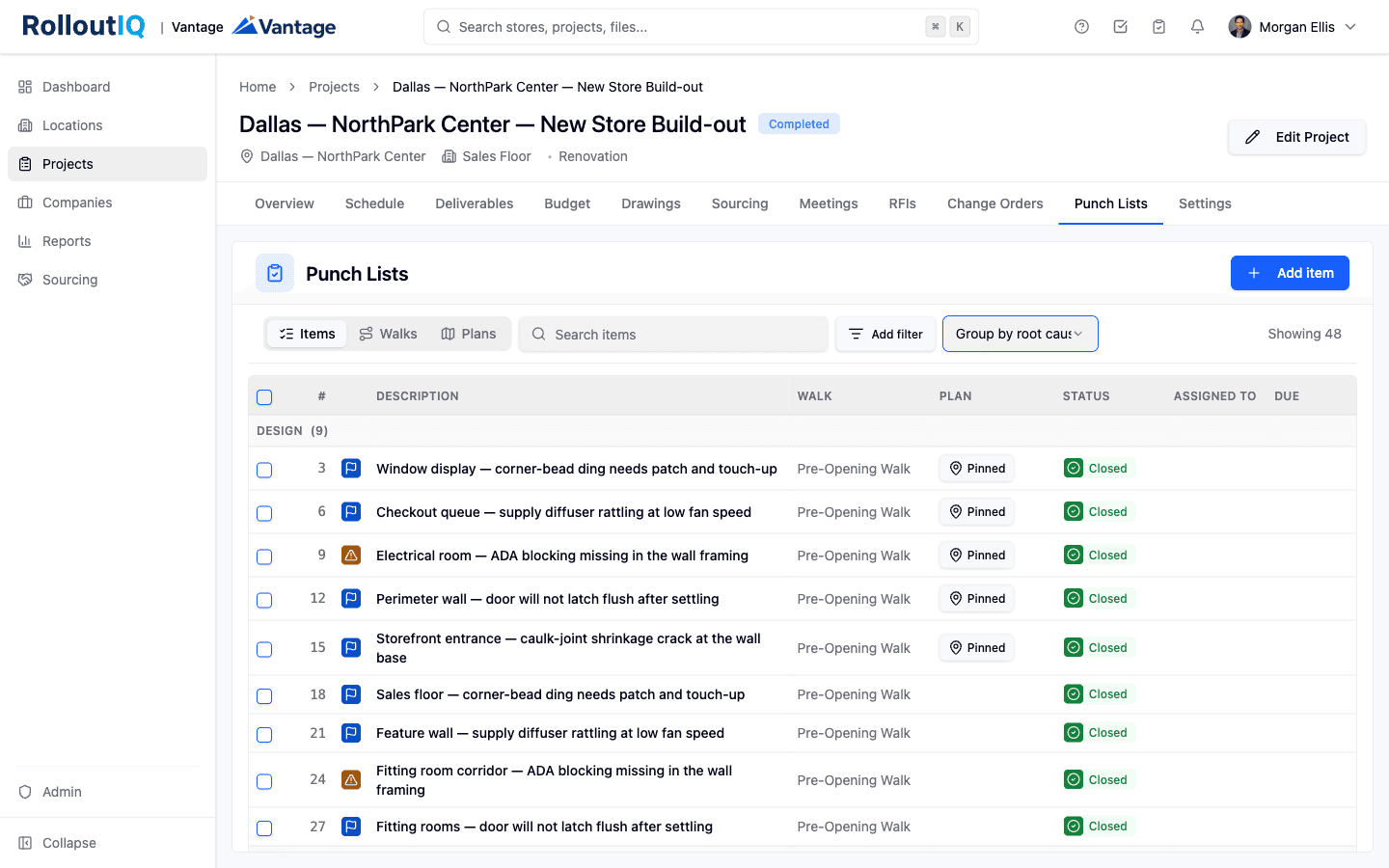
Root Cause Coding Is How a Rollout Program Learns
The same question gets asked at store 5, store 50, and store 500. The record that would have prevented it usually exists already, closed and uncoded, in last year's log.
Ready to Build Smarter?
See how RolloutIQ™ can streamline your retail and multi-site rollout program. Book a personalized demo with our team.