
Store Development
The Retail Rollout Timeline, From Lease to Grand Opening
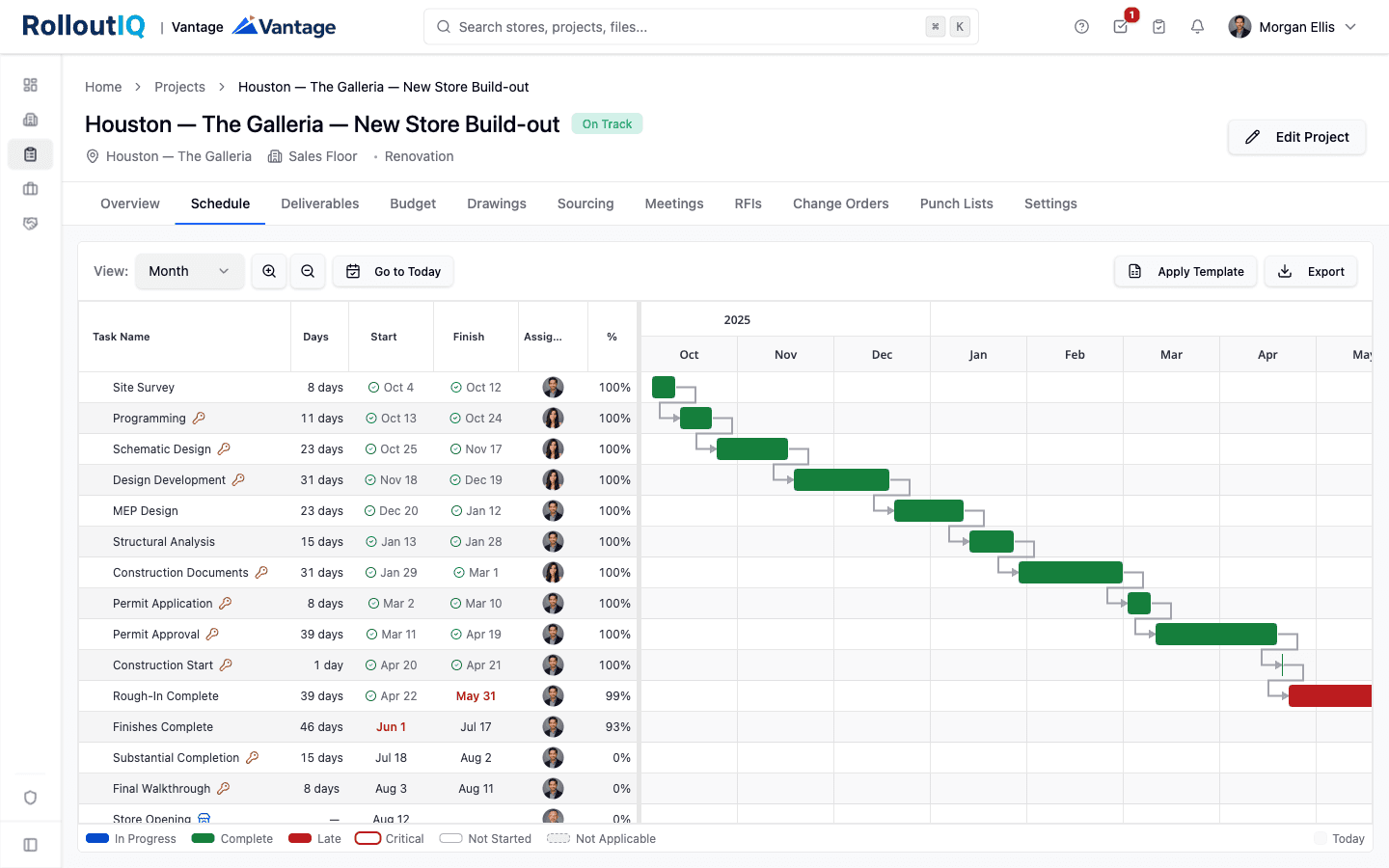
Every store project moves through the same recognizable arc. Knowing the shape of the retail rollout timeline is the first step to running it on schedule.
There is a standard shape to a store project
Across segments, retailers run against the same skeleton. The names differ by brand, but a store moves through a recognizable spine of roughly three dozen milestones from the letter of intent to the grand opening.
The arc groups into a few phases. First comes the deal and design work: site identification, letter of intent, lease execution, and the design progression from concept to construction documents. Then comes approvals and pre-construction: permit submittal and issuance, landlord delivery of the space, bidding, and notice to proceed. Then construction itself: demolition, framing, dry-in, mechanical and electrical rough-in, inspections, finishes, fixtures, and equipment. Finally comes the opening sequence: signage, final inspections, the certificate of occupancy, punch list, merchandising, staff training, a soft open, and the grand opening.
The value of the spine is that it is repeatable. Once you can see every store against the same set of milestones, a rollout becomes a program you can manage rather than a series of one-off surprises.
How long a rollout takes, by format
Total time from lease to opening varies widely by format and project type. These are directional ranges for typical, non-compressed execution. Your prototype and your markets will move them.
- Specialty inline (apparel, electronics): roughly 45 to 75 days of construction, and about 5 to 9 months from lease to open.
- Quick-service ground-up with a drive-thru: roughly 90 to 150 days of construction, and about 12 to 18 months lease to open.
- Fast-casual inline: roughly 60 to 90 days of construction, and about 8 to 12 months lease to open.
- Big-box: a few months of construction for mid-size boxes, stretching to 8 to 12 months for the largest formats.
- Grocery: roughly 9 to 12 months of construction, and 18 to 30 months lease to open once sitework and entitlements are included.
Where the time actually goes, and where it hides
Construction is rarely the part that surprises a team. The schedule risk concentrates in the parts that sit outside the contractor's direct control.
Permitting is the largest. It happens before construction can start, it depends on a third-party review queue, and it is highly jurisdiction-dependent: a complete retail tenant build-out might clear in four to eight weeks in a fast suburb and take eight to twelve weeks or more in a major coastal city. Long-lead equipment is the other quiet one. Rooftop HVAC units and electrical switchgear have run twenty to forty weeks or longer to procure in recent years, which breaks the old assumption that you can order them once construction is underway. Signage and landlord delivery round out the usual hiding places. Each of these runs on its own clock, in parallel with the build, which is exactly why they get missed.

Why the second store is faster than the first
The reason a rollout is worth running as a program is the learning curve. When you repeat a standardized scope across sites, per-unit duration tends to compress by something like 15 to 30 percent after the first five to ten executions. The prototype logic stabilizes, the vendor pool learns your standards, and the dependency network becomes routine.
That compounding only happens if the program is actually repeatable. If every store is scheduled from scratch, you pay the first-store penalty over and over. The operators who get faster are the ones who treat the milestone spine, the templates, and the vendor relationships as assets that carry from one store to the next.
Managing the timeline across a portfolio
At one or two stores, a spreadsheet timeline is fine. At twenty or two hundred, the job changes from tracking a schedule to managing a portfolio of schedules against a fragmented map of jurisdictions and a shared pool of vendors and long-lead equipment.
That is the problem RolloutIQ™ is built for. A critical-path schedule lives inside the platform that already runs the project, recalculating downstream dates from each store's target opening when something shifts, so a slip on one trade is visible immediately rather than at the next status meeting. The point is not a prettier chart. It is seeing, across every store at once, which opening date is actually at risk and why.
The Rollout
The Rollout, in your inbox
A founder's read on retail and multi-site store development. What the latest news means for your pipeline, and what we are building, every couple of weeks.

Written by
Nariman Shariat
Founder, RolloutIQ
Nariman has spent about 20 years opening stores, in the seat between the landlord, the architect, and the general contractor, across some of the largest retail and workplace fleets in the country. Along the way he built the internal platform that ran store development across a fleet, then rebuilt the same idea company after company. He founded RolloutIQ to give multi-site development teams the single source of truth he kept having to build by hand, and writes here about the work of opening and remodeling stores at scale.
More about NarimanKeep Reading
Related Articles
Continue exploring best practices for store development and construction management.
How to Manage a Signage Rollout Across Multiple Locations
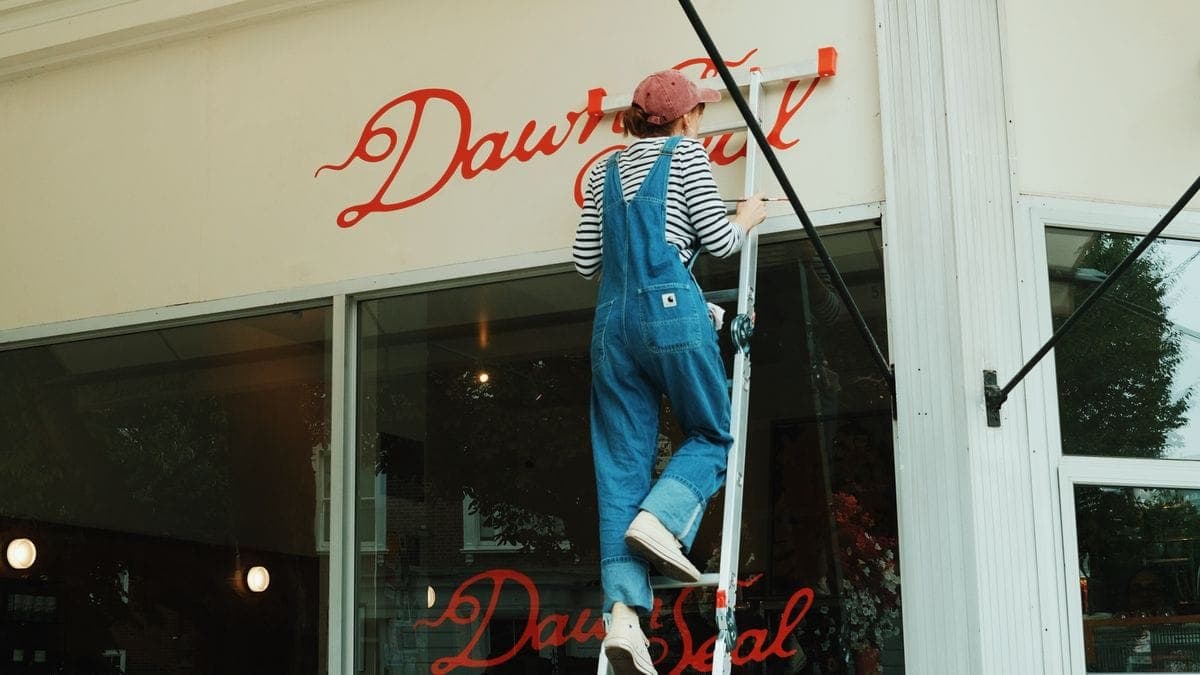
Storefront signage is often the final approval before a grand opening and the one most likely to slip. A practical playbook for managing signage rollouts across a store portfolio.

Construction Schedule Float and How Multisite Operators Should Use It
Schedule float is one of the most useful and most misused concepts in construction management. Here is how multisite operators should think about it.
Reducing Delays in New Store Openings: A Practical Guide
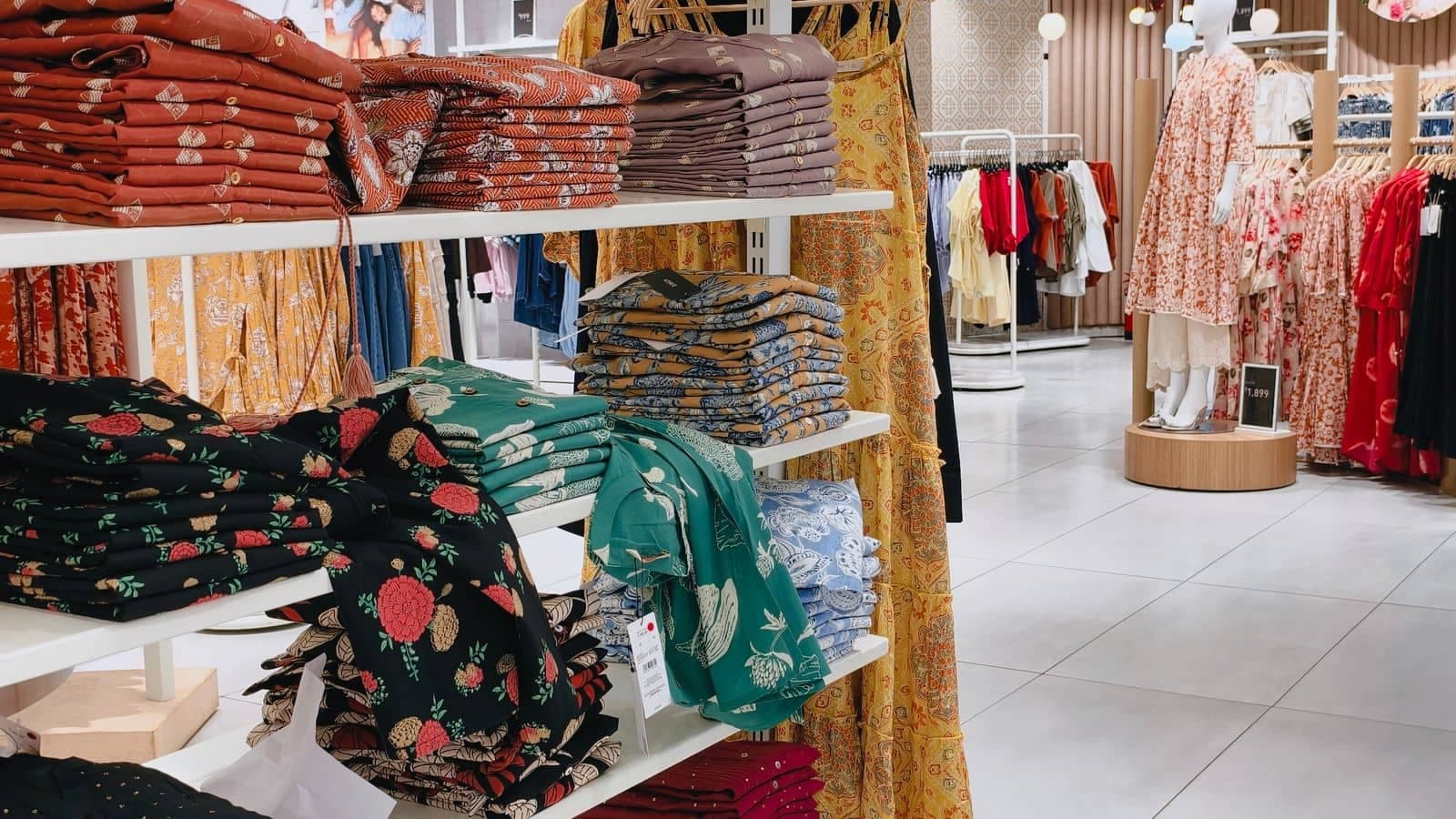
Every delayed store opening costs money in lost revenue, extended rent obligations, and team morale. Here are the practical strategies that top operators use to hit their dates.
Ready to Build Smarter?
See how RolloutIQ™ can streamline your retail and multi-site rollout program. Book a personalized demo with our team.