

Construction Management
The Closeout Package: What to Collect Before You Release Final Payment
Closeout is the phase everyone under-staffs, and it is where the money gets stuck. A store can be open and trading while a chunk of its budget sits frozen over a single missing document.
The phase that decides whether the money moves
Closeout is the phase nobody plans for, and it is where a store's budget gets stuck. The building is finished and the store is already trading. Somewhere in the background, a chunk of the project cost has not been paid, because the owner holds retainage, usually 5% to 10%, until the contractor turns over a complete closeout package. Miss one lien waiver or one operating manual and that money stays frozen. On a $3 million build, the held amount runs into the hundreds of thousands, and it can sit there for six months to a year and a half while someone chases a single missing document. Multiply that across a rollout of 50 stores and the trapped cash reaches the millions.
The store itself is fine, open and selling. Finance and the contractor waiting to be paid both care a great deal, and their standoff is almost always about missing documents while the build itself is done.
What the package contains
The closeout package is the set of documents that prove the store was built to spec and can be operated and maintained. Each piece answers a question someone will ask later, which is why a thin package comes back to bite months after everyone has moved on.
- As-built drawings recording what went in on site, so the next renovation does not start blind
- Operation and maintenance manuals for the equipment, so the facilities team can service a rooftop unit without calling the installer
- Warranties with their start dates and terms, because a warranty nobody can locate is one the store cannot claim against
- Signed lien waivers from the general contractor and every sub, since paying out against unreleased liens is how an owner ends up paying twice
- The certificate of occupancy and every inspection sign-off that gated it
- Attic stock and spare parts, plus the punch list closed and signed, so nothing is still open when the retainage is released
The warranty clock nobody watches
Warranties are where the quiet money leaks out. A warranty starts running on a date, often the day of substantial completion, though equipment warranties frequently begin at delivery or startup instead. The correction period under the standard construction contract runs a year. But nobody schedules the walk-through 11 months in, so the window to claim against a failing compressor or a leaking roof closes before anyone checks. A warranty worth real money expires unused, and the store pays out of its own pocket for a repair the manufacturer owed.
The start-date argument is its own headache. The start date sets the expiry, so the same missing paperwork that freezes retainage also blurs the one date that governs every claim.
The knowledge that leaves with the crew
Closeout also loses the knowledge of how the store was built. The last stretch of a project is where that knowledge lives, and it is the stretch most teams staff the thinnest. The crew that knows which valve controls what, and where the approved substitution ended up, is packing to go to the next job. If that knowledge is not written down and handed to the people who will run the building, it leaves with them, and the store operates blind while the next remodel rediscovers the same conditions the hard way.
Closeout is the handoff from the people who built the store to the people who run it. Rush it and the handoff never happens, and the operating team inherits a building they were never walked through.
Standardize the package across the fleet
On one store, a project manager collects the package by hand. At rollout scale, that breaks. Every store closes on its own timeline with its own vendors, and nobody has designated one place for the deliverables to land, so documents go missing. The fix is a standard closeout checklist, the same at every store, backed by a gate that will not let a project close while punch items are still open. The documents then live on the store's permanent record instead of in a project manager's email.
RolloutIQ gates closeout on the punch list, so a store cannot be marked complete with open items. It keeps the closeout documents attached to the location itself, where they outlast the crew and the project manager both. Because a store is built once, the record of how it was built has to be captured at closeout, while the crew that knows the building is still on site.
The Rollout
The Rollout, in your inbox
A founder's read on retail and multi-site store development. What the latest news means for your pipeline, and what we are building, every couple of weeks.

Written by
Nariman Shariat
Founder, RolloutIQ
Nariman has spent about 20 years opening stores, in the seat between the landlord, the architect, and the general contractor, across some of the largest retail and workplace fleets in the country. Along the way he built the internal platform that ran store development across a fleet, then rebuilt the same idea company after company. He founded RolloutIQ to give multi-site development teams the single source of truth he kept having to build by hand, and writes here about the work of opening and remodeling stores at scale.
More about NarimanKeep Reading
Related Articles
Continue exploring best practices for store development and construction management.
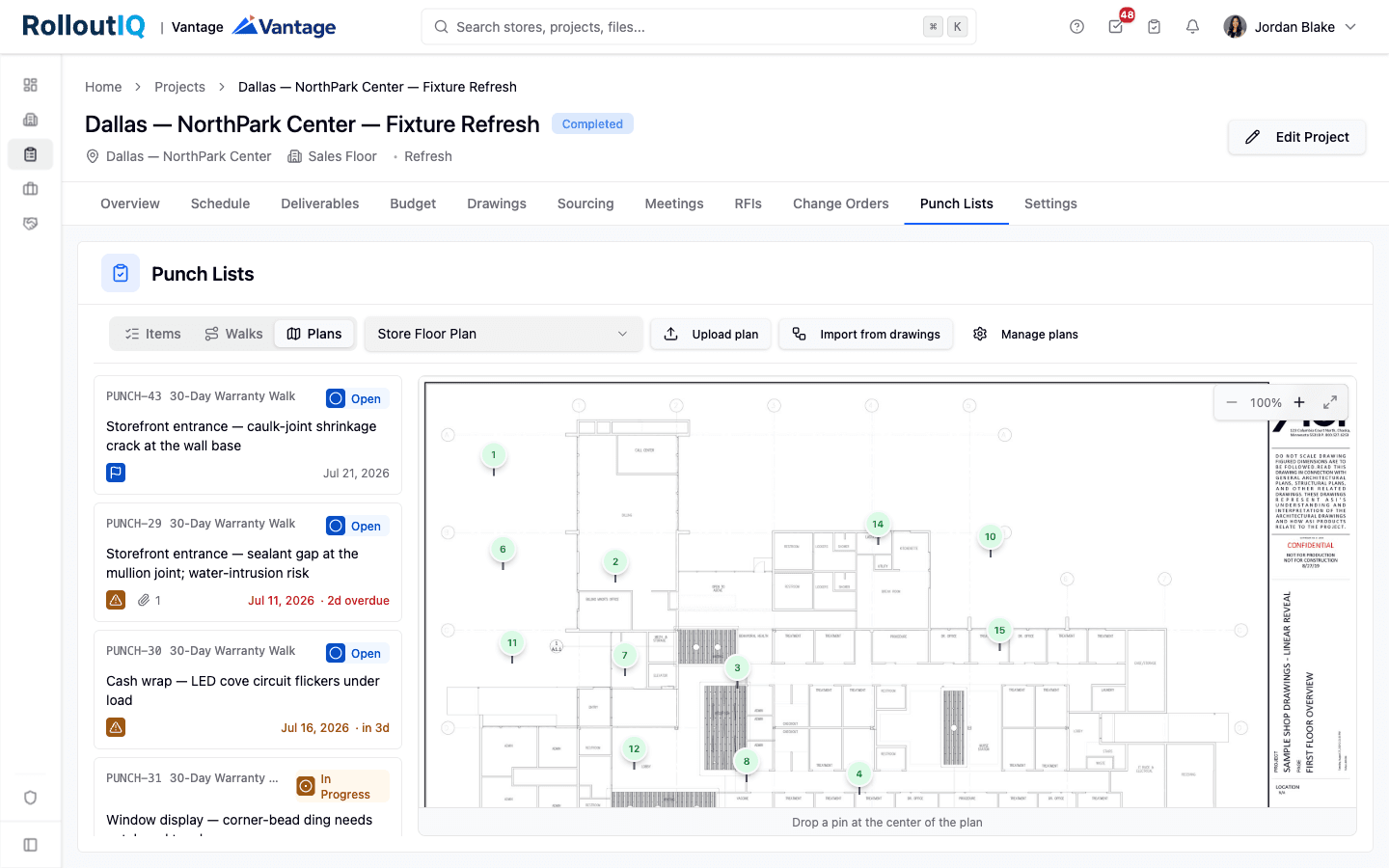
Punch List Management at Store Closeout
The punch list is where projects either finish cleanly or drag on for weeks. Here is how multisite operators manage punch lists so closeout actually closes.
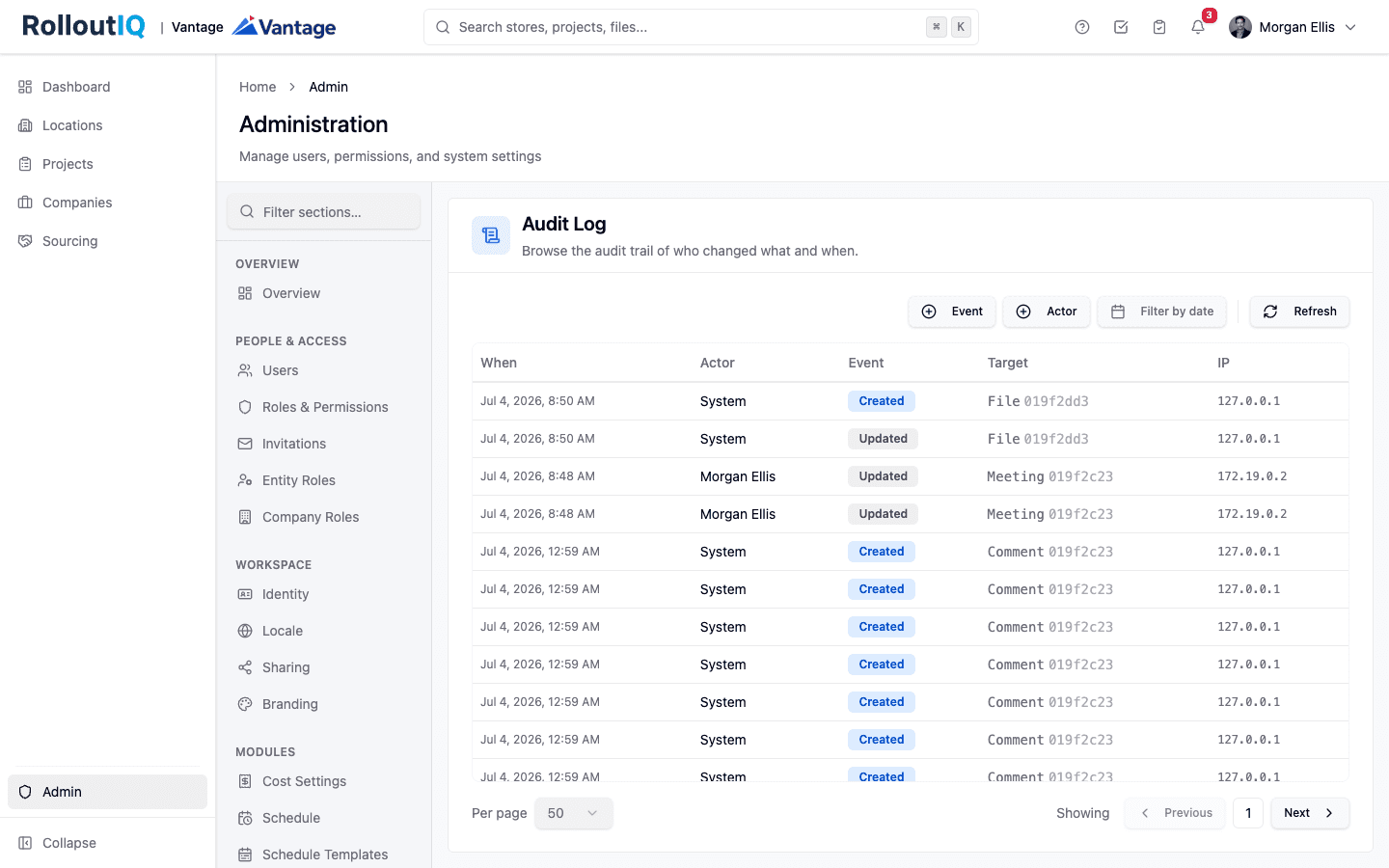
The Audit Trail Is What Settles the Dispute in Retail Construction
In retail construction, the record that would settle a dispute usually never existed. Email and spreadsheets keep no immutable history of who approved what and when. An append-only audit trail does, and it is what wins warranty claims, change-order fights, and compliance reviews.
Why Store Rollouts Fail, and Why the Failure Is Systemic
A store opens late and the general contractor takes the blame. The same slip shows up at the next store, and the next. The causes of rollout failure are a stable, well-documented handful, which is what keeps them recurring at store 5, 50, and 500.
Ready to Build Smarter?
See how RolloutIQ™ can streamline your retail and multi-site rollout program. Book a personalized demo with our team.