

Operations
Punch List Management at Store Closeout
The punch list at substantial completion is the difference between a project that closes cleanly and one that drags into post-opening. Run it as a structured process.
Why Closeouts Drag
Most retail buildouts substantially complete on or near schedule. Many do not actually close out for weeks or months after that. The gap between substantial completion and final closeout is usually filled with punch list items that should have been addressed in days but ended up in dispute, in queue, or in someone's email backlog.
The problem is rarely the items themselves. It is the lack of accountability and the absence of a structured process for working through them. Fix the process and the items get fixed too.
Define Substantial Completion Clearly
Substantial completion has a specific contractual meaning, but in practice it is often interpreted differently by tenant, GC, and landlord. The work letter and the construction contract should define it precisely. The tenant can occupy the space, all systems are operational, all required permits and certificates are in hand, and only minor items remain that do not prevent operation.
When substantial completion is ambiguous, the GC argues the project is done while the tenant identifies more items that need attention. Clear contractual definitions prevent that argument and make the punch list a finite exercise rather than an open-ended dispute.
The Walkthrough Process
The punch list is generated in a substantial completion walkthrough that includes the GC, the architect, the owner's representative, and key trades. Everyone walks the space together, items are identified and documented in real time, and the resulting list is signed by all parties. That signature matters. It commits everyone to what is on the list and, by implication, what is not.
- Schedule the walkthrough at a defined point relative to substantial completion
- All decision-makers attend in person, not by phone
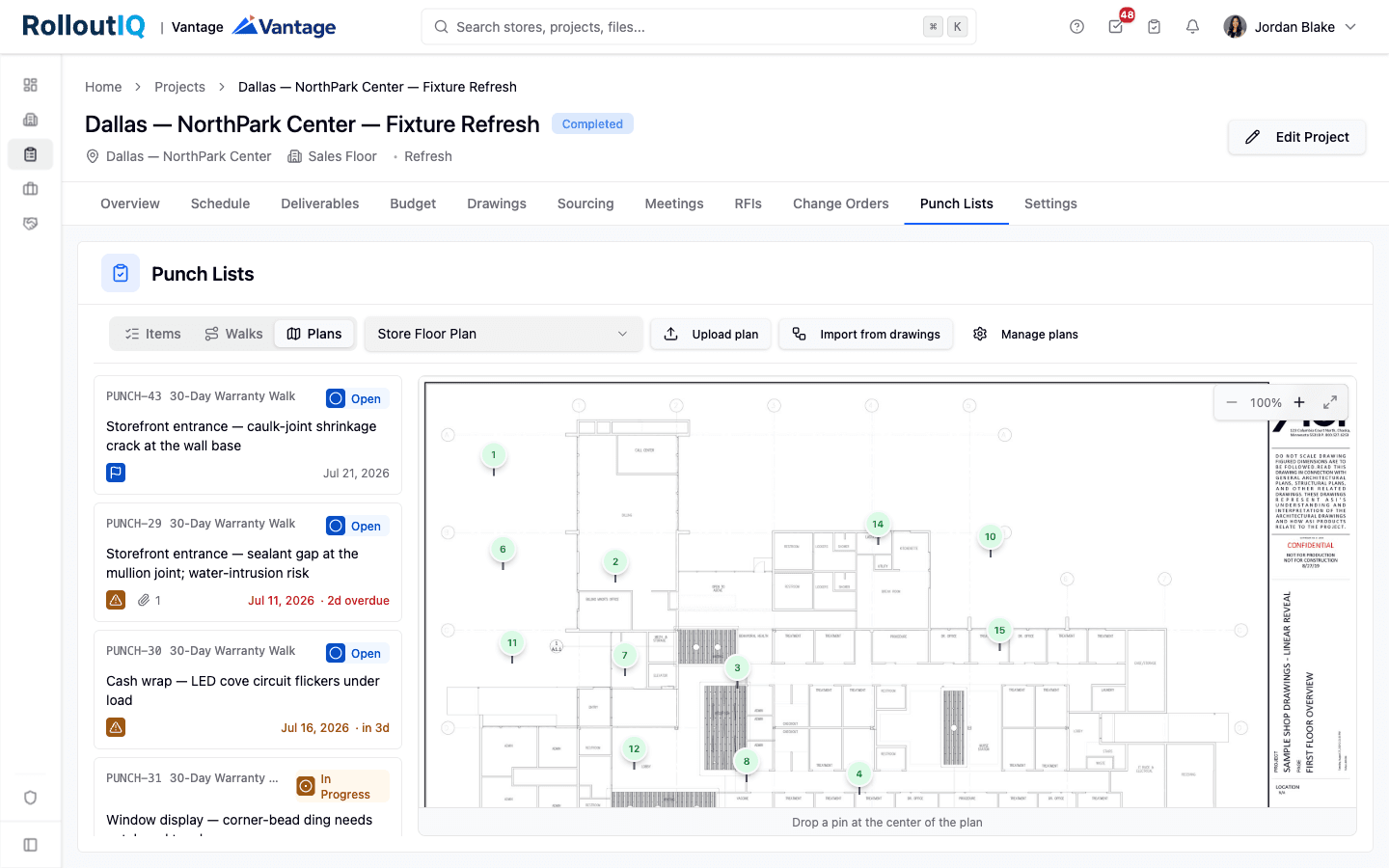
- Each item is photographed, located on the floor plan, and assigned an owner
- The list is signed before anyone leaves the walkthrough
- A single copy is the source of truth, not multiple emailed versions
Working the List
Once the punch list exists, the goal is to close every item with as much velocity as possible. Items should have target completion dates, owners, and verification requirements. A daily review cadence with the GC during punch list work keeps momentum.
The items that consistently cause closeout drag are ones where ownership is unclear or where the responsible party disputes whether the item is their responsibility. Resolve these in the walkthrough, not after. If the GC believes an item is the architect's responsibility, that conversation happens at the walkthrough so the punch list reflects the resolution rather than recording the dispute.
Closeout Documentation
Even after the punch list is closed, the project is not closed until the closeout documentation is complete. As-built drawings, operating manuals, warranties, lien releases, sworn statements, final permit documentation, and certificate of occupancy all need to be assembled and delivered to the tenant.
This is the unsexy part of closeout that often gets skipped or done incompletely. Twelve months later, when something breaks, the team that has the warranties and the as-built drawings handles it in an hour. The team that does not spends a week tracking down documentation that should have been delivered at closeout. Build closeout documentation into the contractual definition of project completion, with retention or final payment tied to its delivery.
The Rollout
The Rollout, in your inbox
A founder's read on retail and multi-site store development. What the latest news means for your pipeline, and what we are building, every couple of weeks.

Written by
Nariman Shariat
Founder, RolloutIQ
Nariman has spent about 20 years opening stores, in the seat between the landlord, the architect, and the general contractor, across some of the largest retail and workplace fleets in the country. Along the way he built the internal platform that ran store development across a fleet, then rebuilt the same idea company after company. He founded RolloutIQ to give multi-site development teams the single source of truth he kept having to build by hand, and writes here about the work of opening and remodeling stores at scale.
More about NarimanKeep Reading
Related Articles
Continue exploring best practices for store development and construction management.
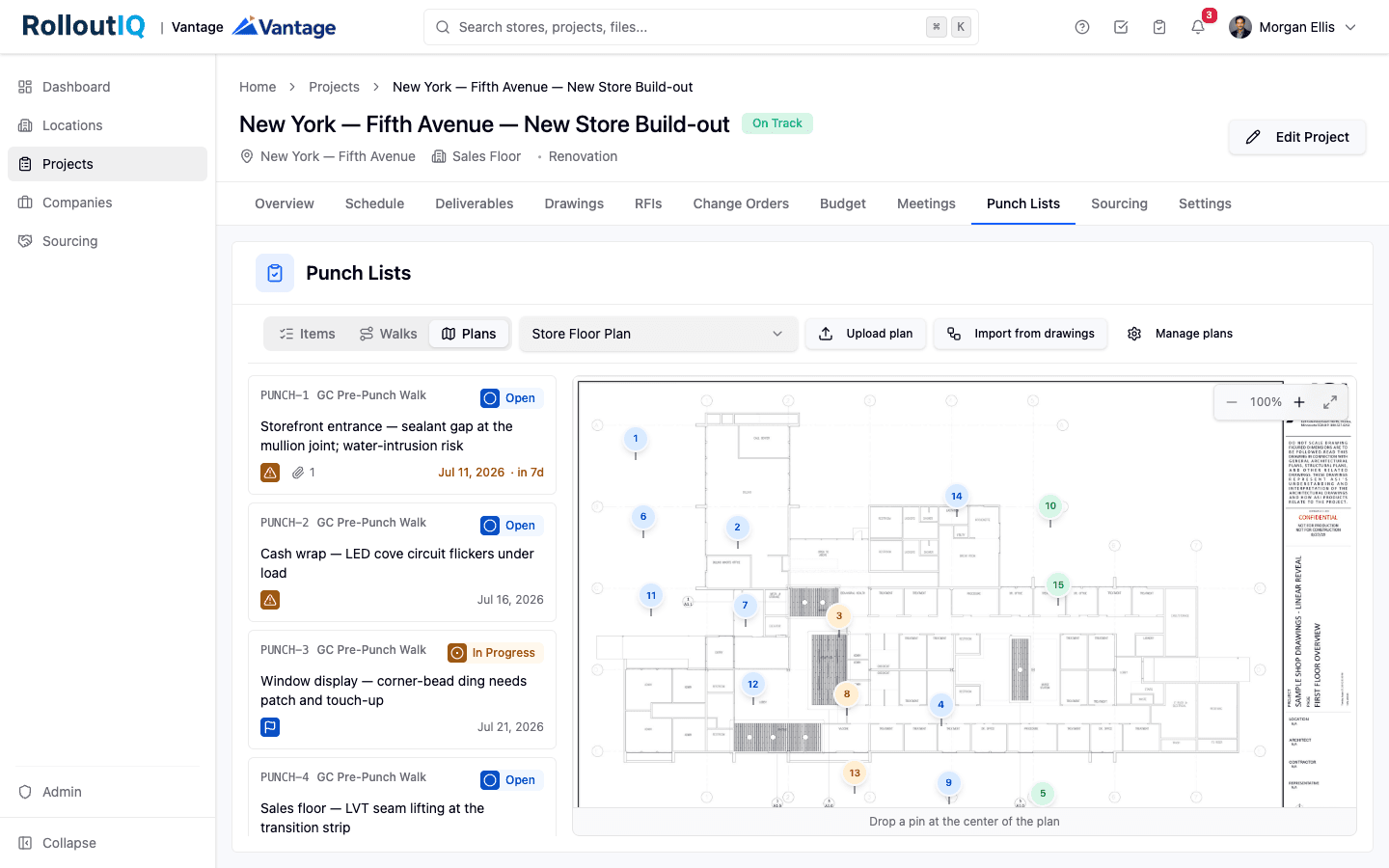
Punch List Management for Retail Rollouts: One Backlog for Every Walk
Retail store openings run a construction punch list and a separate pre-opening checklist in two different tools, reconciled by email. Here is how to put every walk in one backlog and verify each item before it closes.

Reducing Delays in New Store Openings: A Practical Guide
Every delayed store opening costs money in lost revenue, extended rent obligations, and team morale. Here are the practical strategies that top operators use to hit their dates.
Document Management Best Practices for Construction Projects
Poor document management costs construction teams hours every week and creates real project risk. Here are the best practices for getting it right across your portfolio.

Vendor Management Best Practices for Retail Buildouts
Your vendors make or break your rollout timeline. Learn how top retail operators manage vendor relationships, track performance, and build reliable trade networks.
Ready to Build Smarter?
See how RolloutIQ™ can streamline your retail and multi-site rollout program. Book a personalized demo with our team.