
Store Development
Your Store Fleet Is a Portfolio. Which Locations Get Refreshed Next?
Macy's says its reimagined stores are outperforming the rest of the fleet. Underneath the earnings headline is a discipline every multisite operator faces: deciding which stores to refresh, at what level, and in what order.
What Macy's Reported
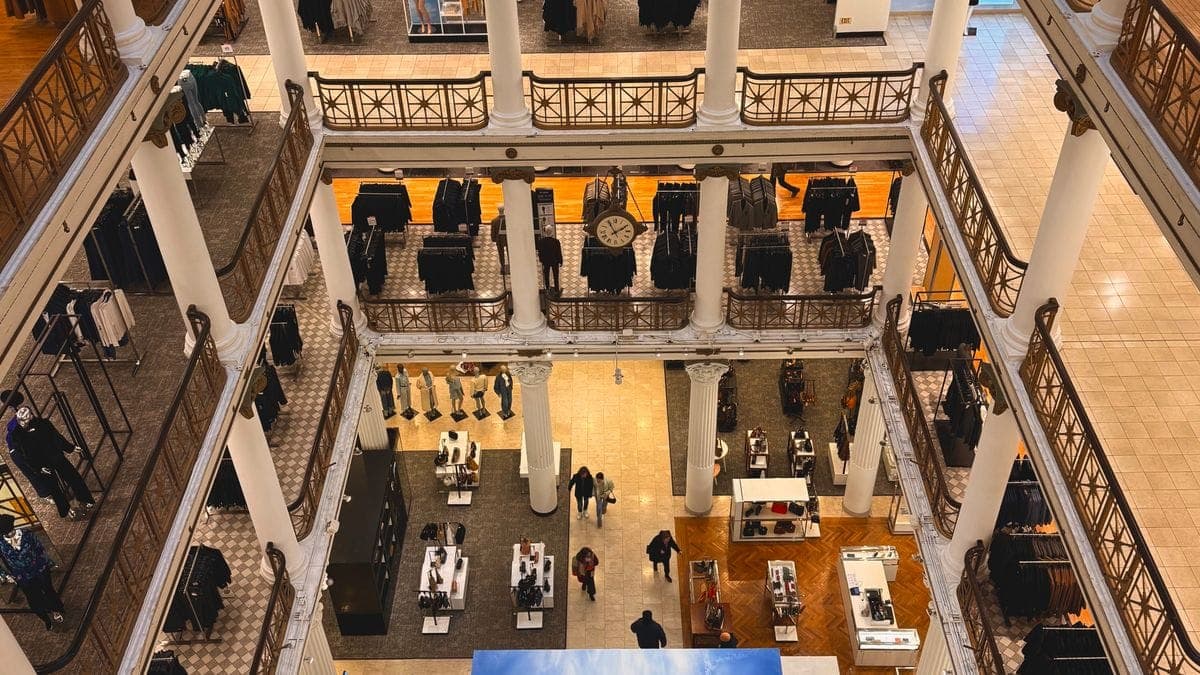
In its most recent quarterly results, Macy's told investors that the stores it has reimagined are outperforming the rest of its fleet. As Retail Dive reported, roughly 200 locations, about half the namesake Macy's fleet, have received upgrades to merchandising and the in-store experience, and that reimagined group is posting stronger comparable sales than the chain as a whole. Net sales came in around 4.7 billion dollars, and net income rose sharply year over year.
Chief executive Tony Spring framed the logic plainly. "We found that when the product and the experience are differentiated and compelling, engagement and spend increase." The company is leaning into the result, expanding the program rather than treating it as a one-time experiment.
The headline is an earnings story. The more durable lesson sits underneath it, and it applies to operators far smaller than Macy's.
Why This Matters for Multisite Operators
The signal is not simply that remodels work. It is that a targeted refresh of the right stores moved the needle more than spreading capital evenly across the fleet would have. Macy's did not reimagine every store. It picked a cohort, invested, and measured the lift against the locations it left alone.
That is portfolio thinking. Any operator running more than a few dozen locations is sitting on a fleet of different vintages, built on different prototype generations, in markets that have moved at different speeds since the doors opened. Treating that fleet as one undifferentiated set, refreshing on a fixed rotation or only when something breaks, leaves return on the table. The stores that would benefit most from a refresh are not evenly distributed, and neither should the capital be.
The Fleet Is a Portfolio, Not a List of Stores
A store is not a project. It is a durable asset that cycles through a sequence of projects over its life: the original build, then refreshes, remodels, the occasional relocation, and eventually a closure or a rebrand. Each of those is a distinct project against the same location, and the location carries its history forward.
That history is what makes prioritization possible, and it is exactly what most operators cannot see in one place. A store opened eight years ago on a prototype two generations old, with a lease coming up for renewal, in a market that has shifted, is a very different refresh candidate than a strong performer remodeled last year. Capital planning treats remodels and refreshes as a standing line in the annual budget, often the second-largest category after new stores. The hard part is not finding the money. It is deciding, among hundreds of candidates, which locations earn it this year.
How to Decide Which Stores to Refresh
A defensible refresh program scores candidates against a consistent set of inputs rather than reacting to whoever complains loudest or whichever district manager has the most influence. The factors that matter are knowable, and most of them already live in your systems if those systems are connected.
- Performance trend against a comparable cohort, so you measure a store against its peers rather than the chain average
- Store age and prototype generation, since a location several versions behind the current standard is drifting from the brand
- Physical condition and deferred maintenance, which can turn a light refresh into a major remodel if left too long
- Lease runway and renewal timing, because you do not pour capital into a location you may exit in eighteen months
- Market trajectory, since a refresh in a declining trade area returns less than the same spend in a growing one
- Refresh level and cost, separating a light cosmetic refresh from a major remodel or a full rebrand, each at a very different price per square foot
- Expected lift and payback against a hurdle rate, so the program is justified the same way a new store is
- Construction and capital capacity, sequencing the work your teams and budget can actually absorb in a year
Running It as a Program, Not a Series of One-Offs
Macy's did the thing more operators should copy. It treated the refresh as a measured program with a control group, not a collection of disconnected projects, and it is using the result to decide what comes next. Replicating that takes a few habits. Build the candidate list from real performance, age, lease, and condition data rather than memory. Standardize refresh scopes into tiers so a light refresh and a major remodel are estimated and executed consistently across the fleet. Tie refresh timing to lease events so capital lands when the commitment is secure. And measure the post-refresh lift against stores you left alone, so next year's prioritization gets sharper.
The limiting factor is usually visibility. The performance data sits in one system, the lease dates in another, the prototype version in a slide deck, and the project history in email. A platform like RolloutIQ™ helps by treating each store as a durable record that carries its full project history, status, and key dates in one place, so the refresh candidate list is built from data the whole team can see rather than reconstructed by hand each planning cycle. The prioritization judgment stays yours. The inputs stop being a scavenger hunt.
Sources
This article is commentary on reporting from the following source.
- Retail Dive - https://www.retaildive.com/news/macys-revamped-store-fleet-customers-followed-q1-earnings-growth/821844/
The Rollout
The Rollout, in your inbox
A founder's read on retail and multi-site store development. What the latest news means for your pipeline, and what we are building, every couple of weeks.

Written by
Nariman Shariat
Founder, RolloutIQ
Nariman has spent about 20 years opening stores, in the seat between the landlord, the architect, and the general contractor, across some of the largest retail and workplace fleets in the country. Along the way he built the internal platform that ran store development across a fleet, then rebuilt the same idea company after company. He founded RolloutIQ to give multi-site development teams the single source of truth he kept having to build by hand, and writes here about the work of opening and remodeling stores at scale.
More about NarimanKeep Reading
Related Articles
Continue exploring best practices for store development and construction management.
Walmart's 650-Store Remodel: Why the Occupied Build Is Harder Than the New One
Walmart plans more than 650 store remodels in 2026 against about 20 new openings. The occupied remodel, rebuilt while the store keeps trading, is the harder program to run, and 2026 is full of them.

Optimizing Your Store Development Process from Site Selection to Grand Opening
Store development is one of the most complex workflows in retail operations. Learn how leading operators streamline every phase from site selection through grand opening.

Managing Budgets Across Multiple Construction Sites
Budget management across multiple construction sites requires portfolio-level financial visibility and proactive cost controls. Here is how leading operators do it.

A Store Rollout Budget Should Be a Governed Baseline
The budget for a store project covers six cost families, not just construction, and the hard part of all of it is governance rather than arithmetic. Here is what it means to run the whole project budget as a baseline.
Ready to Build Smarter?
See how RolloutIQ™ can streamline your retail and multi-site rollout program. Book a personalized demo with our team.