
Store Development
Optimizing Your Store Development Process
A comprehensive guide to streamlining every phase of store development for retail and multisite operators.
Why Store Development Needs a Dedicated Process
Store development is fundamentally different from one-off construction projects. Multisite operators are managing a pipeline of locations simultaneously, each at a different stage of the development lifecycle. Without a standardized process, teams end up reinventing the wheel on every project, leading to inconsistent timelines, budget overruns, and missed deadlines.
The most successful retail operators treat store development as a repeatable process with defined phases, clear milestones, and measurable KPIs. This approach transforms what feels like chaos into a predictable pipeline that scales with the business.
The Five Phases of Store Development
Every store development project moves through five distinct phases. Understanding and optimizing each phase is critical to reducing overall timelines and controlling costs.
- Site Selection and Due Diligence - Evaluate demographics, traffic patterns, lease terms, and competitive landscape before committing to a location.
- Design and Permitting - Develop architectural plans, submit permit applications, and navigate local building code requirements.
- Pre-Construction Planning - Finalize vendor selection, establish budgets, create detailed project schedules, and order long-lead equipment.
- Construction and Build-Out - Execute the physical build with coordinated trades, regular inspections, and proactive issue resolution.
- Closeout and Grand Opening - Complete punch lists, secure certificates of occupancy, train staff, and execute marketing launch plans.
Common Bottlenecks That Delay Store Openings
Permitting is the single biggest source of delays in store development. Municipalities vary wildly in their review timelines, from two weeks to six months, and the same jurisdiction can change materially year over year. Dallas is a useful illustration. City officials reported that the median wait for a new commercial construction permit fell from 276 days in 2023 to 189 days in 2024 after the city overhauled its permitting department, a 32 percent improvement. That is a swing of roughly three months on the same kind of project in the same city, which is why a permitting assumption carried over from last year's pro forma is one of the most dangerous numbers in a rollout schedule. Smart operators submit permit applications as early as possible, maintain relationships with local building departments, and track actual review times per jurisdiction rather than working from a single national assumption.
Vendor coordination is another frequent bottleneck. When multiple trades are working in sequence, a delay from one vendor cascades through the entire schedule. The fix is building realistic buffers into the schedule and tracking vendor performance across projects to identify reliability issues early.
Centralizing Data Across Your Portfolio
When store development data lives in spreadsheets, email threads, and shared drives, critical information gets lost. Teams waste hours searching for the latest floor plan revision or tracking down a permit status update.
Centralizing all project data in a single platform gives every stakeholder real-time visibility into project status, budget health, and upcoming milestones. This is especially important for multisite operators managing dozens of projects simultaneously across different markets.
Measuring What Matters
The best store development teams track a handful of key metrics that drive accountability and continuous improvement.
- Average days from lease signing to grand opening
- Permit approval timelines by municipality
- Budget variance percentage across completed projects
- Vendor on-time delivery rates
- Punch list items at substantial completion
Building a Scalable Store Development Engine
The difference between operators who open 10 stores a year and those who open 100 is not just capital, it is process maturity. Scalable store development requires standardized templates, automated workflows, and portfolio-level visibility that lets leadership identify risks before they become delays.
Investing in purpose-built tools for store development pays dividends across every project. When your process is repeatable and your data is centralized, each new location benefits from the lessons learned on every previous one.
Sources
The permitting figures cited in this article come from the following reporting.
- WFAA, on the City of Dallas reducing median commercial permit wait times from 276 days in 2023 to 189 days in 2024 - https://www.wfaa.com/article/money/dallas-permitting-department-celebrates-progress-turnaround-time/287-ec542893-fa00-4667-a735-3fde9f21af76
The Rollout
The Rollout, in your inbox
A founder's read on retail and multi-site store development. What the latest news means for your pipeline, and what we are building, every couple of weeks.

Written by
Nariman Shariat
Founder, RolloutIQ
Nariman has spent about 20 years opening stores, in the seat between the landlord, the architect, and the general contractor, across some of the largest retail and workplace fleets in the country. Along the way he built the internal platform that ran store development across a fleet, then rebuilt the same idea company after company. He founded RolloutIQ to give multi-site development teams the single source of truth he kept having to build by hand, and writes here about the work of opening and remodeling stores at scale.
More about NarimanKeep Reading
Related Articles
Continue exploring best practices for store development and construction management.
What the Fastest Retail Operators Do Differently
The fastest US developers open anywhere from about 100 to more than 500 units a year, across businesses that sell nothing alike. What they share is how they build. Three moves separate them from everyone else.
Location, Space, and Project in the Retail Portfolio Model
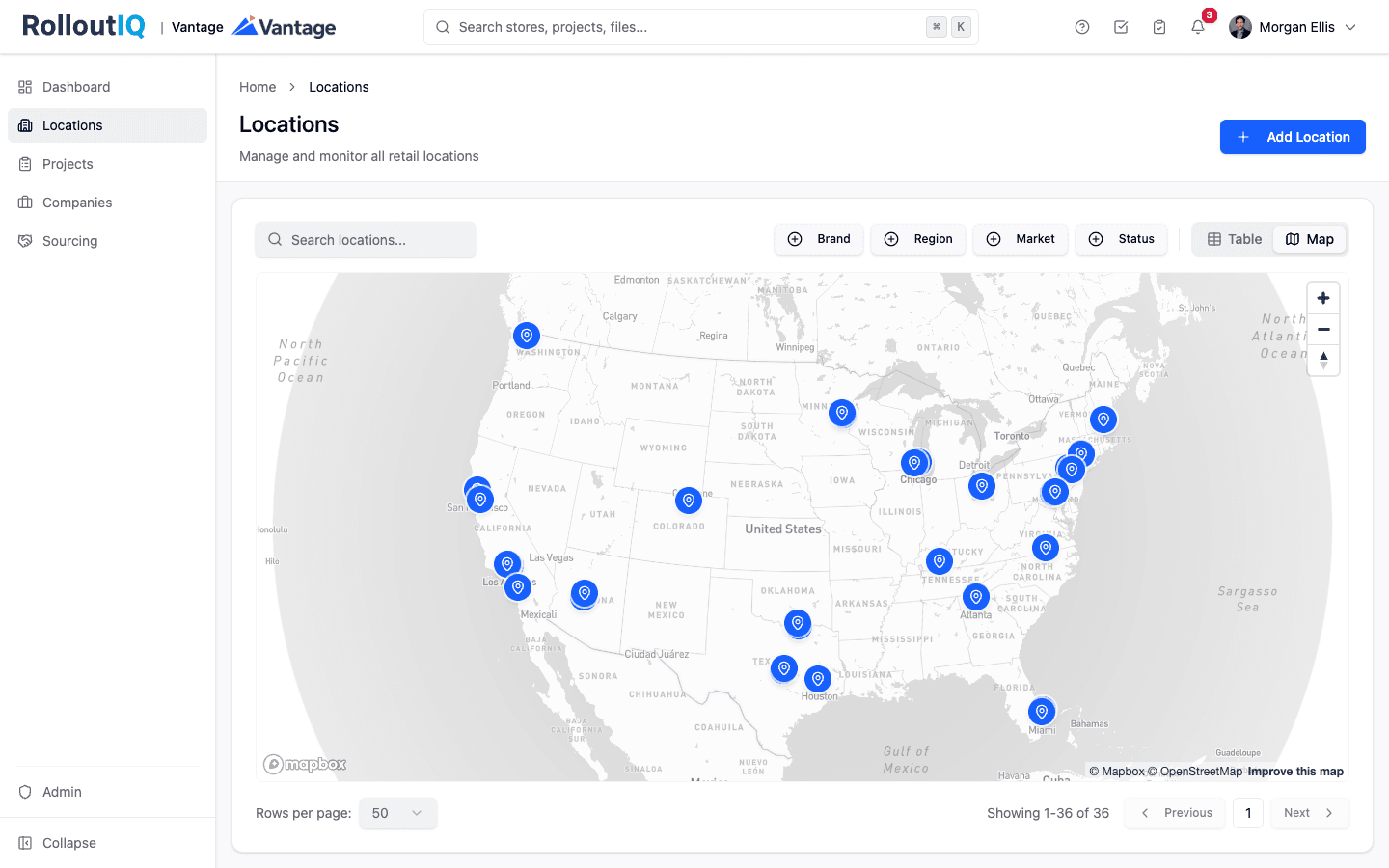
Generic construction PM tools have one organizing object, the project, and it closes when the ribbon is cut. That is fine for a single build and useless for a portfolio of stores that each go through many builds over their lives. The fix is a data model that separates the store, its real estate, and the work done to it.
Retail's 2026 Growth Is Conversion, Not Construction
As new retail construction falls in 2026, off-price and discount chains are expanding by taking over bankrupt competitors' leases. That growth looks like a rollout but runs like a portfolio of one-off conversions.
Compliance Tracking for Multi-Location Retail Rollouts
Compliance failures are one of the most expensive risks in retail construction. Learn how to build a compliance tracking system that scales across your entire portfolio.
Reducing Delays in New Store Openings: A Practical Guide
Every delayed store opening costs money in lost revenue, extended rent obligations, and team morale. Here are the practical strategies that top operators use to hit their dates.
Ready to Build Smarter?
See how RolloutIQ™ can streamline your retail and multi-site rollout program. Book a personalized demo with our team.