
Store Development
Due Diligence for Retail Site Feasibility
Most of what goes wrong in a store build was knowable in the diligence window, before anyone signed the lease. The verification you do in those weeks decides whether the site can carry the store.
The window where a deal gets proven
Between the day a retailer picks a site and the day it signs the lease, there is a stretch of 60 to 120 days that decides whether the store is buildable at the cost the deal assumed. This is due diligence, a verification phase where test fits, surveys, environmental reports, utility checks, and a code analysis all feed a pro forma, which is where the numbers the deal assumed finally get tested. Skip through it to hit a real estate deadline and the risk moves downstream into construction, where the same problem costs several times more to fix and there is no walking away.
The lease is a construction document
The part of a lease that bites in construction is the work letter, the exhibit that spells out what the landlord delivers and what the tenant builds. A work letter that is vague on mechanical capacity or on who runs utilities to the space, and silent on the condition the landlord hands over, surfaces later as a change order in the six-figure range, negotiated after the lease is signed and the tenant has lost all leverage. The fix is having someone who builds stores for a living read the lease before it is executed, because every ambiguity left in it becomes their problem on site.
What feasibility checks
Feasibility is a set of questions the site has to answer before any money is committed.
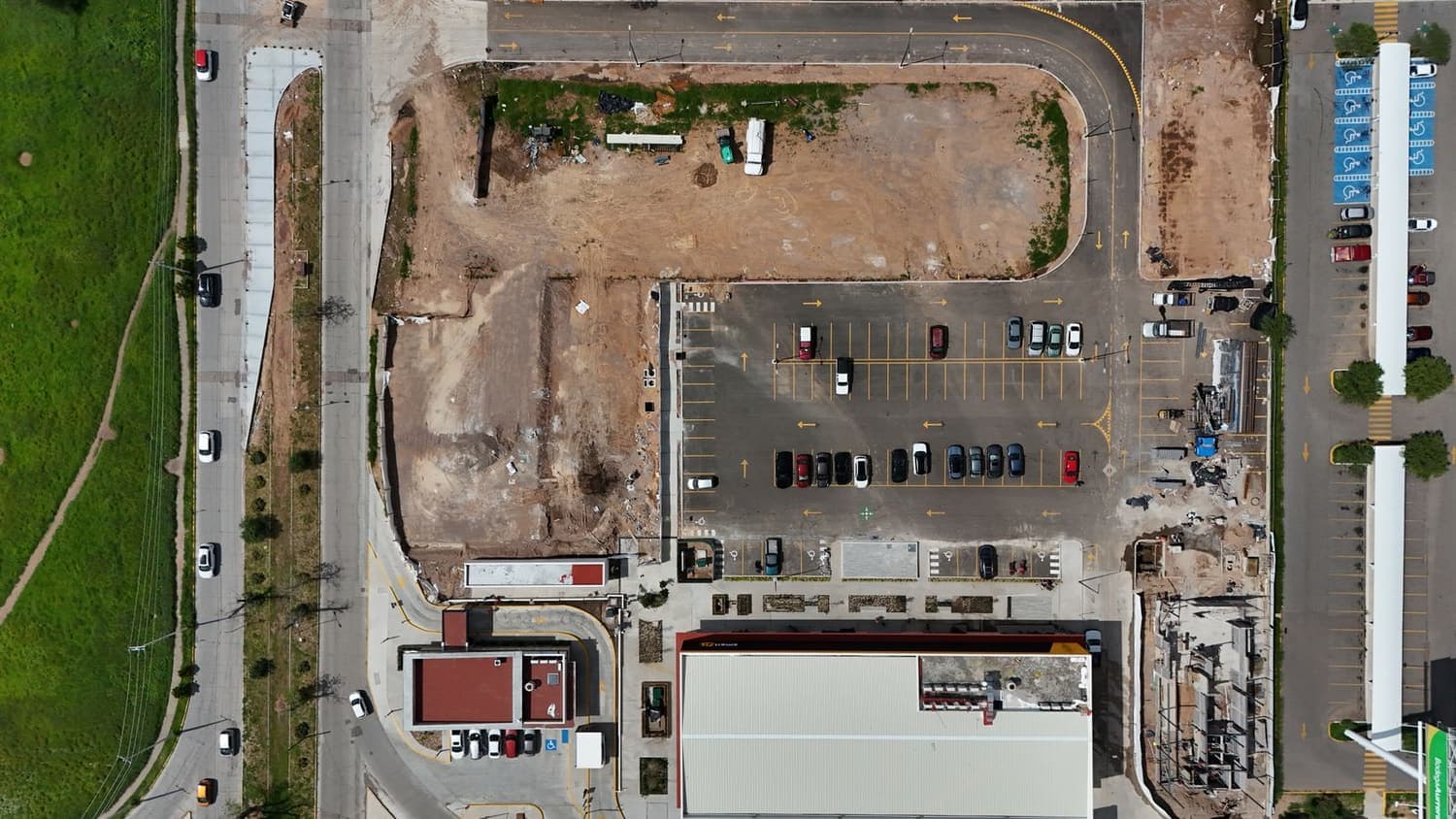
- A test fit that proves the prototype and its required parking fit the site, at the square footage the pro forma assumed
- A survey that finds the boundaries, easements, and setbacks that constrain where and how you can build
- A Phase I environmental assessment, because a site with a contamination finding carries cost and liability into every year that follows
- Utility capacity confirmed, so you learn the transformer or the water service is undersized now, not during construction
- A zoning and code analysis that catches the variance or the use restriction before it becomes a reason the store cannot open
- For a second-generation space, an existing-conditions check of what the last tenant left behind and what has to come out
Where the findings have to go
Diligence produces a stack of reports, and the mistake is to treat each one as finished the moment it is filed. The easement on the survey, the contamination flag on the Phase I, the capacity limit in the utility letter, the obligation buried in the work letter, all of it constrains what design and construction can do. When those constraints live as PDFs in a deal folder, the project team rediscovers them the hard way, usually after a decision has already been made against them. The findings are worth far more as structured facts attached to the location, where the next phase reads them as inputs at the start of design instead of hitting them mid-construction.
Killing a bad site early is the cheapest outcome
Diligence is also how you kill a bad site while killing it is still cheap. A parcel that fails its feasibility check is a modest loss written off early, cheaper by far than a store built on a compromised site that never performs, or a project that blows its budget on problems the reports had already named. A disciplined program counts that as diligence working. Every deal clears the same bar, and because the findings stay on the record either way, the reason a site was passed on is still there the next time someone proposes it.
The Rollout
The Rollout, in your inbox
A founder's read on retail and multi-site store development. What the latest news means for your pipeline, and what we are building, every couple of weeks.

Written by
Nariman Shariat
Founder, RolloutIQ
Nariman has spent about 20 years opening stores, in the seat between the landlord, the architect, and the general contractor, across some of the largest retail and workplace fleets in the country. Along the way he built the internal platform that ran store development across a fleet, then rebuilt the same idea company after company. He founded RolloutIQ to give multi-site development teams the single source of truth he kept having to build by hand, and writes here about the work of opening and remodeling stores at scale.
More about NarimanKeep Reading
Related Articles
Continue exploring best practices for store development and construction management.
Site Selection Criteria for Multisite Retail Operators
Site selection is the highest-leverage decision in store development. A bad site cannot be saved by good operations. Here is how to make it a structured process.

Negotiating Landlord Work Letters for Multisite Operators
The work letter determines what the landlord delivers and what you build. Get it wrong and your buildout starts with surprises. Here is how multisite operators negotiate work letters that hold up.

A Retail Permitting Playbook, Built Jurisdiction by Jurisdiction
Permitting sits on the critical path before a single wall goes up, and every jurisdiction runs its own process. Multisite operators who move fastest turn hundreds of local processes into a playbook they reuse.

Mixed-Use Developments Are Reshaping the 2026 Retail Pipeline
Simon's $250M upgrades, Nashville Premium Outlets, and a wave of sports-anchored mixed-use projects are pulling the 2026 retail pipeline toward a different kind of site.
Ready to Build Smarter?
See how RolloutIQ™ can streamline your retail and multi-site rollout program. Book a personalized demo with our team.