
Industry Trends
Fitness and Wellness Are Powering the 2026 Retail Rebound
Malls are the top-performing US real estate sector again, and service tenants led by fitness and wellness are filling the space. The buildout behind that demand is the part store development teams should study.
The News
America's malls are the best-performing slice of commercial real estate right now. ConnectCRE, citing Wall Street Journal reporting on Green Street data, says mall values rose 13% over the past year, more than double the gain across commercial real estate as a whole. Simon Property Group's shares passed their prior record high in July for the first time since 2016, and Unibail-Rodamco-Westfield reversed a planned US exit to buy out partners in two West Coast properties. Ronald Kamdem, who leads US REIT and real estate research at Morgan Stanley, told the Journal this is probably the best malls have felt since before the pandemic.
Most of the coverage stops at the capital markets. For anyone who builds stores, the more useful question is who is filling the space, and a large part of the answer is fitness and wellness. CoStar data, first reported by the Journal, shows service tenants leased more than half of all US retail square footage in 2025, up from roughly 40% about 15 years earlier, the first time services outpaced goods. CBRE's recent report on beauty and specialty fitness counted 13 boutique fitness brands planning 715 new locations and more than 1.5 million square feet in 2026, led by Club Pilates at 200 studios and Strong Pilates at 155. Crunch Fitness added 91 locations in 2025 and lifted its leasing activity by roughly half.
Why It Matters for Store Development Teams
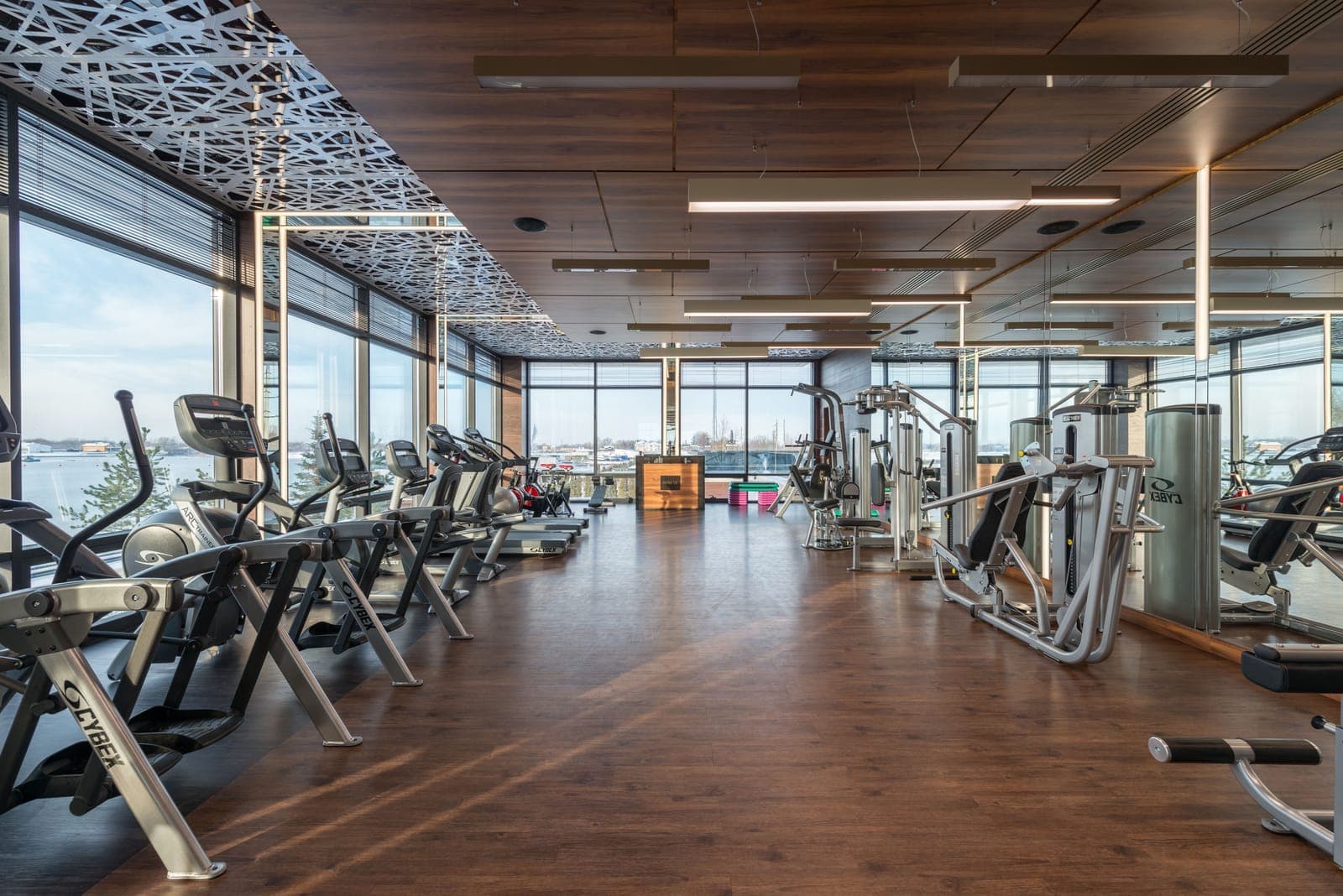
This shift changes what the pipeline is made of. A decade ago most new retail construction was apparel, home goods, and other merchandise stores, a relatively light fit-out of floors, fixtures, lighting, and a checkout counter. A gym or a wellness club is a different kind of building. It carries heavy mechanical and plumbing loads, reinforced floors for equipment, elevated ventilation for a room full of people working out, and often showers, saunas, pools, or treatment rooms that pull the job closer to hospitality or light institutional work than to a shop.
That raises both the cost and the coordination. A large-format gym runs into the millions to build, several times what an apparel box of the same size would cost, and much of that spend sits in systems with long lead times and specialized trades. The equipment is a project inside the project, with its own procurement calendar and an install sequence that has to land after the space is ready and before the opening date. Miss the coordination between the base building, the specialty mechanical work, and the equipment delivery, and the opening slips.
The brands riding this wave open at volume. Crunch is adding dozens a year, boutique operators hundreds between them, and each one is a heavier, more failure-prone buildout than the goods store it often replaces. Running that volume well takes a portfolio system, because one-off project management does not scale to dozens of heavy buildouts a year.
What This Reveals About 2026
The mall rebound and the fitness surge are two views of one shift toward services as the anchor tenant. Landlords who spent a decade replacing failed department stores and losing junior-box tenants have found that gyms, medical and wellness users, food halls, and entertainment concepts draw the repeat foot traffic that keeps a center alive. CBRE noted that the fitness category, with $45.7 billion spent in 2025, is good at absorbing the second-generation big-box space that apparel and department stores left behind.
That backfill is why the buildout question matters more now than it used to. A vacated 40,000-square-foot department store becomes a climbing gym or a medical-fitness club, so a development team inherits an old shell and has to thread modern mechanical, plumbing, and structural work into it while hitting a lease-driven opening date. Old buildings hide expensive surprises. The demand is durable, since consumer spending has moved toward services for years with no sign of reversing. Meeting it is a construction problem, and many teams are hitting that scale for the first time.
Operators that historically built light goods stores are now managing a build type they have less muscle memory for, across more sites at once. The teams that win will treat the gym or wellness buildout as its own standardized program, with a cost model, a long-lead procurement calendar, and a delivery playbook built for the format.
What Operators Should Do
If your growth is riding the fitness, wellness, and experiential wave, the discipline is to treat the buildout as the specialized program it is and to manage the whole pipeline as data. When the buildout is this much heavier and you are running dozens at once, one late trade or equipment order can slip an opening before anyone notices. RolloutIQ is built to hold the schedule, budget, and status of every concurrent project on one view, so a slip surfaces as a pattern early, while there is still time to protect the opening. Those moves apply with any tool, or none at all.
- Put the specialty mechanical work on the critical path from day one. HVAC, plumbing, and electrical for a gym or wellness club drive the schedule, so sequence and track them as the long poles they are rather than as trades that slot in later.
- Treat equipment as a project inside the project. Fitness and wellness fit-outs depend on long-lead equipment with its own procurement and install window, so tie delivery and installation dates to the construction schedule and watch them together.
- Standardize a format-specific prototype and cost model. A club or studio has a repeatable core, so document the box, its systems, and its expected cost, and benchmark every new site against that baseline instead of last year's apparel numbers.
- Underwrite second-generation space on what has to change. When you convert a vacated big-box or department store, record the condition of the structure, mechanical, and electrical systems as fields during site selection so a heavy retrofit is priced before the lease is signed.
- Coordinate landlord delivery against your fit-out. Mall and center space usually arrives through a work letter and a delivery condition, so hold the landlord's milestones and your own construction dates on one timeline to protect the opening.
- Manage the openings as a portfolio. Watch schedule, budget, and permit status across every concurrent club on one board so a slow trade or a late equipment order surfaces as a pattern early rather than as a missed opening.
Sources
Every figure here traces to a source we read and verified. The mall-performance numbers come from Wall Street Journal reporting on Green Street data, summarized by ConnectCRE. The service-tenant share comes from CoStar data first reported by the Journal, and the fitness expansion figures come from a CBRE report, both as reported below.
- ConnectCRE - https://www.connectcre.com/stories/malls-rebound-to-become-top-performing-u-s-cre-sector/
- Athletech News (CoStar data) - https://athletechnews.com/gyms-studios-are-taking-over-americas-retail-spaces/
- ICSC (CBRE, The Vanity Economy) - https://www.icsc.com/news-and-views/icsc-exchange/700-fitness-studios-tjxs-bigger-store-target-5-restaurant-chains-expanding-and-more
The Rollout
The Rollout, in your inbox
A founder's read on retail and multi-site store development. What the latest news means for your pipeline, and what we are building, every couple of weeks.

Written by
Nariman Shariat
Founder, RolloutIQ
Nariman has spent about 20 years opening stores, in the seat between the landlord, the architect, and the general contractor, across some of the largest retail and workplace fleets in the country. Along the way he built the internal platform that ran store development across a fleet, then rebuilt the same idea company after company. He founded RolloutIQ to give multi-site development teams the single source of truth he kept having to build by hand, and writes here about the work of opening and remodeling stores at scale.
More about NarimanKeep Reading
Related Articles
Continue exploring best practices for store development and construction management.
The Landlord Holds Your Schedule: What Pop Mart's Mall Push Says About In-Line Buildouts
Pop Mart will open more than 20 stores at Simon malls and outlet centers in 2026, and Mango is scaling US stores the same way. When you grow through landlord-delivered in-line space, the landlord's delivery condition and work letter control your schedule and cost, not your own GC. Here is why that split is the most overlooked risk in a mall buildout.

What Burlington's 25,000-Square-Foot Store Bet Means for Store Development
Burlington is buying a $240 million Philadelphia headquarters, funded by a turnaround built on a much smaller store. Cutting the prototype to 25,000 square feet reset the company's development math and opened a far wider map of buildable sites. Its prototype discipline, and the second-generation space that discipline opens up, is what other operators can copy.
Ready to Build Smarter?
See how RolloutIQ™ can streamline your retail and multi-site rollout program. Book a personalized demo with our team.