

Technology
The RFIs You're Answering Twice Are Telling You What to Fix
RFI volume across a retail rollout program is a multi-hundred-million-dollar invisible line item. Most of it is the same handful of questions asked across 50 to 500 stores. The operators who turn those patterns into prototype improvements are the ones who recover the cost.
The Hidden Cost Sitting in Your RFI Log
A top-10 US retailer (Dollar General, Starbucks, Walmart scale) processes somewhere between 30,000 and 200,000 RFIs per year across its rollout program. The Navigant Construction Forum's benchmark puts processing cost at roughly $1,080 per RFI, with a documented 22 percent non-response rate. Modern estimates push the per-RFI cost closer to $2,000 to $3,000 once you account for rework, schedule impact, and reviewer time.
The math is brutal. At Dollar General's 2024 program of 2,385 projects and a midpoint of 40 RFIs per project, the annual RFI processing line is in the $100 million range. Walmart and Starbucks land in similar territory. Even a 100-store specialty operator runs into the millions per year.
This is a multi-hundred-million-dollar invisible cost center across the top 20 retailers. Most of it is the same handful of questions asked over and over.
Why the Same Question Gets Asked 50 Times
Retailers build the same prototype 50 to 500 times. A single drawing error or missing detail in Sheet A-302 propagates to every new store built against that version of the prototype until somebody catches it, batches it, and reissues the set. Per the Construction Industry Institute, roughly 80 percent of RFIs stem from drawing conflicts, unclear specs, or missing details. In a multisite rollout program, those defects compound.
The patterns are predictable. Grab-bar clearance at restrooms. Signage mounting height. Refrigeration condenser location. Chipotlane canopy flashing. Grease trap venting. ADA counter height at a specific store condition. California Title 24 Part 6 acceptance testing. Florida HVHZ product approval. NYC DOB TR-1 special inspections. Each one of these gets asked dozens of times across a portfolio because the underlying prototype or the regional code response is not quite right.
At single-project scale, these are nuisances. At portfolio scale, they are a feedback loop the smart operators harvest. Bridgit puts it plainly: RFI velocity, response time, and submission patterns are leading indicators of project health, and a spike on a specific prototype detail across multiple projects is a near-certain signal that the prototype itself needs revision.
Why Most Tools Hide the Patterns
The reason this signal stays invisible is structural. In most construction project management tools, RFIs live in per-project silos. One Procore project is one RFI log. There is no cross-project aggregation, no portfolio-level taxonomy, no prototype version tagging, no way to ask 'which prototype is producing the most RFIs?' or 'which vendor causes the most signage RFIs across our 80 stores?'
Executives at retailers today routinely cannot answer basic portfolio questions like:
- Which open RFIs are threatening a grand-opening date this quarter?
- Which prototype version is producing the most RFIs and where should we revise it?
- Which vendor or design team is generating outsized RFI volume?
- How many of our 80 active stores are blocked on the same MEP clearance question?
- Has this question been asked and answered on a prior project? What was the resolution?
What Portfolio RFI Analytics Should Do
Turning RFIs into a learning loop requires three structural choices most tools have not made.
Structured classification at submission. Every RFI gets tagged on three axes: a category (HVAC, electrical, signage, ADA), a reason (drawing conflict, missing information, field condition), and a root cause (design issue, scope gap, regional code, vendor coordination). Free-text RFI descriptions are useful for context. Free-text is useless for analytics. The classification has to happen at submission, not retroactively.
Prototype version as a first-class field. Every retail RFI carries a prototype version. 'Prototype v4.2 West Region, Sheet A-302' becomes analytically meaningful. Without that tag, cross-project pattern detection is impossible because there is no way to say 'this is the 27th time we have seen this question on Prototype v4.'
Cross-project clustering. A portfolio dashboard that can group RFIs by category, by reason, by root cause, by prototype version, by vendor, by region. When a cluster crosses a threshold (50 RFIs about grab-bar clearance on Prototype v4 over the past quarter), that is a prototype change request waiting to be issued, not a recurring RFI problem.
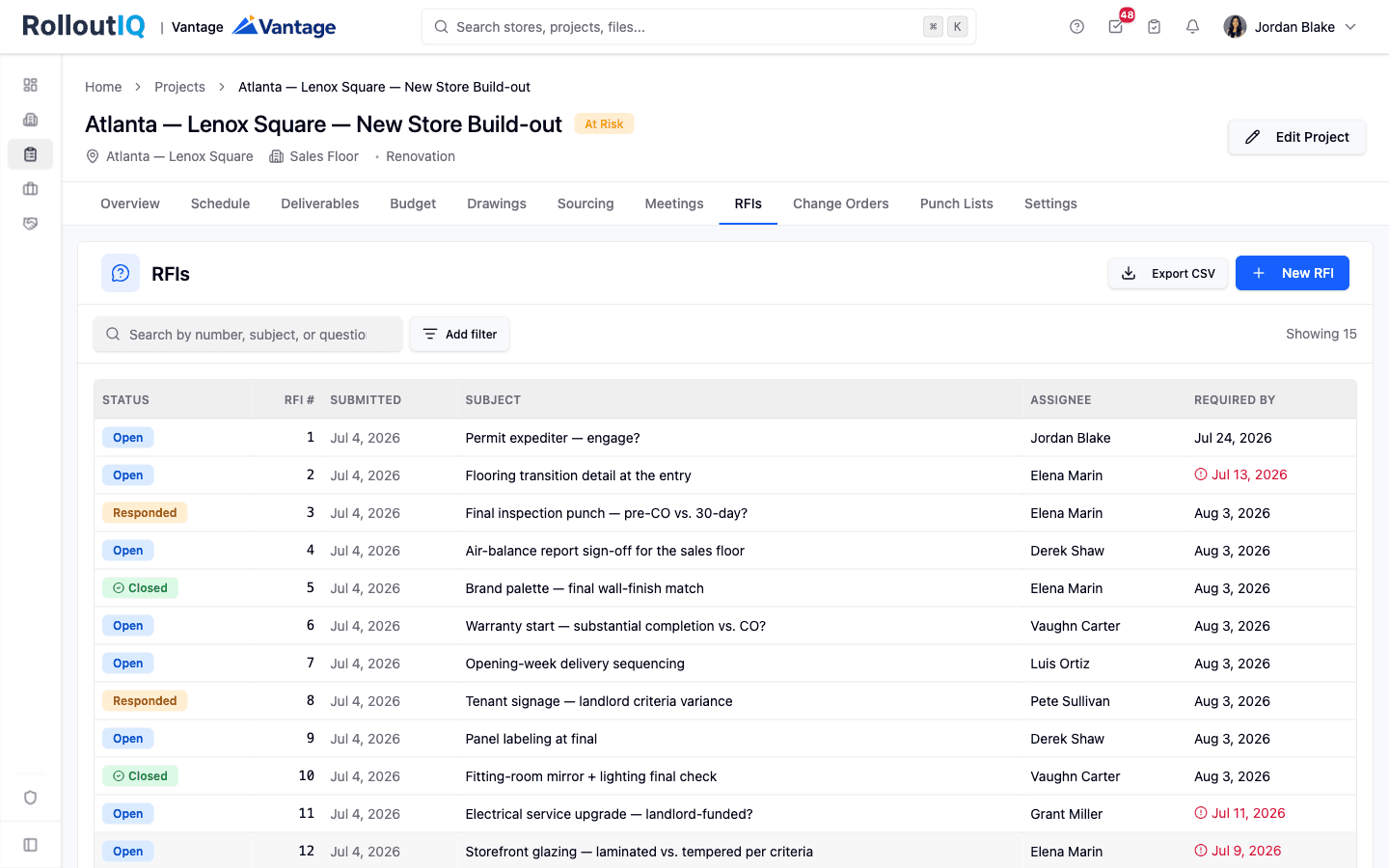
A recent platform update from RolloutIQ™ ships structured Category, Reason, and Root Cause classification with cross-project querying built in. Every RFI carries the project, status, and assignment context plus the structured classification. The export and filter surface respects the same classification so analysts can pull a portfolio-wide CSV of every closed RFI by root cause and feed it into prototype review.
What This Looks Like in Practice
The workflow runs like this. Field teams capture RFIs with their normal cadence, but each submission goes through a short classification step (category, reason, optional root cause). The platform's auto-assignment routes the RFI to the right responder based on the project's role configuration.
Quarterly, a prototype manager pulls the closed-RFI portfolio view, filters by prototype version, and sorts by root cause. The top three clusters that month might be: refrigeration condenser placement on Prototype v4 (62 RFIs), millwork shop drawing conflict at the back-of-house wall (38 RFIs), and signage variance request driven by jurisdictional sign codes (29 RFIs).
Each cluster becomes an action. The refrigeration cluster goes to a prototype change request: the next set issue moves the condenser specification. The millwork cluster goes to the vendor scorecard and to the design coordination checklist used at pre-construction. The signage cluster gets routed to real estate for jurisdiction-aware sign packages at deal kickoff.
This is the loop that closes the cost. Each prototype revision and pre-construction template update prevents the next 50 to 200 RFIs of that type. At $1,080 per RFI, a single prevented cluster of 50 RFIs is $54,000 in direct processing cost recovered, plus the rework, schedule slip, and reviewer time that does not show up on any invoice.
What Operators Should Do Now
If you are managing a multisite rollout program and want to start harvesting RFI patterns, the moves are sequential. None of them require a full platform migration to start.
- Classify RFIs going forward. Define a category, reason, and root cause taxonomy. Apply it to every new RFI submission. Pattern detection requires structured data; you cannot bolt classification on retroactively.
- Tag every RFI to a prototype version. Even a free-text field with 'Prototype v4.2 West' is enough to start. It is the single most important field for cross-project analysis.
- Run a quarterly portfolio review. Pull every closed RFI, group by root cause, and rank by frequency. The top five clusters every quarter are your prototype change request backlog.
- Feed clusters back into pre-construction templates. The same questions across 50 stores belong in the next design review, the next standard detail, the next jurisdiction-aware sign package. Closing the loop is where the dollars come back.
- Track RFI velocity as a leading indicator. Rising RFI rate on a specific prototype detail across multiple projects predicts grand-opening slip by one to three weeks. Watch the metric weekly, not at month-end.
- Measure the ROI. A 30 percent reduction in recurring-category RFIs at top-10 retailer volumes is $9 million to $60 million per year of direct processing cost, before rework. The math justifies the investment quickly.
The Bottom Line
The RFI is the highest-leverage structured data asset in retail construction because it is the only field signal that can close the loop from job-site reality back to prototype design. The retailers that treat RFIs as a cost of doing business pay the $30 million to $200 million bill every year. The retailers that treat RFIs as a learning loop recover a meaningful share of that cost and produce better stores faster.
The tools that make this possible are not particularly exotic. Structured classification at submission, prototype version tagging, and cross-project clustering are the minimum. The platforms that ship them as first-class capability give your team the dashboards to ask the right questions. The platforms that store RFIs as per-project text threads keep the patterns hidden, and your team keeps answering the same question for the fiftieth time.
The Rollout
The Rollout, in your inbox
A founder's read on retail and multi-site store development. What the latest news means for your pipeline, and what we are building, every couple of weeks.

Written by
Nariman Shariat
Founder, RolloutIQ
Nariman has spent about 20 years opening stores, in the seat between the landlord, the architect, and the general contractor, across some of the largest retail and workplace fleets in the country. Along the way he built the internal platform that ran store development across a fleet, then rebuilt the same idea company after company. He founded RolloutIQ to give multi-site development teams the single source of truth he kept having to build by hand, and writes here about the work of opening and remodeling stores at scale.
More about NarimanKeep Reading
Related Articles
Continue exploring best practices for store development and construction management.
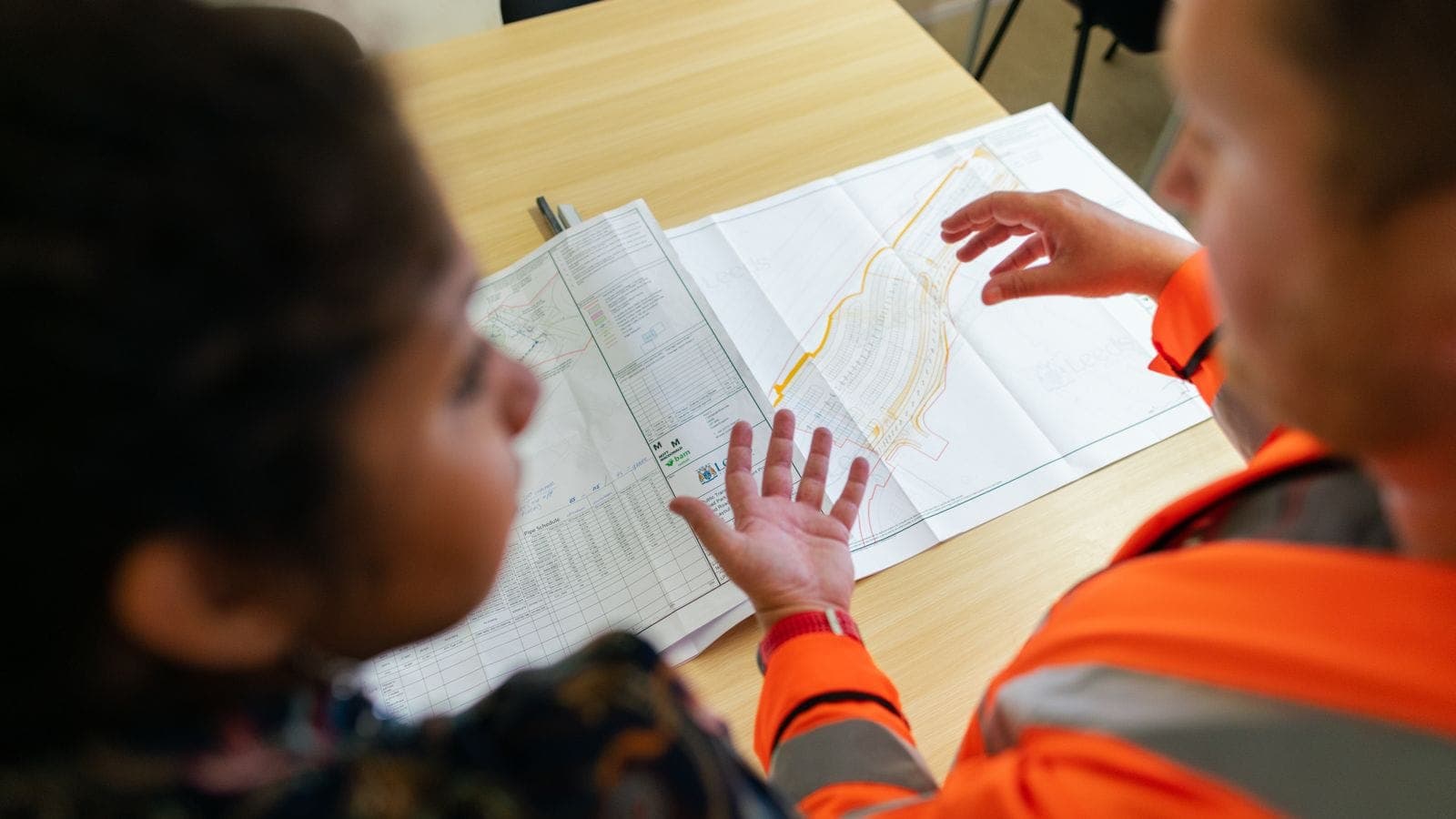
RFI Management Best Practices for Retail Construction
RFIs are inevitable. Slow RFI responses are not. Here's how high-performing retail construction teams turn RFIs from a delay risk into a managed workflow.
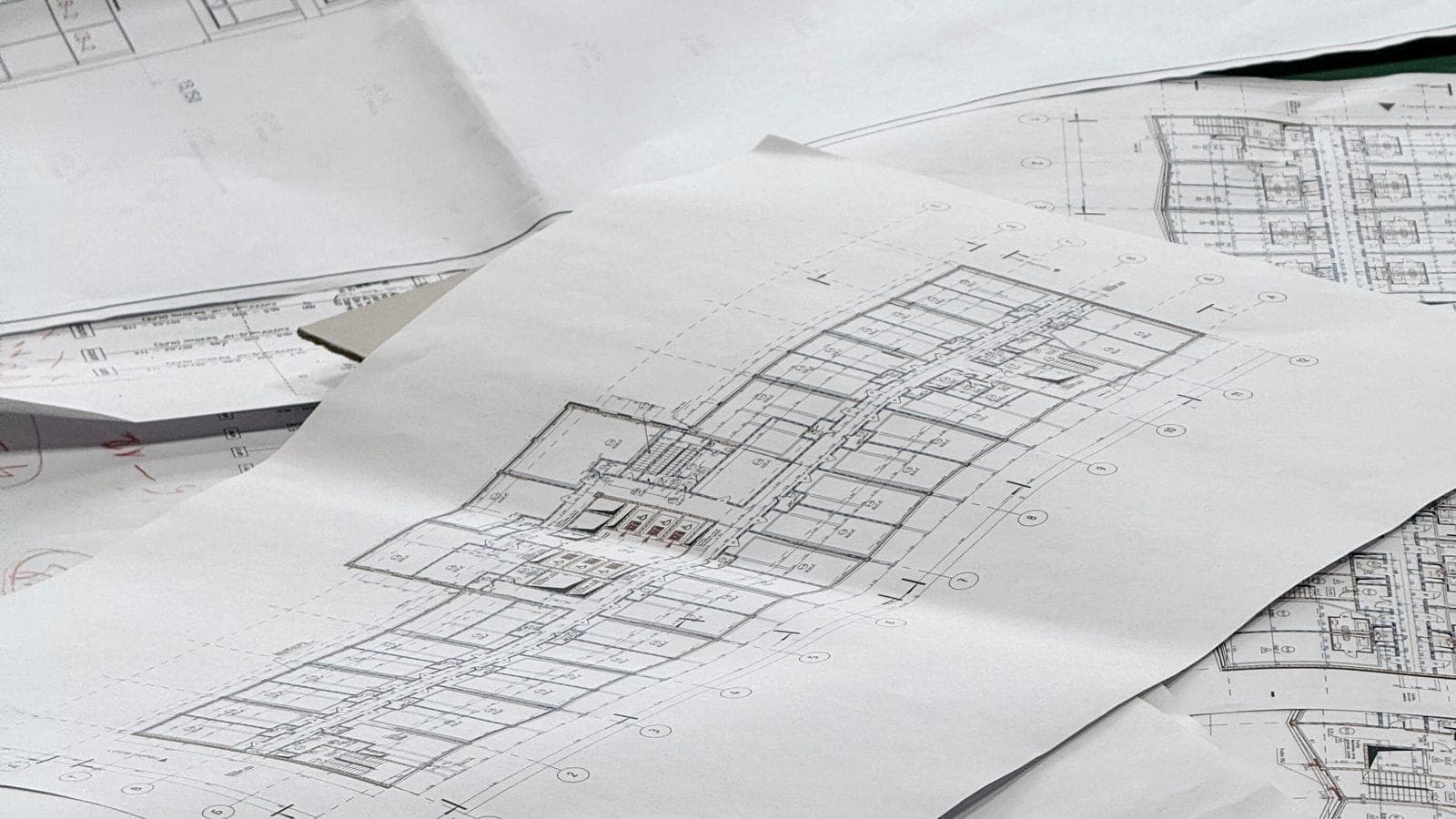
Why Drawing Management Breaks at Multisite Scale (and What to Look For in a Fix)
A retail drawing set is not a file. It is a versioned graph of sheets that re-issues across the project lifecycle. At multisite scale, generic document tools fail in predictable ways.
Document Management Best Practices for Construction Projects
Poor document management costs construction teams hours every week and creates real project risk. Here are the best practices for getting it right across your portfolio.
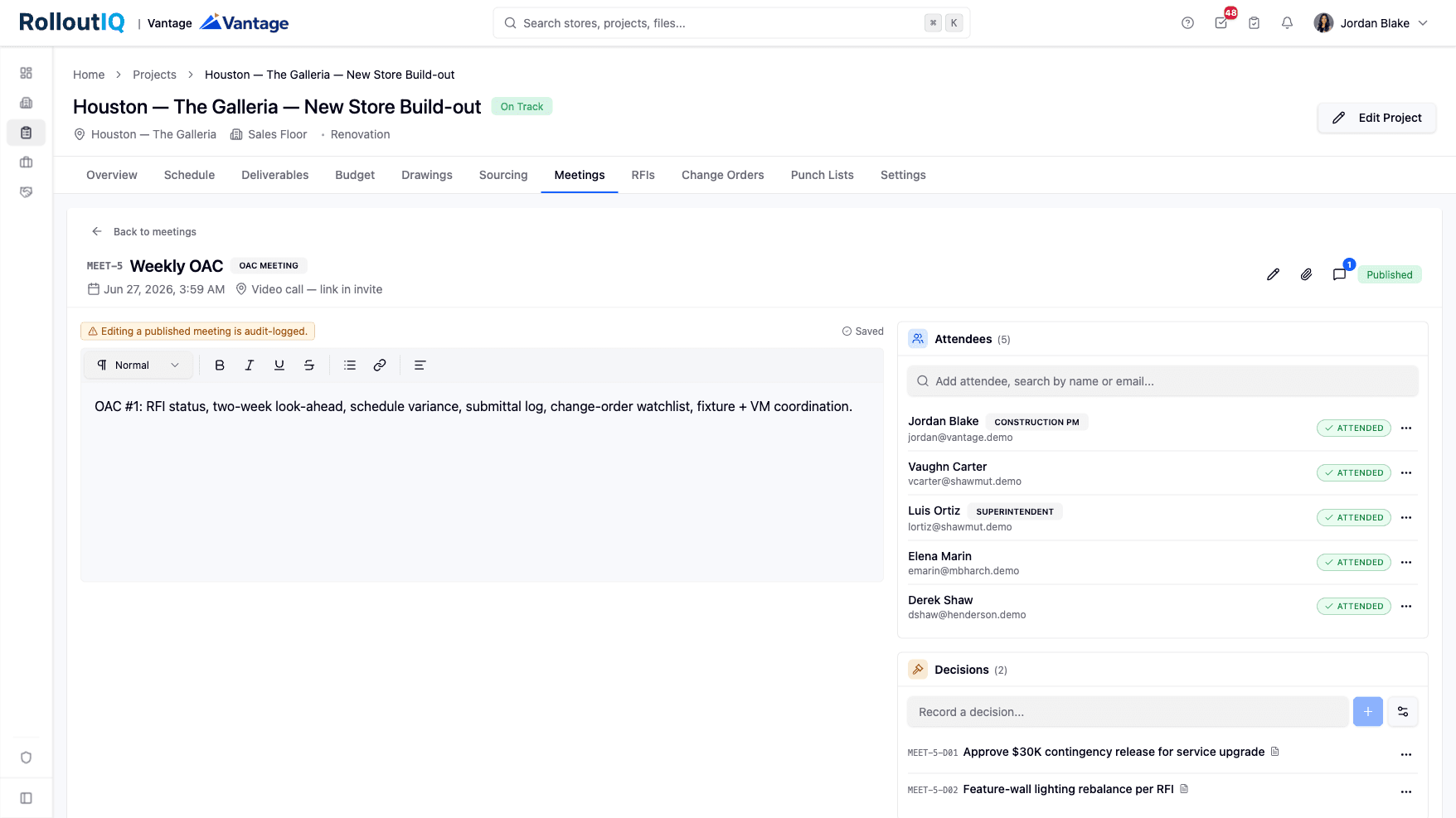
When Twelve OAC Meetings Decide an Opening, Minutes Need to Be Records
A retail rollout decides itself in 12 to 20 OAC meetings, plus 4 to 6 parallel coordination streams running underneath. When minutes live in Word docs and emailed PDFs, the decisions get re-litigated and the action items get lost. Here is what meeting minutes need to do at multisite scale.
The Complete Guide to Multi-Site Construction Management
Managing construction across multiple sites simultaneously requires a fundamentally different approach than single-project management. Here is your complete guide.

How to Evaluate Construction Management Software for Retail Rollouts
Software evaluation usually comes down to whichever vendor has the slickest demo. Here is a more useful framework for picking construction management software that actually fits multisite retail operations.
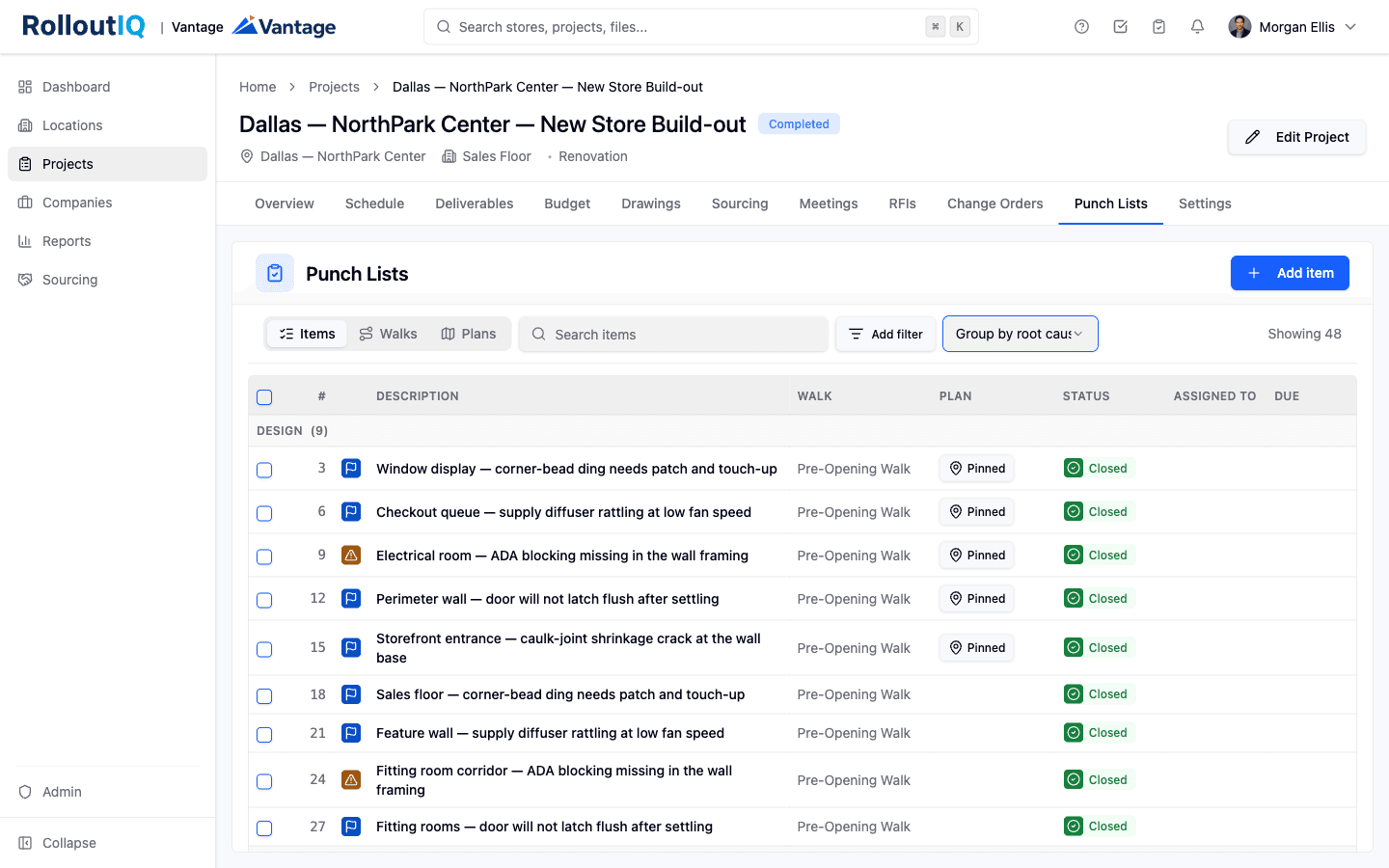
Root Cause Coding Is How a Rollout Program Learns
The same question gets asked at store 5, store 50, and store 500. The record that would have prevented it usually exists already, closed and uncoded, in last year's log.
Ready to Build Smarter?
See how RolloutIQ™ can streamline your retail and multi-site rollout program. Book a personalized demo with our team.