
Construction Management
The Complete Guide to Multi-Site Construction Management
Strategies and best practices for managing construction projects across multiple locations simultaneously.
What Makes Multisite Construction Different
Single-site construction management focuses on optimizing one project at a time. Multisite construction management is a portfolio discipline. You are making resource allocation decisions across projects, balancing competing priorities, and maintaining brand consistency while adapting to local conditions.
The shift from single-site to multisite management requires new tools, new processes, and often a new organizational structure. Project managers who excel at running one site may struggle to maintain quality across five or ten simultaneous builds without the right systems in place.
Portfolio-Level Visibility
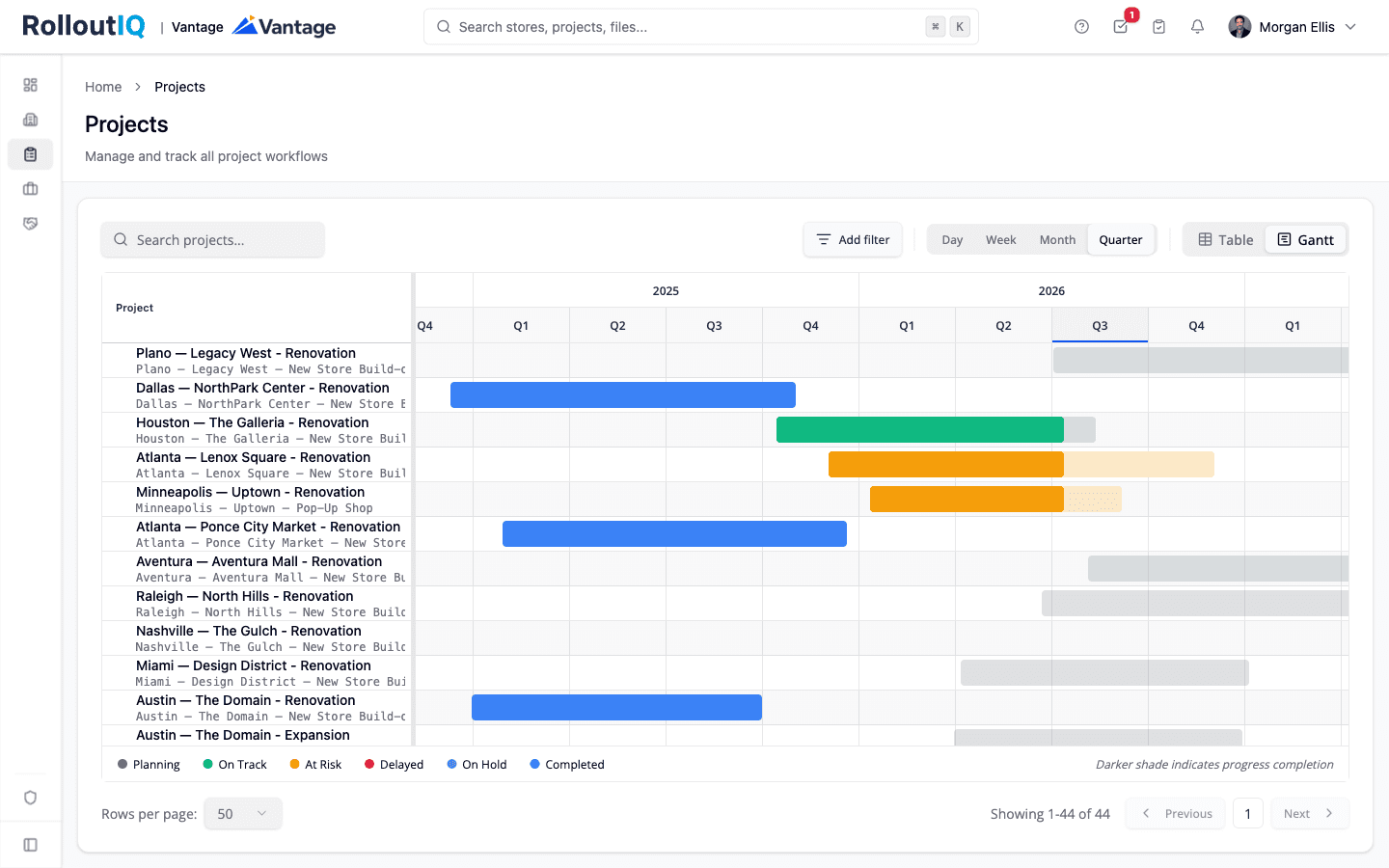
The most critical capability in multisite construction management is portfolio-level visibility. This means having a single view that shows the status, health, and risk profile of every active project in your pipeline.
Effective portfolio visibility includes schedule status by project phase, budget health with earned value metrics, open risks and issues ranked by severity, resource utilization across projects, and upcoming milestones that require attention. This view enables leadership to make informed decisions about where to allocate resources and when to escalate issues.
- Schedule status by project phase with variance indicators
- Budget health showing committed, spent, and forecasted costs
- Risk register with cross-project trend analysis
- Resource allocation heat maps showing team capacity
- Milestone calendar with critical path dependencies
Standardization Without Rigidity
Standardized processes are essential for multisite operations, but rigid standardization breaks down when local conditions vary. The goal is to standardize the framework while allowing flexibility in execution.
This means using consistent project templates, phase gates, and reporting formats across all projects while giving local teams the autonomy to adapt schedules and vendor selections to their market. The framework ensures nothing falls through the cracks. The flexibility ensures teams can respond to real-world conditions without fighting the system.
Resource Allocation Across Projects
One of the biggest challenges in multisite construction is resource allocation. Internal project managers, regional supervisors, and shared vendors all have finite capacity. When multiple projects need attention simultaneously, prioritization decisions become critical.
The best operators use a capacity planning model that maps available resources against projected demand. This model should account for project phases, because a project in pre-construction requires different resources than one in active construction. By forecasting demand across the pipeline, you can identify resource conflicts before they impact schedules.
Risk Management at Scale
Risk management in multisite construction requires a portfolio-level approach. Individual project risks are important, but the risks that matter most are the ones that can cascade across multiple projects, such as a vendor going out of business, a material shortage affecting an entire region, or a regulatory change that impacts your standard design.
Maintaining a cross-project risk register helps you identify patterns and systemic risks. If the same type of issue keeps appearing across projects, it signals a process gap that needs to be addressed at the organizational level, not just the project level.
Technology as a Force Multiplier
The right technology platform is what makes multisite construction management scalable. Without it, portfolio visibility depends on manual data aggregation, risk identification is reactive rather than proactive, and leadership spends more time collecting information than acting on it.
Purpose-built construction management platforms for multisite operators consolidate project data, automate reporting, and provide the portfolio-level views that enable informed decision-making. The ROI is not just in efficiency gains. It is in the delays prevented, the budget overruns caught early, and the consistency maintained across every location.
The Rollout
The Rollout, in your inbox
A founder's read on retail and multi-site store development. What the latest news means for your pipeline, and what we are building, every couple of weeks.

Written by
Nariman Shariat
Founder, RolloutIQ
Nariman has spent about 20 years opening stores, in the seat between the landlord, the architect, and the general contractor, across some of the largest retail and workplace fleets in the country. Along the way he built the internal platform that ran store development across a fleet, then rebuilt the same idea company after company. He founded RolloutIQ to give multi-site development teams the single source of truth he kept having to build by hand, and writes here about the work of opening and remodeling stores at scale.
More about NarimanKeep Reading
Related Articles
Continue exploring best practices for store development and construction management.

Managing Budgets Across Multiple Construction Sites
Budget management across multiple construction sites requires portfolio-level financial visibility and proactive cost controls. Here is how leading operators do it.

How to Think About AI in Retail Construction: Data First, Agents Second
Every construction platform is announcing AI features. The operators who win in the next cycle will not be the ones who bought the most AI features. They will be the ones who made their construction data agent-ready.
Coordinating a Multi-Site Retail Rollout
Running fifty store projects at once is not fifty times running one. Here is how to coordinate a multi-site retail rollout across vendors, permits, long-lead procurement, and opening dates.
Ready to Build Smarter?
See how RolloutIQ™ can streamline your retail and multi-site rollout program. Book a personalized demo with our team.