
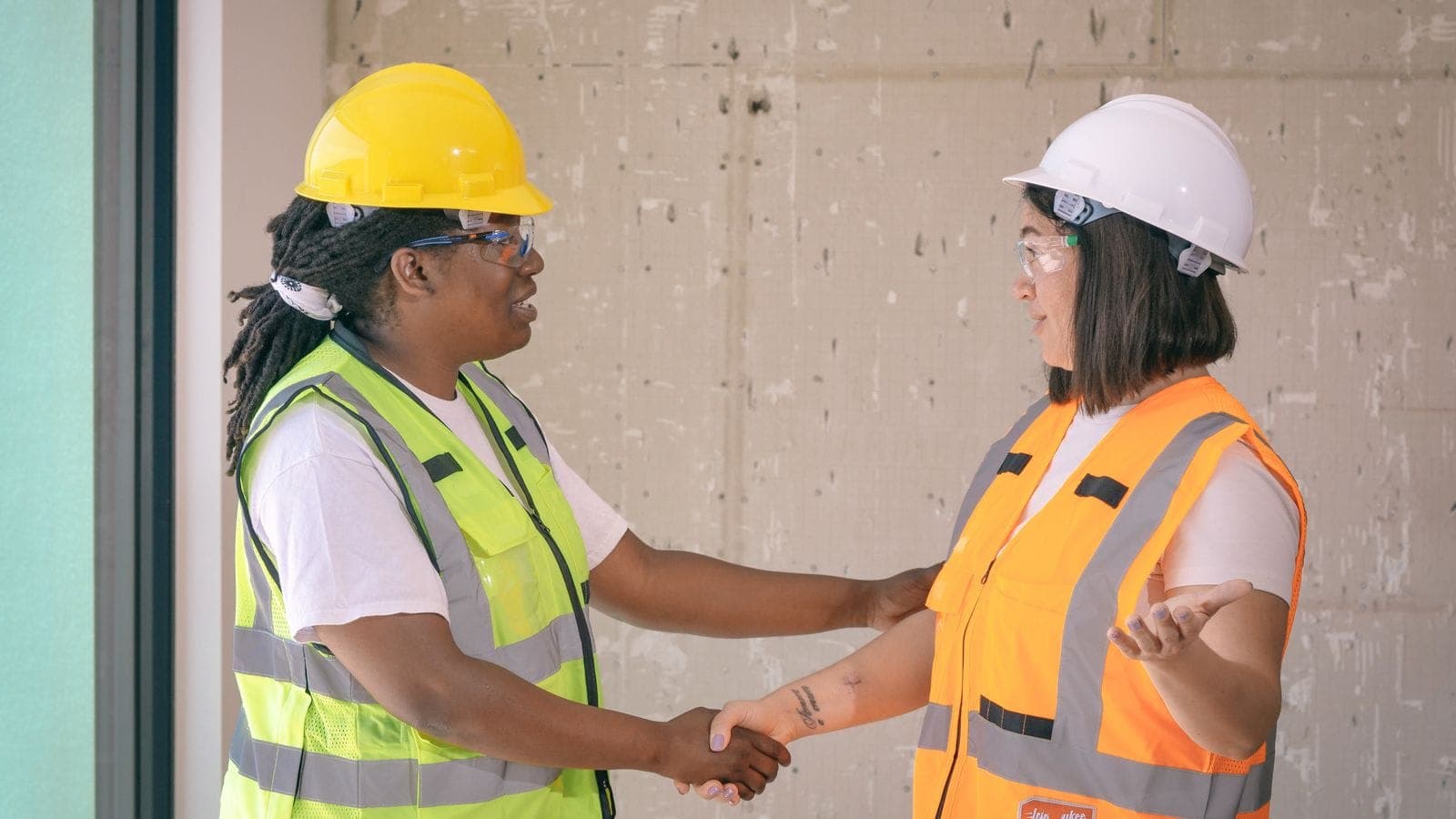
Vendor Management
Vendor Management Best Practices for Retail Buildouts
How to build and manage a reliable vendor network that delivers consistent results across your store development portfolio.
Why Vendor Management Is Critical for Multisite Operators
In retail construction, your vendors are your execution layer. The quality of your general contractors, subcontractors, and equipment suppliers directly determines whether projects finish on time, on budget, and to your brand standards. For multisite operators, vendor management is compounded by the need to maintain consistency across different markets with different labor pools.
The most common cause of construction delays is not bad weather or supply chain issues. It is vendor coordination failures. When the electrician shows up before the framing is complete, or the equipment vendor delivers to the wrong site, days are lost that ripple through the entire schedule.
The labor market raises the stakes. In the Associated General Contractors of America's 2025 workforce survey, 92 percent of construction firms reported difficulty filling positions, and 45 percent said worker shortages were already delaying their projects. When qualified crews are scarce, vendor reliability stops being a nicety and becomes the constraint on how fast you can open stores.
Building a Vendor Qualification Process
Not every contractor who can build a store should build your store. A structured qualification process helps you identify vendors who understand retail-specific requirements and can deliver at the pace multisite operations demand.
- Verify licensing, insurance, and bonding requirements for every operating market.
- Check references from other retail or restaurant clients with similar project scopes.
- Evaluate financial stability to ensure vendors can handle your payment terms and project volume.
- Assess workforce capacity to confirm they can staff your projects without overextending.
- Review safety records and OSHA compliance history.
Tracking Vendor Performance Across Projects
Vendor scorecards are one of the most powerful tools in a multisite operator's toolkit. By tracking performance metrics across every project, you build a data-driven picture of which vendors deliver and which ones consistently create problems.
The hard part is rarely knowing this. It is having the data somewhere usable. In Deltek's Clarity study of the architecture and engineering industry, more than 75 percent of firms said they still rely mostly on manual data entry and spreadsheets to manage resources and project delivery. A vendor scorecard trapped in a spreadsheet that one person updates from memory is a scorecard nobody reads when the next award decision is on the table.
Key metrics to track include on-time completion rate, budget adherence, punch list items at turnover, safety incidents, and communication responsiveness. Over time, this data becomes invaluable for negotiating better terms with top performers and replacing underperformers before they impact your pipeline.
Coordinating Multiple Trades on Tight Timelines
Retail buildouts often operate on compressed timelines where multiple trades need to work simultaneously or in rapid sequence. Effective coordination requires a detailed construction schedule that accounts for trade dependencies, lead times for materials and equipment, and inspection holds.
Daily or weekly coordination meetings with your GC and key subcontractors keep everyone aligned on priorities and help surface potential conflicts before they cause delays. The investment in communication upfront saves exponentially more time than resolving issues after they happen.
Scaling Your Vendor Network
As your rollout pace increases, your vendor network needs to scale with it. This means developing relationships with multiple qualified vendors in each market so that you are never dependent on a single contractor for your pipeline.
Some operators build preferred vendor programs that offer qualified contractors a steady stream of work in exchange for priority scheduling, competitive pricing, and adherence to brand standards. This creates a win-win relationship where vendors invest in understanding your requirements because they know the volume will be there.
Sources
The benchmarks cited in this article come from the following industry research.
- Associated General Contractors of America, 2025 Workforce Survey - https://www.agc.org/news/2025/08/28/construction-workforce-shortages-are-leading-cause-project-delays-immigration-enforcement-affects
- Deltek, Clarity Architecture and Engineering Industry Study - https://www.deltek.com/en/about/media-center/press-releases/2025/what-the-46th-annual-deltek-clarity-ae-study-reveals-about-the-industry
The Rollout
The Rollout, in your inbox
A founder's read on retail and multi-site store development. What the latest news means for your pipeline, and what we are building, every couple of weeks.

Written by
Nariman Shariat
Founder, RolloutIQ
Nariman has spent about 20 years opening stores, in the seat between the landlord, the architect, and the general contractor, across some of the largest retail and workplace fleets in the country. Along the way he built the internal platform that ran store development across a fleet, then rebuilt the same idea company after company. He founded RolloutIQ to give multi-site development teams the single source of truth he kept having to build by hand, and writes here about the work of opening and remodeling stores at scale.
More about NarimanKeep Reading
Related Articles
Continue exploring best practices for store development and construction management.

Optimizing Your Store Development Process from Site Selection to Grand Opening
Store development is one of the most complex workflows in retail operations. Learn how leading operators streamline every phase from site selection through grand opening.

Reducing Delays in New Store Openings: A Practical Guide
Every delayed store opening costs money in lost revenue, extended rent obligations, and team morale. Here are the practical strategies that top operators use to hit their dates.

Building or Outsourcing Your Store Development Team: What to Keep Either Way
Past a certain pace, every multisite operator faces the same call: staff a development team or hand the rollout to an owner's rep. Here is what each side buys, and the one thing to keep in-house either way.

The Labor Number Got Better. The Retail Construction Math Got Worse.
ABC says construction needs 349,000 new workers in 2026, down from 500K-plus a year ago. The headline reads like relief. For retail operators running 50 to 500 store programs, the underlying math just got harder.
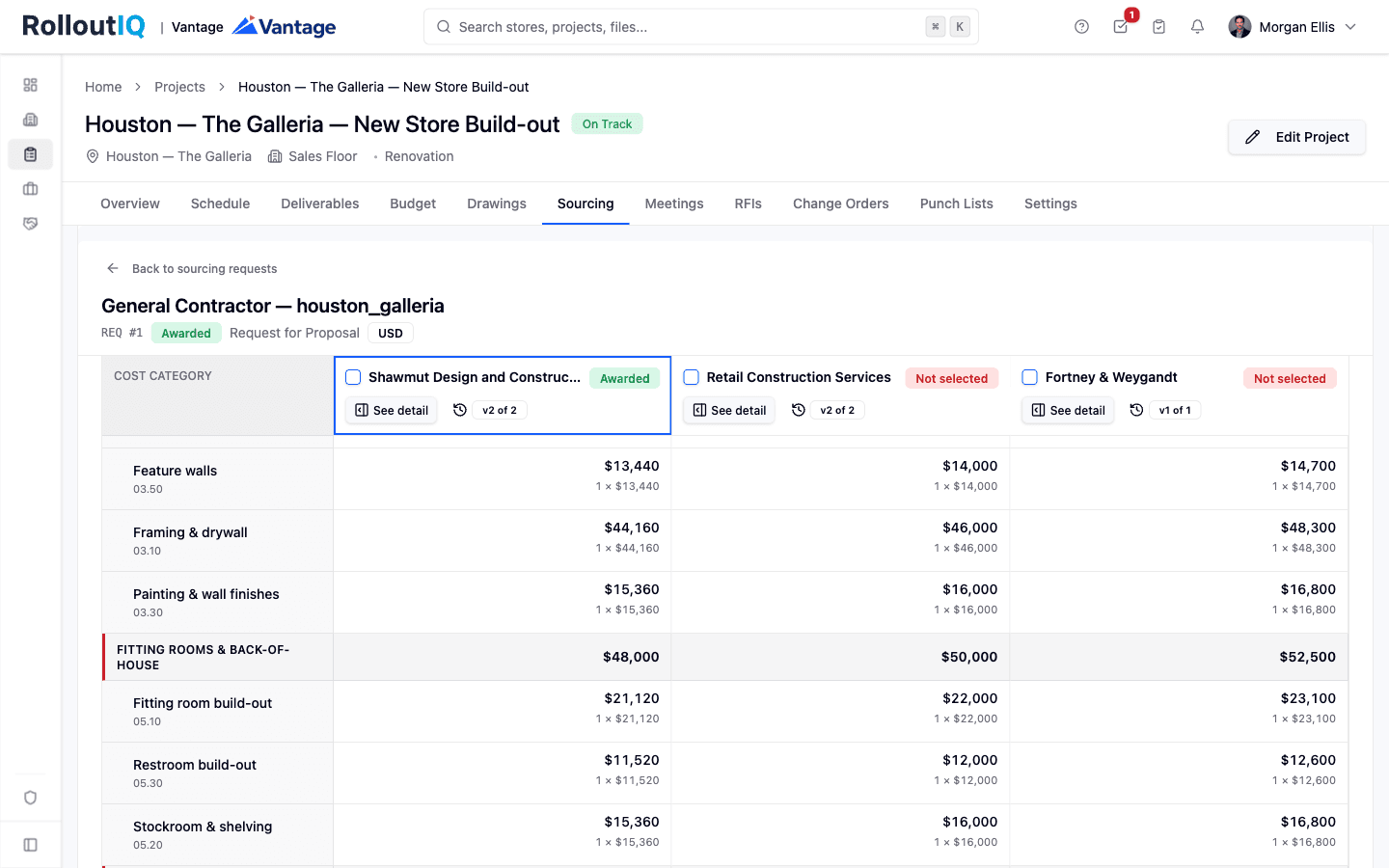
Bid Leveling: Where Your Real Construction Cost Is Decided
The lowest bid is rarely the lowest cost. Bid leveling, the work of making competing bids comparable, can eat 40 to 80 hours a project. Here is how multisite teams make competitive bidding fast, fair, and auditable.
Ready to Build Smarter?
See how RolloutIQ™ can streamline your retail and multi-site rollout program. Book a personalized demo with our team.