

Technology
How to Think About AI in Retail Construction
Every construction platform is shipping AI features. The right question is not which features to buy, but which data architecture lets your team build the AI workflows it actually needs.
The AI Feature Race Is the Wrong Race
Every construction project management platform now markets some form of AI. The pitch is familiar: intelligent document search, predictive risk detection, automated reporting. Each vendor's AI works on their data, in their UI, on their roadmap.
That model is already breaking. The operators who will win in the next cycle are not the ones who buy the most vendor AI features. They are the ones who recognize that AI value comes from data architecture and integration, not from any specific feature a vendor ships.
The real question for multisite construction leaders is not 'does my PM platform have AI?' It is 'is my construction data structured, accessible, and agent-ready, so my team can build the workflows it actually needs on the AI stack it already uses?'
Why Vendor-Built AI Features Disappoint
There are three reasons vendor-built AI features tend to underdeliver for multisite operators.
The first is that vendor AI is built for the median customer. Your operations are not the median. The risk patterns, document conventions, and reporting cadences that matter to your team are specific to your brand, your prototype mix, and your operating model. A generic risk-detection feature flags generic risks.
The second is that vendor AI lives behind a roadmap. Your team has a workflow problem this quarter. The vendor's AI roadmap delivers something in 18 months that addresses 60 percent of it.
The third is that vendor AI does not compose. Your team wants an agent that pulls data from your PM tool, your real estate system, your finance system, and your IT inventory. Each vendor's closed AI feature cannot reach across these boundaries. You need data, not features.
The Right Architecture: Data Layer Plus Open Access
The operators getting real value from AI today share a common architecture. They have invested in a project data layer that is structured, accurate, and accessible. That is not the norm. Autodesk and FMI, surveying more than 3,900 construction professionals for their 2021 study Harnessing the Data Advantage in Construction, found 30% of respondents said more than half of their own project data was bad, meaning inaccurate, incomplete, inaccessible, inconsistent, or untimely, and unusable for decisions. They then expose that data via open APIs and emerging standards like the Model Context Protocol (MCP), which Anthropic introduced as an open standard in November 2024, so their teams can build the AI agents they actually need on the LLM stack they already use.
- Structured data is the prerequisite. Drawing sets, schedules, budgets, vendors, permits, and inspections all need to be typed, queryable entities. Without that, no AI capability is meaningful.
- Open API access lets your team build custom dashboards, feed data into your warehouse, and trigger downstream automations.
- MCP support lets agents (Claude, Cursor, custom-built) read project state and run reports directly, with the same RBAC that guards your UI.
- Webhooks and event streams let downstream automations and agents react in real time to schedule changes, permit updates, and budget variances.
- Tenant isolation and append-only audit logs are what make security teams sign off on agents reading sensitive project data.
What Operators Should Do Now
If you are evaluating construction platforms today, the AI-related questions to ask are not about features. They are about architecture.
Does the platform ship an MCP server, and what tools does it expose? Is there a documented REST API with the same RBAC the UI uses? Are webhooks and event streams available for downstream agents and automations? Is tenant isolation database-level or shared-schema? Are audit logs append-only and queryable by API?
A platform that answers yes to these questions enables your team to build the AI workflows it actually needs on the timeline your business actually moves. A platform that markets AI features but cannot answer these questions is selling you their roadmap, not your capability.
The Long Bet
The construction technology vendors that survive the next decade will be the ones that recognize they are infrastructure, not application. Their job is to keep project data clean, accessible, and trustworthy. The applications and agents that operate on that data will be built increasingly by customers, integrators, and the broader ecosystem.
For multisite operators, the takeaway is simple. Bet on platforms that treat your data as the asset, expose it cleanly, and get out of the way. Skepticism about any vendor's AI feature checklist is appropriate. The right architecture beats the right features, every time.
Sources
The research and standards referenced in this article are public and linked below.
- Autodesk and FMI, Harnessing the Data Advantage in Construction (2021) - https://adsknews.autodesk.com/en/pressrelease/study-from-autodesk-and-fmi-finds-better-data-strategies-could-save-the-global-construction-industry-1-85-trillion/
- Anthropic, Introducing the Model Context Protocol (November 2024) - https://www.anthropic.com/news/model-context-protocol
The Rollout
The Rollout, in your inbox
A founder's read on retail and multi-site store development. What the latest news means for your pipeline, and what we are building, every couple of weeks.

Written by
Nariman Shariat
Founder, RolloutIQ
Nariman has spent about 20 years opening stores, in the seat between the landlord, the architect, and the general contractor, across some of the largest retail and workplace fleets in the country. Along the way he built the internal platform that ran store development across a fleet, then rebuilt the same idea company after company. He founded RolloutIQ to give multi-site development teams the single source of truth he kept having to build by hand, and writes here about the work of opening and remodeling stores at scale.
More about NarimanKeep Reading
Related Articles
Continue exploring best practices for store development and construction management.
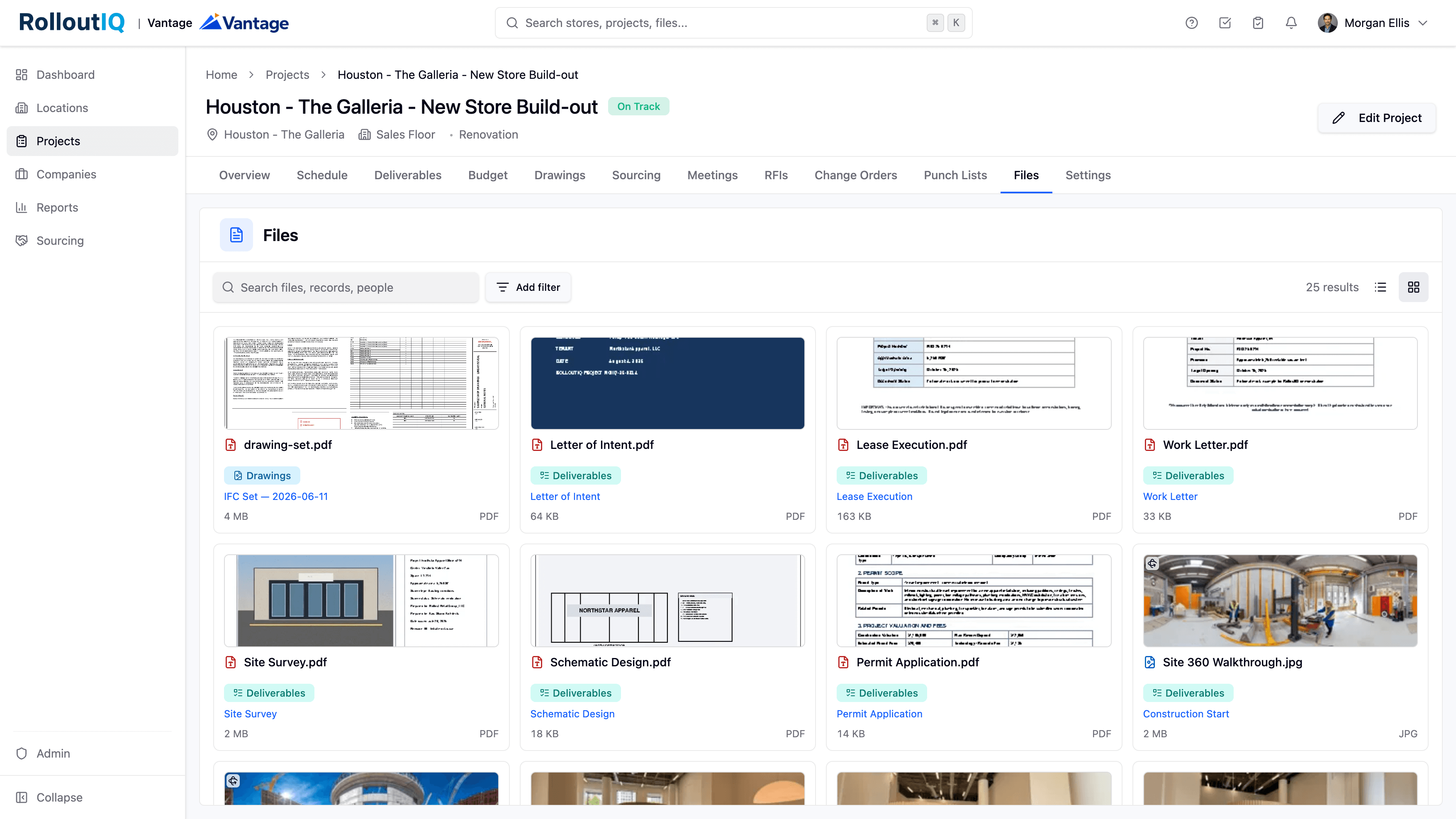
Field Photo Documentation at Multisite Scale
A retail buildout throws off thousands of photos before it opens, and across a portfolio the visual record goes missing exactly when a dispute, a warranty claim, or a closeout needs it. A file system that reads iPhone HEIC photos inline, opens 360 walkthroughs interactively, and shows every file as a scannable gallery keeps that record findable.

AI Isn't Artificial. It's Actionable Intelligence.
The anxiety in every rollout is that AI will replace the people executing the work. There is a more useful way to think about it. The best thing intelligence can do is hand a builder the next decision, not take the job.

Putting AI Agents to Work on Construction Projects with MCP
Generic chatbots can summarize a PDF. They cannot answer 'which projects in the Northeast slipped this week.' Model Context Protocol changes that by letting agents read the project system of record under the same permissions the user already has. Here is what construction teams can actually do with it.
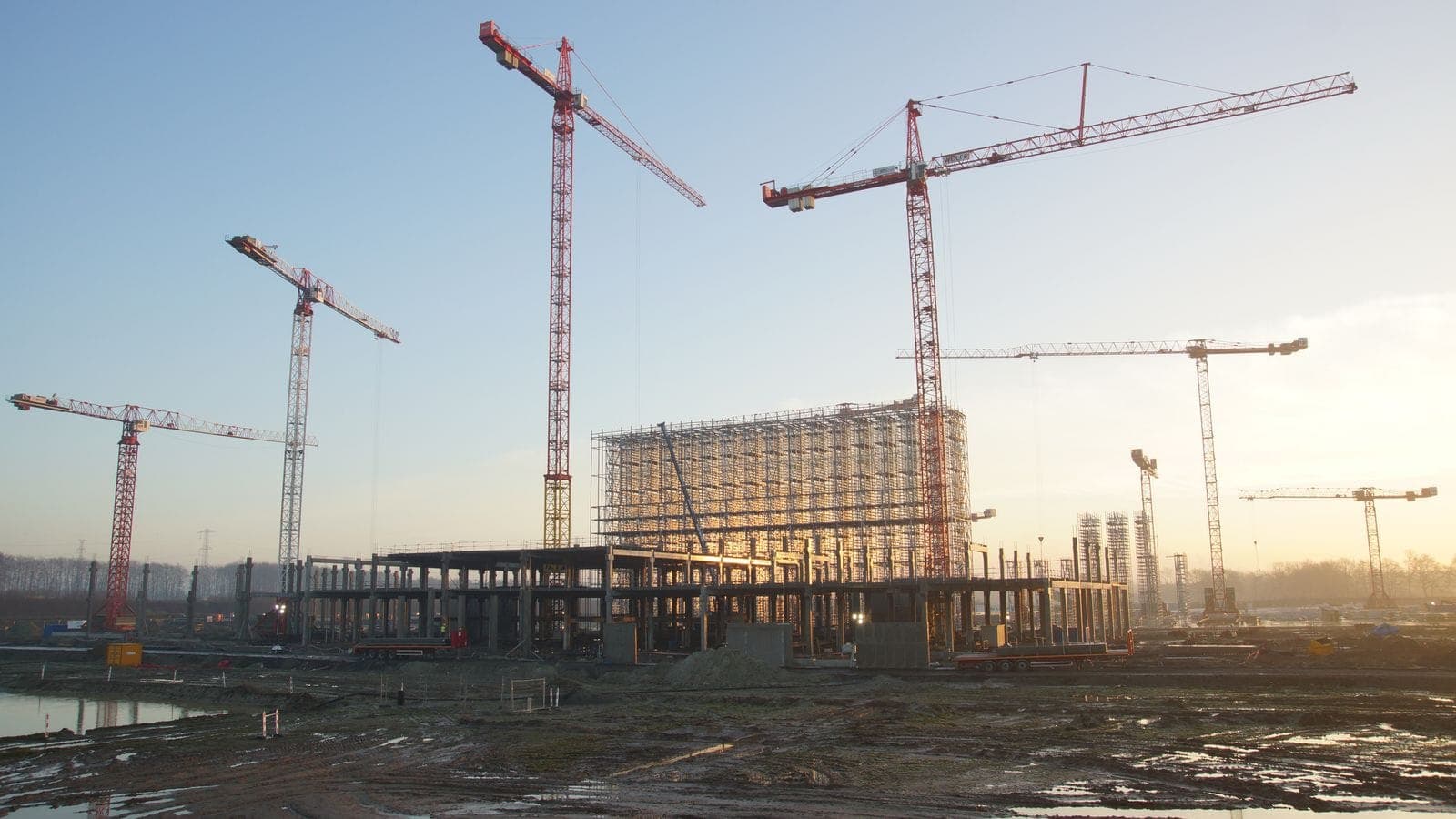
The Complete Guide to Multi-Site Construction Management
Managing construction across multiple sites simultaneously requires a fundamentally different approach than single-project management. Here is your complete guide.

How to Evaluate Construction Management Software for Retail Rollouts
Software evaluation usually comes down to whichever vendor has the slickest demo. Here is a more useful framework for picking construction management software that actually fits multisite retail operations.
Ready to Build Smarter?
See how RolloutIQ™ can streamline your retail and multi-site rollout program. Book a personalized demo with our team.